
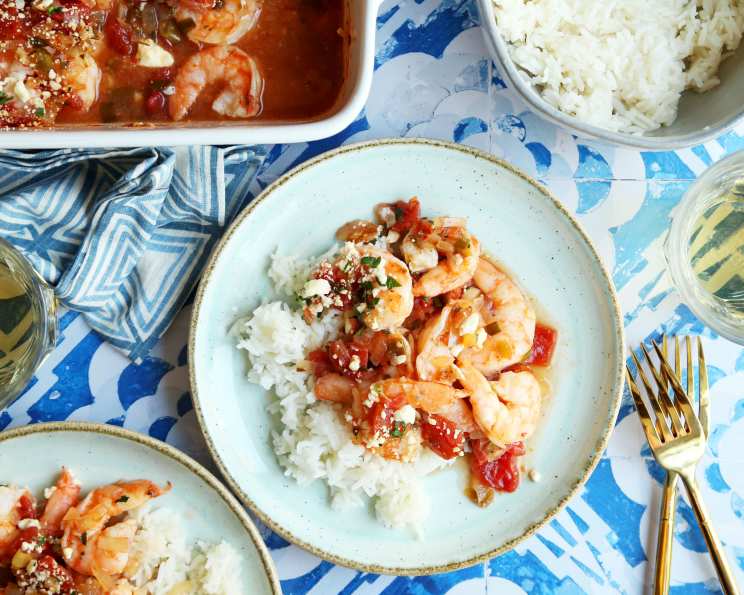
Greek Baked Shrimp with Feta: A Culinary Journey to the Aegean
The memory is as vivid as the turquoise waters of the Aegean: a small taverna perched on a cliffside in Santorini, the warm sun on my face, and the intoxicating aroma of garlic, tomatoes, and salty feta wafting from the kitchen. The dish that arrived was simple, rustic, and utterly divine – plump, succulent shrimp swimming in a vibrant tomato sauce, kissed with herbs, and crowned with golden, bubbling feta. That first taste of Greek Baked Shrimp with Feta transported me, and I’ve been chasing that flavour ever since, recreating it in my own kitchen with love and a touch of nostalgia.
Recipe Overview
- Prep Time: 20 minutes
- Cook Time: 42 minutes
- Total Time: 1 hour 2 minutes
- Servings: 6
- Yield: 6 servings
- Dietary Type: Mediterranean
Ingredients
- 2 lbs large shrimp, uncooked
- 1 medium-sized onion, finely chopped
- 2 teaspoons extra virgin olive oil
- 1 cup chopped green onion
- 2 cloves garlic, crushed
- 2 cups diced peeled tomatoes
- ½ cup dry white wine or ½ cup non-alcoholic wine
- ¼ cup chopped flat leaf parsley
- ½ teaspoon dried oregano
- Salt
- Pepper
- 4 ounces fat-free feta cheese
Equipment Needed
- Large pan or skillet
- Shallow casserole dish
Instructions
-
Preheat your oven to 450 degrees Fahrenheit (232 degrees Celsius). Ensuring the oven is properly preheated is crucial for even cooking and that perfectly browned feta.
-
Prepare the shrimp: Remove the shells from the shrimp, leaving the last segment and tail intact for a more elegant presentation (this is optional, you can fully remove the shells if you prefer). Devein the shrimp by making a shallow cut along the back and removing the dark vein. This step is essential for both hygiene and taste.
-
Rinse the shrimp under cold water and pat them dry with paper towels. Excess moisture can prevent the shrimp from browning properly in the oven.
-
In a large pan or skillet, sauté the finely chopped onion in extra virgin olive oil over medium heat until translucent. This usually takes about 5-7 minutes. If the onion starts to stick or brown too quickly, add a few drops of water to the pan.
-
Add the crushed garlic and chopped green onion to the pan and cook for 2 minutes more, stirring constantly. Be careful not to burn the garlic, as it can become bitter.
-
Pour in the diced peeled tomatoes, dry white wine (or non-alcoholic wine), half of the chopped flat leaf parsley, and dried oregano. Season with salt and pepper to taste. Remember that the feta cheese is salty, so adjust your seasoning accordingly.
-
Reduce the heat to low, cover the pan, and simmer the sauce for 30 minutes, or until it has thickened. Stir occasionally to prevent sticking. The simmering time allows the flavours to meld together beautifully.
-
Pour half of the tomato sauce into a shallow casserole dish. This creates a base for the shrimp and prevents them from sticking to the bottom of the dish.
-
Arrange the shrimp on top of the sauce in a single layer. Ensure the shrimp are evenly spaced to allow for even cooking.
-
Pour the remaining tomato sauce over the shrimp, ensuring they are well coated.
-
Crumble the fat-free feta cheese evenly over the shrimp and sauce. The feta will melt and brown in the oven, adding a salty, tangy flavour to the dish.
-
Bake in the preheated oven at 450 degrees Fahrenheit (232 degrees Celsius) for 10-12 minutes, or until the shrimp are pink and opaque and the feta cheese is lightly browned and bubbling. Keep a close eye on the shrimp as they can overcook quickly and become rubbery.
-
Garnish with the remaining chopped parsley and serve immediately.
Expert Tips & Tricks
- Shrimp Selection: Use high-quality, fresh shrimp for the best flavour and texture. Frozen shrimp can be used, but be sure to thaw them completely and pat them dry before cooking.
- Wine Choice: A crisp, dry white wine like Sauvignon Blanc or Pinot Grigio works well in this recipe. If you’re using non-alcoholic wine, choose one that is light and fruity.
- Feta Focus: While the recipe calls for fat-free feta, using regular feta will add a richer flavour. If using regular feta, consider reducing the amount slightly, as it has a stronger flavour.
- Spice It Up: For a little heat, add a pinch of red pepper flakes to the tomato sauce.
- Make-Ahead Magic: The tomato sauce can be made ahead of time and stored in the refrigerator for up to 3 days. This makes it easy to prepare the dish quickly when you’re ready to bake it. Simply assemble the dish with the sauce and shrimp and bake as directed.
Serving & Storage Suggestions
Serve the Greek Baked Shrimp with Feta hot, straight from the oven. It’s delicious on its own or served with crusty bread for dipping into the flavourful sauce. You can also serve it over pasta, rice, or quinoa for a heartier meal.
Leftovers can be stored in an airtight container in the refrigerator for up to 2 days. Reheat gently in a pan over low heat or in the microwave until heated through. Be careful not to overcook the shrimp, as they can become tough when reheated. The dish is best enjoyed fresh and I do not recommend freezing it.
Nutritional Information
| Nutrient | Amount per Serving | % Daily Value |
|---|---|---|
| Calories | 216 kcal | – |
| Calories from Fat | – | 31% |
| Total Fat | 7.5 g | 11% |
| Saturated Fat | 3.4 g | 17% |
| Cholesterol | 208.9 mg | 69% |
| Sodium | 1090.9 mg | 45% |
| Total Carbohydrate | 8.5 g | 2% |
| Dietary Fiber | 1.6 g | 6% |
| Sugars | 3.8 g | – |
| Protein | 24.7 g | 49% |
Variations & Substitutions
- Vegetarian Option: Substitute the shrimp with grilled halloumi cheese or large chunks of eggplant for a vegetarian version of this dish.
- Gluten-Free: This recipe is naturally gluten-free, but be sure to check the labels of your wine and feta cheese to ensure they are gluten-free.
- Dairy-Free: For a dairy-free option, omit the feta cheese or substitute it with a dairy-free feta alternative. Nutritional yeast can also add a cheesy flavour.
- Herbs: Experiment with different herbs to customize the flavour. Fresh basil, thyme, or rosemary would all be delicious additions.
- Vegetables: Add other vegetables to the sauce, such as bell peppers, zucchini, or mushrooms.
FAQs (Frequently Asked Questions)
Q: Can I use pre-cooked shrimp for this recipe?
A: While you can use pre-cooked shrimp, the texture will be better if you use raw shrimp and cook them in the sauce. Pre-cooked shrimp can become rubbery if overcooked.
Q: Can I make this recipe ahead of time?
A: You can prepare the tomato sauce ahead of time and store it in the refrigerator for up to 3 days. Assemble the dish just before baking.
Q: What kind of wine should I use?
A: A crisp, dry white wine like Sauvignon Blanc or Pinot Grigio is ideal. If using non-alcoholic wine, choose a light and fruity variety.
Q: Is it necessary to devein the shrimp?
A: Deveining is not strictly necessary, but it is recommended for both hygiene and taste. The vein can sometimes have a slightly gritty texture.
Q: Can I use a different type of cheese?
A: While feta is the traditional choice, you can experiment with other cheeses like mozzarella or parmesan. However, feta provides a unique salty and tangy flavour that complements the shrimp and tomato sauce perfectly.
Final Thoughts
Greek Baked Shrimp with Feta is more than just a recipe; it’s an invitation to experience the vibrant flavours of the Mediterranean. The combination of succulent shrimp, tangy feta, and a rich, herby tomato sauce is simply irresistible. Don’t be afraid to experiment with different herbs and spices to create your own unique version of this classic dish. I encourage you to try this recipe and share your feedback. Pair it with a crisp Greek salad and a glass of chilled retsina for a truly authentic Mediterranean experience. Kali Orexi!