
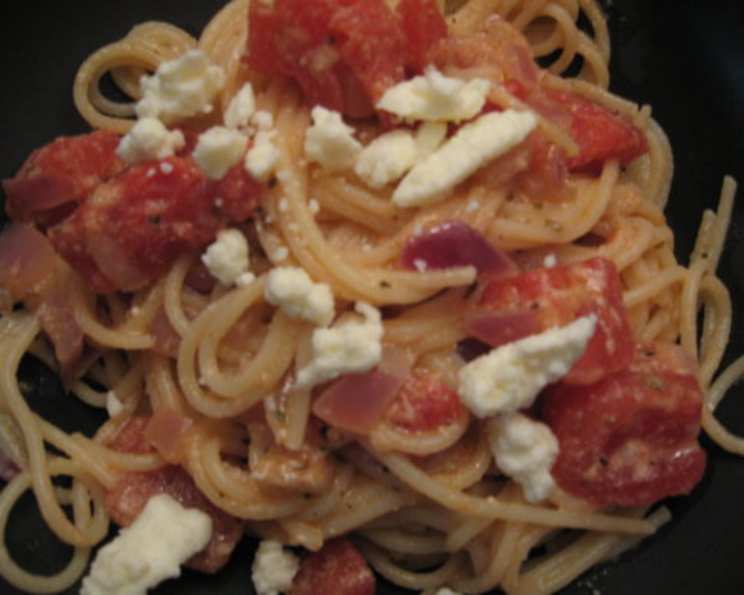
Greek Feta and Tomato Pasta: A Taste of the Mediterranean Sun
I remember being a young chef, fresh out of culinary school and eager to conquer the world of gastronomy. My first summer job took me to a small taverna on the Greek island of Crete. The aroma of sun-ripened tomatoes, fragrant oregano, and salty feta would waft through the air each morning. One day, the owner’s Yiayia (grandmother) showed me this simple yet sublime pasta dish. The vibrant flavors, the freshness of the ingredients, and the rustic simplicity of the preparation instantly transported me. It wasn’t just food; it was sunshine on a plate, a taste of the Greek summer I’ll never forget. Now, I’m excited to share this very recipe with you!
Recipe Overview
- Prep Time: 10 minutes
- Cook Time: 10 minutes
- Total Time: 20 minutes
- Servings: 4
- Dietary Type: Vegetarian
Ingredients
- ½ lb thin spaghetti
- ¼ cup extra virgin olive oil
- 1 small onion, chopped
- 3 garlic cloves, chopped
- 4 fresh plum tomatoes, cored and chopped (or substitute with a 14.5 oz can of diced tomatoes)
- 1 teaspoon dried oregano
- ½ teaspoon salt
- ⅓ cup dry white wine
- 4 ounces feta cheese, crumbled
- ⅛ teaspoon cracked black pepper
Equipment Needed
- Large pot
- Large skillet
- Colander
Instructions
- Bring 4 quarts of water to a rolling boil in a large pot. Add a generous pinch of salt. This will flavor the pasta from the inside out.
- Add the thin spaghetti to the boiling water. Cook according to package directions until al dente (slightly firm to the bite). While the pasta is cooking, you can start preparing the sauce.
- Before draining the pasta, reserve ¼ cup of the cooking water. This starchy water will help emulsify the sauce and create a creamy texture. Drain the pasta in a colander.
- While the pasta cooks, heat ¼ cup of extra virgin olive oil in a large skillet over medium heat. Make sure the skillet is large enough to accommodate the pasta later.
- Add the chopped onion to the skillet and cook for about 3 minutes, stirring occasionally, until softened and translucent. Don’t let it brown.
- Add the chopped garlic cloves to the skillet and cook for 1 minute, stirring constantly, until fragrant. Be careful not to burn the garlic, as it will turn bitter.
- Stir in the chopped fresh plum tomatoes (or diced tomatoes if using canned), dried oregano, and salt. Cook for 2 minutes, stirring occasionally, until the tomatoes begin to break down.
- Pour in the dry white wine and cook for 1 minute, allowing the alcohol to evaporate and the flavors to meld.
- Add the crumbled feta cheese, cooked spaghetti, and reserved pasta water to the skillet.
- Toss everything together gently but thoroughly until the feta begins to melt and the sauce coats the pasta evenly. Season with cracked black pepper.
- Serve the pasta immediately.
Expert Tips & Tricks
- Quality of Ingredients Matters: Use the best quality extra virgin olive oil and feta cheese you can find. The flavor will shine through.
- Don’t Overcook the Pasta: Al dente pasta holds its shape better and absorbs the sauce more effectively.
- Adjust the Seasoning: Taste the sauce and adjust the salt and pepper as needed. The feta is already salty, so be mindful of that.
- Make it Ahead (Partially): You can chop the vegetables and crumble the feta ahead of time. Store them separately in the refrigerator until ready to use.
- Brighten the Flavors: A squeeze of fresh lemon juice right before serving will add a vibrant tang.
Serving & Storage Suggestions
Serve the Greek Feta and Tomato Pasta immediately while it’s hot and the feta is still melty. Garnish with a sprinkle of fresh oregano or basil for added flavor and visual appeal. This dish pairs perfectly with a crisp Greek salad and a glass of chilled dry white wine.
Leftovers can be stored in an airtight container in the refrigerator for up to 3 days. Reheat gently in a skillet over low heat, adding a splash of water or olive oil if needed to prevent sticking. The pasta may lose some of its texture upon reheating. Freezing is not recommended, as the pasta and feta may become mushy.
Nutritional Information
| Nutrient | Amount per Serving | % Daily Value |
|---|---|---|
| Calories | 451 kcal | N/A |
| Total Fat | 21.3 g | 32% |
| Saturated Fat | 6.6 g | 32% |
| Cholesterol | 26.8 mg | 8% |
| Sodium | 636.7 mg | 26% |
| Total Carbohydrate | 45.3 g | 15% |
| Dietary Fiber | 1.2 g | 4% |
| Sugars | 3.8 g | N/A |
| Protein | 16.5 g | 33% |
Variations & Substitutions
- Gluten-Free: Use gluten-free spaghetti. There are many good-quality brands available now.
- Vegan: Substitute the feta cheese with a vegan feta alternative. Be aware that the flavor and texture may differ slightly.
- Spicy: Add a pinch of red pepper flakes to the sauce for a touch of heat.
- Herbaceous: Experiment with different herbs, such as fresh basil, parsley, or mint.
- Seasonal Tomatoes: When tomatoes are at their peak in the summer, try using different heirloom varieties for a unique flavor profile.
- Heartier: Add grilled chicken or shrimp for extra protein and heartiness.
FAQs (Frequently Asked Questions)
Q: Can I use a different type of pasta?
A: Yes, while thin spaghetti works well, other pasta shapes like penne, rigatoni, or even orzo would also be delicious. Just adjust the cooking time accordingly.
Q: I don’t have dry white wine. Can I substitute it with something else?
A: You can use chicken broth or vegetable broth in place of the white wine. The wine adds acidity and flavor, so a splash of lemon juice or white wine vinegar would also be a good addition.
Q: How do I prevent the pasta from sticking together?
A: Make sure to use enough water when cooking the pasta and stir it occasionally. Rinsing the cooked pasta briefly with cold water can also help, but it’s not necessary if you’re adding it to the sauce immediately.
Q: My feta cheese is very salty. How can I reduce the saltiness?
A: Soak the feta in cold water for 30 minutes before crumbling it. This will draw out some of the excess salt. Also, be mindful of adding extra salt to the sauce.
Q: Can I add other vegetables to the sauce?
A: Absolutely! Bell peppers, zucchini, or eggplant would all be great additions. Sauté them along with the onion and garlic.
Final Thoughts
This Greek Feta and Tomato Pasta is a celebration of simple, fresh ingredients and vibrant Mediterranean flavors. It’s a dish that’s both easy to prepare and deeply satisfying. I encourage you to try this recipe and experience the taste of the Greek summer for yourself. Don’t be afraid to experiment with different variations and substitutions to create your own signature version. And please, share your feedback and experiences – I’d love to hear how it turned out! Pair it with a refreshing cucumber and dill salad, and you will have the perfect meal!