
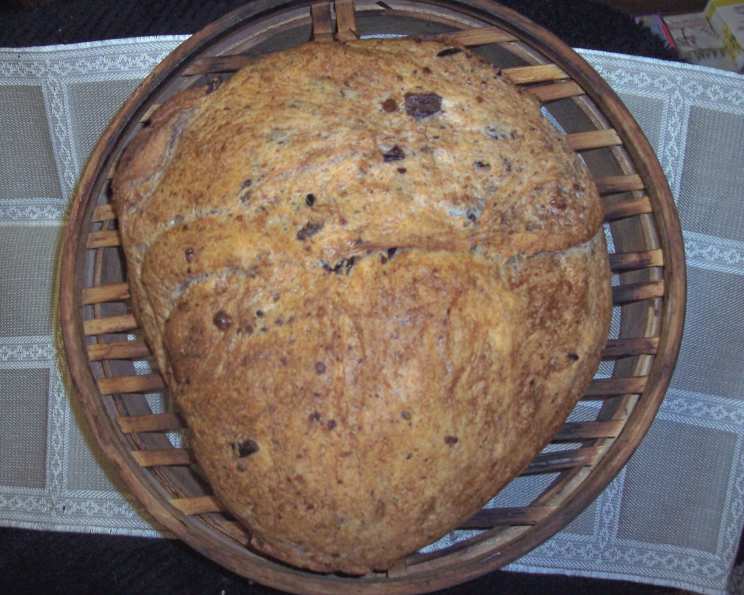
Greek Olive Bread: A Taste of the Mediterranean Sun
The aroma alone transports me back to a sun-drenched taverna on the island of Crete, where a crusty loaf of olive bread, warm from the wood-fired oven, graced our table every evening. The salty tang of olives, the creamy whisper of feta, and the satisfying chew of the bread were the perfect accompaniment to laughter, stories, and the clinking of glasses filled with local wine, as the Aegean waves whispered secrets to the shore. This recipe captures that rustic magic, bringing a slice of Greek summer to your own kitchen.
Recipe Overview
- Prep Time: 30 minutes
- Cook Time: 25 minutes
- Total Time: 1 hour 55 minutes – 2 hours 25 minutes (including rise time)
- Servings: Approximately 12 slices
- Yield: 1 round loaf
- Dietary Type: Vegetarian
Ingredients
- 3 – 3 ½ cups bread flour or 3 – 3 ½ cups unbleached all-purpose flour
- 1 (2 ¾ teaspoon) package active dry yeast or 1 (2 ¾ teaspoon) package fast-rising yeast
- 1 tablespoon sugar
- 1 teaspoon salt
- 2 tablespoons extra virgin olive oil
- 1 cup very warm water (not scalding, about 110°F)
- 1 cup coarsely chopped pitted oil-cured olives or 1 cup black olives
- ½ cup crumbled feta cheese
- 2 teaspoons extra virgin olive oil, for brushing
Equipment Needed
- Large mixing bowl
- Measuring cups and spoons
- Clean bowl for rising
- Work surface
- Baking sheet
- 3-inch round cutter (optional)
- Wire rack
Instructions
-
In a large mixing bowl, stir together 3 cups of the flour, the yeast, sugar, and salt. Ensure all dry ingredients are evenly distributed.
-
Create a well in the center of the dry ingredients. Pour in the 2 tablespoons of olive oil and the warm water.
-
Stir until all the dry ingredients are moistened and a shaggy dough forms.
-
Cover the bowl with a clean kitchen towel or plastic wrap and let it stand for 15 minutes. This allows the flour to fully hydrate and the yeast to activate, resulting in a better texture.
-
Sprinkle a clean work surface generously with flour.
-
Scrape the dough out onto the floured surface.
-
Dust the top of the dough with flour to prevent sticking.
-
Knead the dough until it is smooth and elastic, and small bubbles develop just under the surface, about 5 minutes. Add more flour, a tablespoon at a time, if the dough gets sticky. Be careful not to add too much flour, as this will make the bread tough.
-
Place the kneaded dough in a clean, greased bowl, turning to coat all over. This prevents the dough from drying out as it rises.
-
Cover the bowl and let the dough rise in a warm place until doubled in size, about 1 to 1 ½ hours. The rising time can vary depending on the temperature of your kitchen.
-
Punch down the dough to release the trapped air. This helps to redistribute the yeast and create a more even texture.
-
Pat the dough into a ½ inch thick circle.
-
Sprinkle the olives and feta cheese evenly over the surface of the dough.
-
Knead the dough lightly to incorporate the olives and feta cheese, being careful not to overwork it.
-
Shape the dough into a ball.
-
Pat the ball out to make a circle approximately 8 inches in diameter.
-
Place the circle of dough on a greased baking sheet.
-
Using a 3-inch round cutter (or a sharp knife), cut a circle in the center of the dough, but leave the round of dough in place, creating a ring shape. (You can bake the removed center alongside the bread; it will likely cook faster than the circular loaf. Keep an eye on it and remove it from the oven sooner if it browns too quickly.)
-
Brush the top of the dough with the 2 teaspoons of olive oil. This will give the crust a beautiful golden color and a slightly crispy texture.
-
Cover the dough and let it rise again until puffy, about 30 to 45 minutes.
-
Preheat the oven to 375°F (190°C).
-
Bake the bread for 25 minutes, or until the crust is a rich golden brown and the loaf sounds hollow when tapped on the bottom.
-
Cool the bread on a wire rack before slicing and serving. This allows the steam to escape, preventing the bread from becoming soggy.
Expert Tips & Tricks
- For an extra flavorful bread, use a mix of different types of olives, such as Kalamata, Castelvetrano, and Cerignola.
- If you don’t have feta cheese on hand, you can substitute it with goat cheese or ricotta salata.
- A touch of dried oregano or thyme can add a lovely herbal note to the bread. Incorporate about 1 teaspoon of dried herbs into the dough along with the flour.
- To ensure even baking, rotate the baking sheet halfway through the baking time.
- If the crust is browning too quickly, tent the bread with aluminum foil.
- If using fast-rising yeast, you can skip the initial 15-minute rest period after mixing the dough.
Serving & Storage Suggestions
This Greek Olive Bread is best served warm or at room temperature. It’s delicious on its own, or it can be paired with a variety of dishes. Try it with grilled or roasted vegetables, hummus, tzatziki, or a hearty Greek salad. It’s also fantastic with grilled lamb or chicken.
Store leftover bread in an airtight container at room temperature for up to 2 days. For longer storage, wrap the bread tightly in plastic wrap and freeze for up to 2 months. To reheat, thaw the bread completely and then bake it in a preheated oven at 350°F (175°C) for 5-10 minutes, or until warmed through. You can also revive individual slices in a toaster oven.
Nutritional Information
| Nutrient | Amount per Serving | % Daily Value (approximate) |
|---|---|---|
| Calories | 290 kcal | 15% |
| Total Fat | 12g | 18% |
| Saturated Fat | 4g | 20% |
| Cholesterol | 20mg | 7% |
| Sodium | 700mg | 29% |
| Total Carbohydrate | 38g | 13% |
| Dietary Fiber | 2g | 8% |
| Sugars | 4g | – |
| Protein | 8g | 16% |
Note: Nutritional information is an estimate and may vary based on specific ingredients and portion sizes.
Variations & Substitutions
- Gluten-Free: Substitute the bread flour with a gluten-free bread flour blend. You may need to adjust the amount of liquid depending on the blend you use.
- Vegan: Omit the feta cheese or substitute it with a vegan feta alternative.
- Herbaceous: Add chopped fresh herbs like rosemary, thyme, or oregano to the dough for an extra layer of flavor.
- Spicy: Add a pinch of red pepper flakes to the dough for a subtle kick.
- Sun-Dried Tomato: Incorporate ½ cup of chopped sun-dried tomatoes into the dough along with the olives and feta.
FAQs (Frequently Asked Questions)
Q: Can I use instant yeast instead of active dry yeast?
A: Yes, you can substitute instant yeast (also known as rapid-rise yeast) for active dry yeast. There’s no need to proof instant yeast in water first; simply add it to the dry ingredients.
Q: My dough isn’t rising. What could be the problem?
A: Several factors can prevent dough from rising, including using expired yeast, water that is too hot or too cold, or a kitchen that is too cold. Make sure your yeast is fresh, the water is warm (not hot), and the dough is placed in a warm, draft-free area to rise.
Q: Can I make this bread ahead of time?
A: Yes, you can prepare the dough ahead of time and refrigerate it for up to 24 hours. When you’re ready to bake, bring the dough to room temperature, shape it, and let it rise before baking as directed.
Q: The olives are very salty. Is there anything I can do?
A: Yes, you can soak the olives in water for about 30 minutes before chopping them to remove some of the excess salt. Drain them well before adding them to the dough.
Q: Can I freeze the baked bread?
A: Absolutely! Allow the bread to cool completely, then wrap it tightly in plastic wrap and aluminum foil. Freeze for up to 2 months. Thaw completely before reheating.
Final Thoughts
This Greek Olive Bread is more than just a recipe; it’s an invitation to experience the flavors and aromas of the Mediterranean. I encourage you to give it a try, experiment with different variations, and share your creations with friends and family. Pair it with a crisp white wine and good company, and you’ll be transported to a sun-drenched Greek taverna in no time. Kali Orexi! (Bon appétit!)