
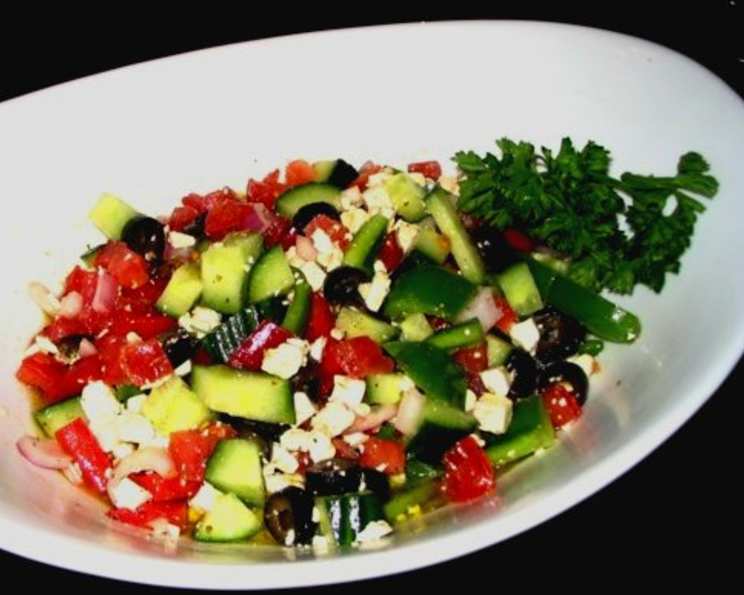
A Taste of the Aegean: Crafting the Perfect Greek Salad
My first experience with an authentic Greek salad wasn’t in a taverna overlooking the cerulean waters of the Aegean, but rather in my grandmother’s sun-drenched garden. I remember the vibrant colors of the ripe tomatoes, the crisp snap of the cucumber she’d just plucked, and the briny aroma of the Kalamata olives. She would assemble the salad right there on her worn wooden table, the scent of oregano hanging in the air, a taste of pure sunshine and Mediterranean soul. It was more than just a salad; it was a connection to family, to the land, and to a way of life.
Recipe Overview
- Prep Time: 15 minutes
- Cook Time: 0 minutes
- Total Time: 15 minutes
- Servings: 6
- Yield: 6 servings
- Dietary Type: Gluten-Free
Ingredients
- 3 tomatoes
- 1 cucumber
- 1 red onion
- 1 cup green bell pepper
- 1 cup red bell pepper
- ½ cup Kalamata olives
- 4 ounces feta cheese
- ⅔ cup olive oil
- 2 tablespoons red wine vinegar
- 1 tablespoon lemon juice
- 1 garlic clove
- 2 teaspoons dried oregano
- ½ teaspoon salt
- Freshly ground black pepper to taste
Equipment Needed
- Large mixing bowl
- Cutting board
- Sharp knife
- Measuring cups and spoons
- Small bowl or jar for dressing (optional)
Instructions
-
Begin by prepping your vegetables. Dice the tomatoes into bite-sized pieces. The ripeness of the tomatoes is key here – you want them juicy and flavorful.
-
Next, peel the cucumber (optional, but recommended if the skin is thick or waxed), and dice it into similar-sized pieces as the tomatoes.
-
Thinly slice the red onion. If you find red onion to be too strong, you can soak the slices in cold water for 10-15 minutes to mellow out the flavor. I tend to use a smaller red onion, as I don’t want it to overpower the salad, but you can adjust the amount to your liking.
-
Remove the seeds and dice the green and red bell peppers into approximately 1-inch pieces. Using both colors adds visual appeal and a slightly sweeter flavor.
-
In a large mixing bowl, combine the diced tomatoes, cucumber, red onion, green bell pepper, and red bell pepper.
-
Add the Kalamata olives to the bowl. Be sure to use good-quality olives, preferably Kalamata, for the most authentic flavor. If your olives are whole, you may want to halve or quarter them.
-
Crumble the feta cheese over the vegetables. Don’t skimp on the feta! It’s a crucial element of the salad, adding a salty, tangy counterpoint to the fresh vegetables. I prefer using a block of feta and crumbling it myself, as it tends to have a better texture than pre-crumbled feta.
-
Now, prepare the dressing. In a small bowl or jar, whisk together the olive oil, red wine vinegar, lemon juice, minced garlic, dried oregano, salt, and pepper. Mince the garlic clove finely for the best flavor distribution. You can also shake the ingredients together in a jar for easy emulsification.
-
Pour the dressing over the vegetables and gently toss to combine. Ensure that all the vegetables are evenly coated with the dressing.
-
To allow the flavors to meld, cover the bowl and refrigerate for at least 30 minutes before serving. This marinating period is crucial for allowing the flavors to come together and create a cohesive and delicious salad.
-
Just before serving, give the salad another gentle toss to redistribute the dressing.
-
Serve the Greek salad in a clear serving bowl to showcase the vibrant colors of the ingredients.
Expert Tips & Tricks
- Use high-quality ingredients: The beauty of Greek salad lies in its simplicity. Using the freshest, best-quality ingredients will make a world of difference. Seek out ripe, in-season tomatoes, crisp cucumbers, and flavorful olives.
- Don’t overdress: A little dressing goes a long way. You want the dressing to enhance the flavors of the vegetables, not drown them.
- Adjust to your tastes: Feel free to adjust the quantities of the vegetables to suit your preferences. If you prefer more cucumber or less red onion, go for it!
- Add a pinch of sugar: If your tomatoes are not very sweet, a tiny pinch of sugar can help to balance the acidity of the vinegar and lemon juice.
- Fresh herbs are a plus: While the recipe calls for dried oregano, adding fresh oregano, if available, will elevate the flavor even further.
Serving & Storage Suggestions
Greek salad is best served fresh and chilled. It makes a wonderful side dish or a light lunch. It pairs perfectly with grilled meats, fish, or pita bread and hummus.
Leftovers can be stored in an airtight container in the refrigerator for up to 2 days. However, the vegetables will become softer and release more liquid over time, so it’s best to consume it as soon as possible. It is not recommended to freeze Greek salad.
Nutritional Information
| Nutrient | Amount per Serving | % Daily Value |
|---|---|---|
| Calories | 318 kcal | N/A |
| Calories from Fat | 268 g | 84% |
| Total Fat | 29.8 g | 45% |
| Saturated Fat | 6.6 g | 32% |
| Cholesterol | 17.8 mg | 5% |
| Sodium | 521.5 mg | 21% |
| Total Carbohydrate | 10.8 g | 3% |
| Dietary Fiber | 2.7 g | 10% |
| Sugars | 5.8 g | 23% |
| Protein | 4.5 g | 9% |
Variations & Substitutions
- Add protein: For a heartier salad, add grilled chicken, chickpeas, or hard-boiled eggs.
- Swap the cheese: If you’re not a fan of feta, try using halloumi, a semi-hard, unripened cheese that holds its shape when grilled or pan-fried.
- Make it vegan: Simply omit the feta cheese or substitute it with a vegan feta alternative.
- Spice it up: Add a pinch of red pepper flakes to the dressing for a little heat.
- Use different herbs: Experiment with other Mediterranean herbs such as basil, thyme, or rosemary.
FAQs (Frequently Asked Questions)
Q: Can I make Greek salad ahead of time?
A: While the salad is best served fresh, you can chop the vegetables and prepare the dressing ahead of time. Store them separately and combine just before serving to prevent the vegetables from becoming soggy.
Q: How can I prevent the red onion from being too strong?
A: Soak the sliced red onion in cold water for 10-15 minutes before adding it to the salad. This will help to mellow out its flavor.
Q: Can I use dried herbs instead of fresh?
A: Yes, you can use dried herbs, but fresh herbs will provide a brighter and more intense flavor. If using dried herbs, use about half the amount called for in the recipe.
Q: What is the best type of olive oil to use for Greek salad?
A: Extra virgin olive oil is the best choice for Greek salad. It has a rich, fruity flavor that complements the other ingredients.
Q: How long will Greek salad last in the refrigerator?
A: Greek salad will last for up to 2 days in the refrigerator, but the vegetables will become softer and release more liquid over time. It’s best to consume it as soon as possible.
Final Thoughts
Now it’s your turn to create your own taste of the Aegean! This Greek salad is more than just a recipe; it’s an invitation to experience the simple pleasures of fresh, vibrant ingredients. Don’t be afraid to experiment with different variations and substitutions to create a salad that’s perfect for your palate. Serve it with a crusty loaf of bread and a glass of chilled white wine for a truly authentic Mediterranean meal. Share your creations and feedback – I’d love to hear how you make this classic salad your own. Kali Orexi! (Bon appétit!)