
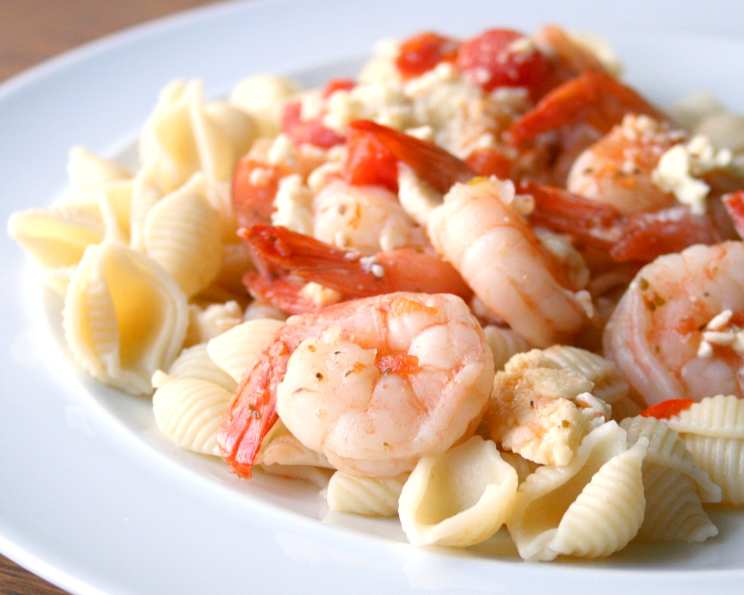
Greek Shrimp with Rigatoni: A Mediterranean Delight
The aroma alone transports me back to summers on the Greek islands. I can almost feel the warm sun on my skin, the gentle sea breeze carrying the scent of oregano and the happy chatter of family gathered around a table laden with food. This Greek Shrimp with Rigatoni recipe isn’t just a dish; it’s a cherished memory, a taste of sun-drenched holidays, and a celebration of simple, fresh ingredients brought together in perfect harmony. It’s a dish that screams summer, no matter what time of year it is.
Recipe Overview
- Prep Time: 20 minutes
- Cook Time: 20 minutes
- Total Time: 40 minutes
- Servings: 4
- Dietary Type: Mediterranean
Ingredients
- 5 tablespoons olive oil
- 1 teaspoon finely chopped garlic
- 2 cups peeled cubed tomatoes, preferably fresh, about one pound whole
- 1/2 cup white wine
- Salt & freshly ground black pepper to taste
- 1/4 cup finely chopped fresh basil
- 1 teaspoon dried oregano leaves
- 1 1/2 lbs fresh medium-sized shrimp, about 48, peeled, deveined, leaving the last tail segment on (optional)
- 1/8 teaspoon red pepper flakes
- 1/2 lb crumbled feta cheese
- 1/3 lb rigatoni pasta
Equipment Needed
- Large skillet
- Small baking dish
- Pasta pot
- Colander
Instructions
-
Begin by preheating your oven to 400 degrees Fahrenheit (200 degrees Celsius). This will be for the final baking of the shrimp dish.
-
In a large skillet, heat 1 tablespoon of olive oil over medium heat. Add the finely chopped garlic and cook briefly, stirring constantly, until fragrant (about 30 seconds). Be careful not to burn the garlic, as this will impart a bitter taste.
-
Add the peeled, cubed tomatoes to the skillet. If using fresh tomatoes, ensure they are ripe and flavorful for the best results.
-
Cook the tomatoes for about one minute, stirring occasionally, then add the white wine, salt, freshly ground black pepper, fresh basil, and dried oregano leaves. The white wine adds a depth of flavor to the sauce, but you can substitute chicken broth if preferred.
-
Cook the tomato sauce over medium heat for about 10 minutes, stirring occasionally, allowing the flavors to meld together and the sauce to slightly reduce. This step is crucial for developing the rich, savory base of the dish.
-
While the sauce is simmering, prepare the shrimp. Sprinkle the peeled and deveined shrimp with salt and pepper. Pat them dry with a paper towel before seasoning to help them brown nicely.
-
In a separate large skillet, heat the remaining 4 tablespoons of olive oil over medium-high heat. Once the oil is hot, add the seasoned shrimp.
-
Cook the shrimp quickly for about 1 minute per side, just until they turn pink and opaque. Be careful not to overcook the shrimp, as they will become rubbery. The goal is to sear them lightly, leaving them juicy and tender.
-
Sprinkle the cooked shrimp with the red pepper flakes for a touch of heat. Adjust the amount of red pepper flakes to your preference.
-
Spoon the cooked shrimp and any pan juices into a small baking dish. The baking dish should be large enough to hold the shrimp in a single layer.
-
Sprinkle the crumbled feta cheese evenly over the shrimp. The feta cheese adds a salty, tangy flavor that complements the sweetness of the shrimp and tomatoes.
-
Spoon the prepared tomato sauce generously over the shrimp and cheese. Ensure the shrimp are well-coated in the sauce.
-
Bake the dish in the preheated oven for 10 minutes, or until the feta cheese is melted and slightly browned, and the sauce is bubbly.
-
While the shrimp dish is baking, cook the rigatoni pasta according to the directions on the package. Be sure to salt the pasta water generously. Cook the pasta al dente, meaning it should be firm to the bite.
-
Drain the cooked rigatoni pasta thoroughly using a colander. Do not overcook the pasta, as it will become mushy.
-
Serve the cooked rigatoni immediately with the shrimp mixture spooned generously over it. Garnish with fresh basil, if desired.
Expert Tips & Tricks
- Shrimp Size Matters: Use medium-sized shrimp for the best balance of flavor and texture. Overly large shrimp can become tough, while smaller shrimp can overcook easily.
- Don’t Overcook the Shrimp: The key to perfectly cooked shrimp is to avoid overcooking. Cook them just until they turn pink and opaque.
- Fresh Herbs are Key: Fresh basil adds a bright, vibrant flavor to the dish. If fresh basil is not available, you can use dried basil, but use half the amount.
- Make-Ahead Tip: The tomato sauce can be made a day in advance and stored in the refrigerator. This will save you time on the day you plan to serve the dish.
- Spice it Up: If you like a little more heat, add a pinch of cayenne pepper to the tomato sauce.
- Deglaze the Shrimp Pan: After cooking the shrimp, deglaze the pan with a little extra white wine or chicken broth to scrape up any flavorful browned bits, and add this liquid to the tomato sauce for added depth.
Serving & Storage Suggestions
Serve the Greek Shrimp with Rigatoni immediately after baking for the best flavor and texture. Garnish with extra fresh basil and a drizzle of olive oil for a beautiful presentation. A side of crusty bread is perfect for soaking up the delicious sauce. Leftovers can be stored in an airtight container in the refrigerator for up to 2 days. To reheat, gently warm in a skillet over low heat, or microwave in short intervals until heated through. Be careful not to overcook the shrimp when reheating. We don’t recommend freezing the dish as the shrimp and feta cheese textures can suffer.
Nutritional Information
| Nutrient | Amount per Serving | % Daily Value |
|---|---|---|
| Calories | 450 kcal | 23% |
| Total Fat | 25g | 38% |
| Saturated Fat | 10g | 50% |
| Cholesterol | 200mg | 67% |
| Sodium | 800mg | 33% |
| Total Carbohydrate | 25g | 8% |
| Dietary Fiber | 2g | 8% |
| Sugars | 5g | – |
| Protein | 30g | 60% |
Nutritional information is an estimate and may vary based on specific ingredients and portion sizes.
Variations & Substitutions
- Gluten-Free: Use gluten-free pasta in place of the rigatoni for a gluten-free version.
- Vegetarian: Substitute the shrimp with cannellini beans or artichoke hearts for a vegetarian option.
- Spicy Version: Increase the amount of red pepper flakes or add a chopped fresh chili pepper to the tomato sauce for a spicier dish.
- Different Cheese: If feta is not your favourite, you can substitute goat cheese or ricotta salata.
- Pasta Shape: Feel free to use penne, ziti or any other tube-shaped pasta if you don’t have rigatoni.
FAQs (Frequently Asked Questions)
Q: Can I use frozen shrimp for this recipe?
A: Yes, you can use frozen shrimp, but be sure to thaw them completely and pat them dry before cooking. This will prevent them from steaming in the pan and ensure they brown properly.
Q: Can I make this dish ahead of time?
A: You can prepare the tomato sauce and cook the pasta ahead of time. Store them separately in the refrigerator and assemble the dish just before baking.
Q: How do I prevent the shrimp from overcooking?
A: Cook the shrimp quickly over medium-high heat, just until they turn pink and opaque. Avoid overcooking, as this will make them tough and rubbery.
Q: What kind of white wine should I use?
A: A dry white wine such as Sauvignon Blanc, Pinot Grigio, or Chardonnay works well in this recipe.
Q: Can I add other vegetables to this dish?
A: Yes, you can add other vegetables such as bell peppers, zucchini, or onions to the tomato sauce for added flavor and nutrition.
Final Thoughts
Greek Shrimp with Rigatoni is a simple yet elegant dish that is perfect for a weeknight meal or a special occasion. The combination of juicy shrimp, tangy feta cheese, and flavorful tomato sauce is sure to delight your taste buds. I encourage you to try this recipe and share your feedback. Serve it with a crisp Greek salad and a glass of chilled white wine for a truly memorable Mediterranean feast!