
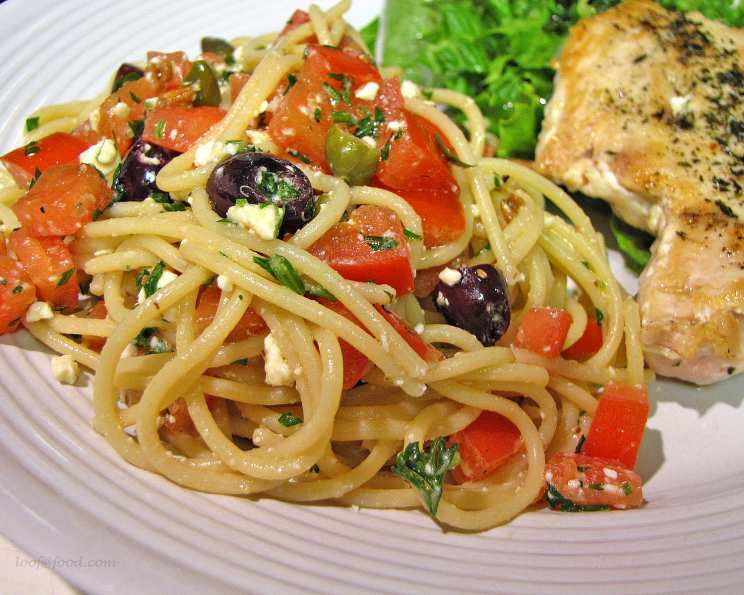
Mediterranean Sunshine on a Plate: Greek Spaghetti
The first time I tasted this vibrant pasta dish, I was a young cook on a tiny Greek island. The air was thick with the scent of sea salt and wild herbs. A local fisherman’s wife, Yia-Yia Eleni, tossed it together for our lunch – a symphony of bright tomatoes, salty olives, creamy feta, and briny capers, all clinging to perfectly cooked spaghetti. The simplicity was breathtaking. The taste? Pure sunshine. It wasn’t just a meal; it was a lesson in how the freshest ingredients, prepared with love, could transport you to another place entirely.
Recipe Overview
- Prep Time: 15 minutes
- Cook Time: 20 minutes
- Total Time: 35 minutes
- Servings: 4-6
- Dietary Type: Mediterranean
Ingredients
- 1 1⁄2 lbs tomatoes, seeded and cut into 1/2-inch pieces
- 1⁄2 cup kalamata olives or other black olives, pitted
- 1⁄4 lb feta cheese, crumbled
- 3 tablespoons capers, drained
- 3 tablespoons flat leaf parsley, chopped
- 1⁄4 teaspoon salt
- 1⁄4 teaspoon fresh ground black pepper
- 3⁄4 lb spaghetti
- 6 tablespoons olive oil
- 3 garlic cloves, minced
Equipment Needed
- Large Bowl
- Medium Frying Pan
- Large Pot
Instructions
-
Prepare the vibrant tomato base. In a large bowl, gently combine the tomatoes, olives, feta, capers, parsley, salt, and pepper. Handle with care to avoid crushing the tomatoes. Set aside; this allows the flavors to meld beautifully while the pasta cooks.
-
Cook the spaghetti according to the package directions. Be sure to salt the water generously – this seasons the pasta from the inside out. Aim for al dente – a slight resistance to the bite. This provides a delightful textural contrast to the soft tomatoes and feta.
-
While the spaghetti is cooking, prepare the fragrant garlic oil. In a medium frying pan, heat the olive oil over moderately low heat. This gentle heat is crucial to prevent the garlic from burning, which can impart a bitter flavor.
-
Add the minced garlic to the heated olive oil and cook, stirring constantly, for just 1 minute. The garlic should be fragrant and just beginning to turn golden, but not brown. Remove the pan from the heat to prevent further cooking.
-
Once the spaghetti is cooked al dente, immediately drain it well. Do not rinse the pasta unless you prefer a less starchy texture.
-
Transfer the drained, hot spaghetti to the large bowl containing the tomato mixture. Pour the fragrant garlic oil over the pasta and tomatoes.
-
Gently toss all the ingredients together until the spaghetti is evenly coated with the tomato mixture and garlic oil. Be careful not to overmix, as this can cause the feta to break down too much. The goal is to create a cohesive dish where each ingredient retains its distinct identity while complementing the others.
Expert Tips & Tricks
- Tomato Selection: Use the ripest, most flavorful tomatoes you can find. Heirloom varieties, if available, will add a burst of sweetness and complexity. If using canned tomatoes, opt for high-quality whole peeled tomatoes and crush them by hand.
- Feta Tip: For the best flavor and texture, use a block of feta cheese packed in brine, rather than pre-crumbled feta. The block feta tends to be creamier and more flavorful.
- Garlic Infusion: For a more subtle garlic flavor, infuse the olive oil with whole garlic cloves instead of minced. Remove the cloves before adding the pasta.
- Pasta Water: Reserve about 1/2 cup of the pasta water before draining. If the spaghetti seems dry after tossing, add a little of the pasta water to create a creamier sauce. The starch in the water helps emulsify the sauce.
- Make-Ahead Tip: The tomato mixture can be prepared a few hours ahead of time. Store it in the refrigerator and let it come to room temperature before tossing with the pasta. Do not add the pasta until just before serving.
Serving & Storage Suggestions
Serve the Greek Spaghetti immediately after tossing to ensure the pasta is warm and the tomatoes are fresh. Garnish with additional fresh parsley and a drizzle of olive oil for a visually appealing presentation. This dish is best enjoyed at room temperature or slightly warm.
Leftovers can be stored in an airtight container in the refrigerator for up to 2 days. Reheat gently in a skillet over low heat, adding a splash of olive oil or pasta water to prevent drying. This dish is not ideal for freezing, as the tomatoes and feta may become watery upon thawing.
Nutritional Information
| Nutrient | Amount per Serving | % Daily Value |
|---|---|---|
| Calories | 628 kcal | N/A |
| Calories from Fat | 268 kcal | N/A |
| Total Fat | 30g | 45% |
| Saturated Fat | 8g | 38% |
| Cholesterol | 25mg | 8% |
| Sodium | 794mg | 33% |
| Total Carbohydrate | 74g | 24% |
| Dietary Fiber | 6g | 22% |
| Sugars | 8g | N/A |
| Protein | 17g | N/A |
Variations & Substitutions
- Gluten-Free: Use your favorite gluten-free spaghetti.
- Vegan: Substitute the feta cheese with a vegan feta alternative or nutritional yeast for a cheesy flavor.
- Protein Boost: Add grilled chicken, shrimp, or chickpeas for extra protein.
- Spice it Up: Add a pinch of red pepper flakes to the tomato mixture for a touch of heat.
- Herbs: Experiment with different fresh herbs, such as oregano, basil, or mint.
- Vegetables: Add other Mediterranean vegetables, such as bell peppers, zucchini, or eggplant.
FAQs (Frequently Asked Questions)
Q: Can I use dried parsley instead of fresh?
A: Fresh parsley provides the best flavor, but if you only have dried, use about 1 tablespoon. Remember that dried herbs are more concentrated than fresh, so use less.
Q: What kind of olives are best for this dish?
A: Kalamata olives are traditionally used and offer a rich, briny flavor. However, any black olives will work.
Q: Can I make this dish ahead of time?
A: The tomato mixture can be made ahead of time and stored in the refrigerator. Add the cooked pasta just before serving.
Q: How can I prevent the garlic from burning?
A: Cook the garlic over low heat and stir constantly. Remove the pan from the heat if the garlic starts to brown too quickly.
Q: Is it necessary to seed the tomatoes?
A: Seeding the tomatoes helps to prevent the dish from becoming too watery. However, if you prefer a juicier sauce, you can skip this step.
Final Thoughts
This Greek Spaghetti is more than just a recipe; it’s an invitation to experience the vibrant flavors of the Mediterranean. It’s a celebration of simple ingredients, prepared with love and care. I encourage you to try this recipe and share it with your family and friends. Feel free to adjust the ingredients to your liking and make it your own. Pair it with a crisp white wine and a side of crusty bread for a truly unforgettable meal. Kali Orexi! (Bon appétit!)