
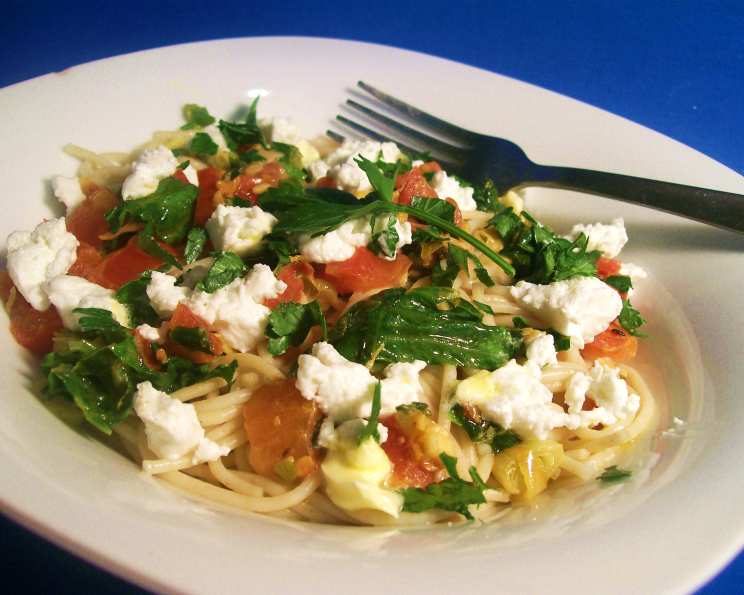
Greek Spaghetti: A Mediterranean Delight
The first time I tasted something even remotely like this Greek spaghetti was at a tiny taverna clinging to the cliffs of Santorini. The sun was setting, painting the Aegean Sea in hues of orange and pink, and the air was thick with the scent of oregano and sea salt. A simple plate of pasta, bursting with the bright flavors of the Mediterranean, felt like pure magic. It wasn’t precisely this recipe, but it captured the same essence – fresh, light, and utterly satisfying. That memory fuels my love for this dish, a reminder of sun-drenched islands and the joy of simple, perfect food.
Recipe Overview
- Prep Time: 15 minutes
- Cook Time: 15 minutes
- Total Time: 30 minutes
- Servings: 4
- Dietary Type: Mediterranean
Ingredients
- 1 lb cooked spaghetti, held warm
- 1/4 cup olive oil
- 4 garlic cloves, crushed
- 4 green onions, sliced thin
- 1 cup cherry tomatoes, split in half and seeded
- 1 handful coarsely chopped fresh spinach
- 1 cup crumbled feta cheese
- 1 tablespoon oregano
- Salt and pepper, to taste
Equipment Needed
- Large sauté pan
- Large pot for cooking spaghetti (if not already cooked)
Instructions
- If your spaghetti isn’t already cooked, bring a large pot of salted water to a boil. Add the spaghetti and cook according to package directions until al dente. Drain well and keep warm.
- While the spaghetti is cooking (or after it’s already cooked and held warm), heat a large sauté pan over medium heat.
- Add the olive oil to the hot pan. Once the oil is shimmering, add the crushed garlic. Be careful not to burn the garlic; it should just lightly sizzle and become fragrant. This usually takes about 30 seconds.
- Immediately add the sliced green onions to the pan. Sauté for about a minute, until they soften slightly.
- Add the split and seeded cherry tomatoes to the pan. Cook for approximately 3-5 minutes, allowing them to soften and release their juices. The tomatoes should become slightly jammy.
- Add the coarsely chopped fresh spinach to the pan. Cook just until the spinach wilts, which should only take a few seconds. Be careful not to overcook the spinach, as it will become mushy.
- Immediately pour the entire contents of the sauté pan over the warm, cooked spaghetti.
- Sprinkle the crumbled feta cheese and oregano over the spaghetti.
- Toss the spaghetti gently but thoroughly, ensuring that the sauce, feta, and oregano are evenly distributed. The feta will soften slightly from the heat, creating a creamy element.
- Season with salt and pepper to taste. Remember that feta cheese is already salty, so taste before adding additional salt.
Expert Tips & Tricks
- Don’t overcook the spaghetti: Al dente pasta is key to a great texture in this dish.
- Seed the tomatoes: Seeding the cherry tomatoes prevents the sauce from becoming too watery. It’s a small step that makes a big difference.
- Fresh is best: Use fresh oregano for the most vibrant flavor. If you only have dried oregano, use about 1 teaspoon instead of 1 tablespoon.
- Warm the feta: If you prefer a creamier texture, you can gently warm the feta cheese in the microwave for a few seconds before adding it to the spaghetti. This will help it melt more easily.
- Garlic Precautions: Watch the garlic extremely carefully and prevent it from scorching. Burnt garlic will make your entire dish bitter.
- Spice it up: For a little extra heat, add a pinch of red pepper flakes to the sauté pan along with the garlic.
Serving & Storage Suggestions
Serve the Greek spaghetti immediately while it’s warm. It’s delicious on its own or as a side dish to grilled chicken or fish. A simple Greek salad would also complement this dish perfectly.
Leftovers can be stored in an airtight container in the refrigerator for up to 3 days. To reheat, microwave gently or warm in a sauté pan over low heat. Add a splash of olive oil or water if the spaghetti seems dry. It can be eaten cold as well, but the texture of the pasta might not be as ideal. Freezing is not recommended, as the pasta will likely become mushy upon thawing.
Nutritional Information
| Nutrient | Amount per Serving | % Daily Value |
|---|---|---|
| Calories | 414.4 kcal | N/A |
| Calories from Fat | 204 g | 49% |
| Total Fat | 22.7 g | 34% |
| Saturated Fat | 7.7 g | 38% |
| Cholesterol | 33.4 mg | 11% |
| Sodium | 424.7 mg | 17% |
| Total Carbohydrate | 40.3 g | 13% |
| Dietary Fiber | 3 g | 12% |
| Sugars | 3.5 g | N/A |
| Protein | 12.7 g | 25% |
Note: Nutritional information is an estimate and may vary based on specific ingredients and preparation methods.
Variations & Substitutions
- Gluten-free: Use gluten-free spaghetti. Many brands offer excellent alternatives that taste just as good as traditional pasta.
- Vegan: Substitute the feta cheese with a vegan feta alternative or nutritional yeast for a cheesy flavor.
- Protein boost: Add grilled chicken, shrimp, or chickpeas for extra protein.
- Vegetable medley: Incorporate other vegetables like bell peppers, zucchini, or eggplant. Sauté them along with the green onions and tomatoes.
- Lemon zest: Add a teaspoon of lemon zest to the sauce for a brighter, more citrusy flavor.
- Herbs: Experiment with different herbs, such as basil, parsley, or dill.
FAQs (Frequently Asked Questions)
Q: Can I make this ahead of time?
A: While the spaghetti is best served fresh, you can prepare the sauce ahead of time and store it in the refrigerator for up to 2 days. Just toss it with freshly cooked spaghetti when you’re ready to serve.
Q: What kind of feta cheese should I use?
A: Greek feta cheese, made from sheep’s milk, is the most authentic choice. However, you can use any good-quality feta cheese that you enjoy.
Q: Can I use dried spinach instead of fresh?
A: Fresh spinach is preferred for its texture and flavor. If you only have dried spinach, rehydrate it before adding it to the pan.
Q: Is it necessary to seed the cherry tomatoes?
A: While not strictly necessary, seeding the cherry tomatoes helps prevent the sauce from becoming too watery, resulting in a better texture.
Q: Can I add other types of cheese?
A: While feta is traditional, you can experiment with other cheeses like parmesan or ricotta salata. However, these will change the flavor profile of the dish.
Final Thoughts
This Greek spaghetti is more than just a simple pasta dish; it’s a celebration of fresh, vibrant Mediterranean flavors. It’s easy to make, quick to prepare, and always a crowd-pleaser. Whether you’re looking for a light weeknight meal or a flavorful side dish to impress your guests, this recipe is sure to deliver. Don’t be afraid to experiment with the ingredients and make it your own. I hope you enjoy this taste of the Greek islands as much as I do! And if you try it, please come back and leave a comment – I’d love to hear how it turned out. Pair it with a crisp glass of white wine and transport yourself to the sun-kissed shores of Greece!