
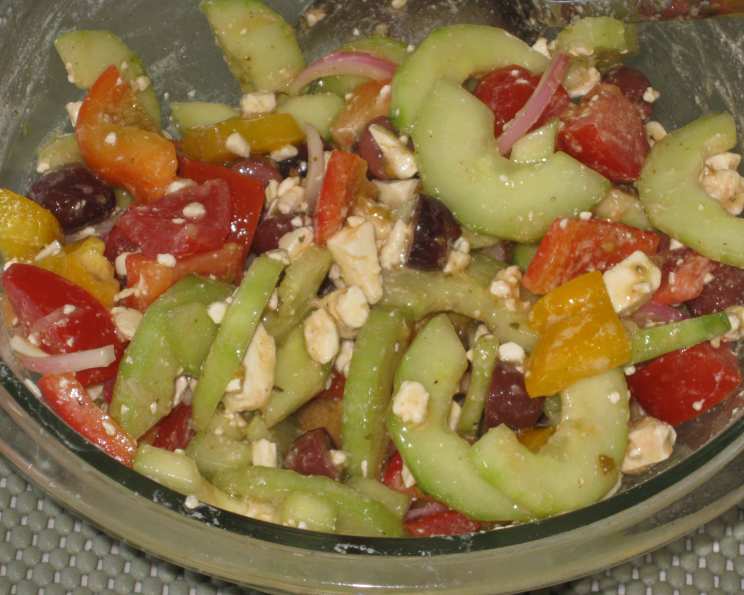
A Taste of the Islands: Authentic Greek Tomato Salad with Feta and Olives
There’s a little taverna, tucked away on a hillside overlooking the Aegean Sea on the island of Crete, where I first truly understood the soul of Greek salad. It wasn’t just the vibrant colours of the ripe tomatoes, the salty tang of the feta, or the briny bite of the olives. It was the way the sun-drenched ingredients, dressed simply with olive oil and oregano, sang of the land itself. Every bite was a celebration of freshness and simplicity, a reminder that the most beautiful dishes are often the ones that require the fewest embellishments. It’s a taste I’ve been chasing ever since, and this recipe comes remarkably close.
Recipe Overview
- Prep Time: 15 minutes
- Cook Time: 0 minutes
- Total Time: 15 minutes
- Servings: 6
- Yield: 6 cups
- Dietary Type: Vegetarian (easily adaptable to Vegan by omitting feta)
Ingredients
- 2 firm cucumbers
- 4 ripe tomatoes, cored and cut into bite-sized slices
- 1 large green pepper, seeded and cut into bite-sized pieces (you can use 1/2 green, 1/2 red pepper)
- 1 small red onion, peeled and thinly sliced
- 4-6 ounces feta cheese, cut into cubes
- 1/2 cup pitted kalamata olives, sliced
- 1 tablespoon chopped fresh oregano leaves (or 1/2 tsp dried)
- 1/4 cup red wine vinegar
- Splash balsamic vinegar
- 2/3 cup extra virgin olive oil
- Sea salt, to taste
- Ground pepper, to taste
Equipment Needed
- Large Bowl
- Small Bowl
- Small Spoon
- Whisk
- Knife
- Cutting Board
Instructions
- First, prepare the cucumbers. Peel them and cut them in half lengthwise. Using a small spoon, carefully scrape out the seeds and discard them. Then, cut the cucumber halves into bite-sized chunks. Removing the seeds prevents the salad from becoming too watery.
- In a large bowl, combine the cucumber chunks with the ripe tomatoes, green pepper (or a mix of green and red), thinly sliced red onion, feta cheese cubes, and sliced kalamata olives. The bowl should be large enough to allow for easy tossing without spilling.
- In a separate, small bowl, prepare the dressing. Combine the fresh oregano leaves (or dried oregano) with the red wine vinegar and a splash of balsamic vinegar. This little touch of balsamic adds a depth of flavour that complements the other ingredients beautifully.
- Using a whisk, slowly incorporate the extra virgin olive oil into the vinegar mixture. Whisk constantly until the dressing is emulsified and slightly thickened. This ensures the dressing coats the salad evenly.
- Drizzle about half of the prepared dressing over the salad in the large bowl.
- Season the salad with sea salt and ground pepper to taste. Be mindful of the saltiness of the feta cheese and olives – you may not need much additional salt.
- Gently toss all the ingredients together to ensure they are evenly coated with the dressing.
- Serve the salad immediately, with the remaining dressing on the side for those who prefer a more generous coating. You can also serve the salad over a bed of fresh lettuce greens for added volume and presentation, if desired.
Expert Tips & Tricks
- Quality Ingredients are Key: This salad shines when you use the best possible ingredients. Seek out ripe, in-season tomatoes, good quality feta, and flavorful extra virgin olive oil.
- Chill the Vegetables: For an extra refreshing salad, chill the cucumbers, tomatoes, and green pepper in the refrigerator for about 30 minutes before preparing the salad.
- Don’t Overdress: Start with half the dressing and add more as needed. Too much dressing can make the salad soggy.
- Make Ahead (Partially): You can chop the vegetables ahead of time and store them separately in the refrigerator. Prepare the dressing in advance as well. Combine everything just before serving to prevent the salad from becoming soggy.
- Spice It Up: For a little heat, add a pinch of red pepper flakes to the dressing.
- Herbs Matter: Fresh oregano is ideal, but if you only have dried, rub it between your fingers before adding it to the dressing to release its aroma.
- Feta Variation: If you prefer crumbled feta over cubed, that works perfectly well.
Serving & Storage Suggestions
This Greek Tomato Salad is best served fresh and immediately after preparation. The vibrant flavors are at their peak, and the vegetables are crisp.
Serving: Serve as a refreshing side dish to grilled meats, fish, or poultry. It’s also a wonderful light lunch on its own, especially on a warm day. Garnish with a few extra oregano sprigs for a visually appealing presentation. A crusty loaf of bread is perfect for soaking up the delicious dressing.
Storage: Leftover salad is best stored in an airtight container in the refrigerator. However, the tomatoes and cucumbers will release moisture over time, making the salad slightly watery. It’s best consumed within 1-2 days. The dressing can be stored separately in the refrigerator for up to 3 days. This salad is not suitable for freezing.
Nutritional Information
| Nutrient | Amount per Serving | % Daily Value |
|---|---|---|
| Calories | 478.1 kcal | N/A |
| Calories from Fat | 402 g | 84% |
| Total Fat | 44.7 g | 68% |
| Saturated Fat | 9.8 g | 49% |
| Cholesterol | 26.8 mg | 8% |
| Sodium | 493.5 mg | 20% |
| Total Carbohydrate | 16.4 g | 5% |
| Dietary Fiber | 3.8 g | 15% |
| Sugars | 8.7 g | N/A |
| Protein | 7 g | 14% |
Note: Nutritional information is an estimate and may vary based on specific ingredients and portion sizes.
Variations & Substitutions
- Vegan Version: Simply omit the feta cheese for a delicious vegan salad. You can add some toasted walnuts or sunflower seeds for a bit of crunch and added protein.
- Add Some Protein: Grilled chicken or chickpeas can be added to make this a more substantial meal.
- Different Olives: While kalamata olives are traditional, you can experiment with other varieties such as green olives or Niçoise olives.
- Cucumber Variety: English cucumbers have thinner skins and fewer seeds, so they don’t necessarily need to be peeled or seeded.
- Herb Variations: Try adding fresh mint or dill along with the oregano for a different flavor profile.
- Cheese Variations: Use halloumi cheese instead of feta. Halloumi’s salty flavor works well with the other ingredients. You could also use ricotta salata.
- Lemon Juice: A squeeze of lemon juice in the dressing will brighten the salad even more.
FAQs (Frequently Asked Questions)
Q: Can I make this salad ahead of time?
A: Yes, you can chop the vegetables and prepare the dressing in advance. Store them separately and combine just before serving to prevent the salad from becoming soggy.
Q: How long will this salad last in the refrigerator?
A: It’s best consumed within 1-2 days, as the tomatoes and cucumbers will release moisture over time.
Q: Can I use dried oregano instead of fresh?
A: Yes, but use half the amount (1/2 tsp) as dried herbs are more concentrated in flavor.
Q: What if I don’t have red wine vinegar?
A: You can substitute white wine vinegar or apple cider vinegar.
Q: Is it necessary to peel the cucumbers?
A: It’s a matter of personal preference. If you are using cucumbers with thick skins, peeling is recommended.
Final Thoughts
This Greek Tomato Salad with Feta and Olives is more than just a recipe; it’s a celebration of simple, fresh ingredients and vibrant flavors. I encourage you to give it a try, experiment with your favorite variations, and share it with friends and family. Let the taste of the Aegean transport you to sunny shores and remind you of the beauty in simplicity. This salad is a guaranteed crowd-pleaser, perfect for any occasion! Kali Orexi! (Bon appétit!)