
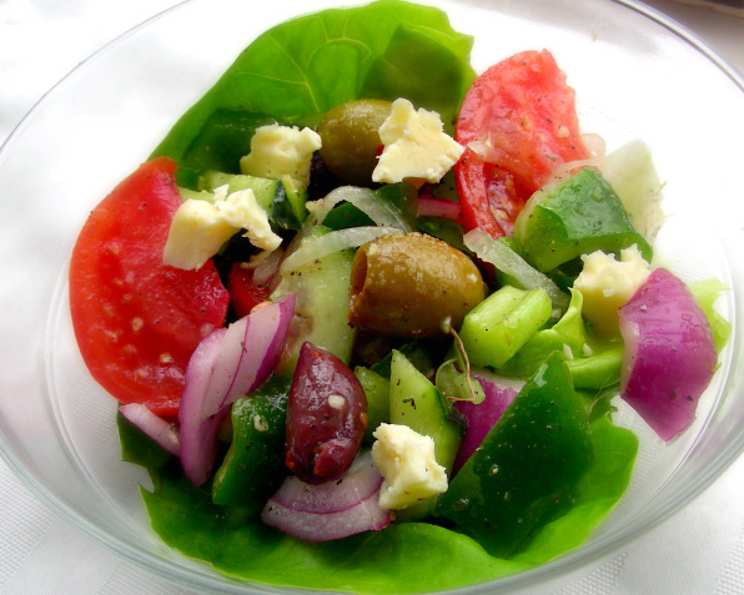
Greek Village Salad (Nick and Marina Makris Horiatiki Salad)
The aroma of a Greek Village Salad instantly transports me back to a sun-drenched taverna in Santorini. The air was thick with the scent of olive oil and oregano, the sea breeze whispering through the open windows. We were a table full of boisterous family members, and the Horiatiki salad, piled high in a rustic bowl, was the centerpiece of our feast – a vibrant testament to the simple, perfect flavors of the Mediterranean. It’s more than just a salad; it’s a celebration of fresh, unadulterated ingredients, a taste of sunshine on a plate.
Recipe Overview
- Prep Time: 15 minutes
- Cook Time: 0 minutes
- Total Time: 15 minutes
- Servings: 8-10
- Yield: 1 large salad
- Dietary Type: Gluten-Free
Ingredients
- 4 large tomatoes (not over ripe, cut into small wedges)
- 1 English cucumber (cut in 1/2 inch cubes or smaller)
- 1 medium red onion (cut in thin wedges)
- 1 large green pepper (sliced)
- 1⁄2 lb feta cheese (cubed or crumbled)
- 12 black Greek olives (or green)
- 4 ounces extra virgin olive oil
- Salt (to taste)
- 1⁄4 cup Italian parsley (optional)
Equipment Needed
- Large mixing bowl
Instructions
-
Begin by preparing the vegetables. Cut the tomatoes into small wedges. The key here is to use ripe, but not overly soft, tomatoes. Their sweetness and acidity are the heart of the salad.
-
Next, cube the English cucumber into approximately 1/2-inch cubes or smaller. English cucumbers have a thinner skin and fewer seeds, making them ideal for this salad, but regular cucumbers can be used if peeled and seeded.
-
Cut the medium red onion into thin wedges. Soaking the red onion in ice water for 10 minutes can mellow its bite if you prefer a milder flavor.
-
Slice the large green pepper. Remove the core and seeds before slicing into thin strips.
-
Place all the prepared vegetables – the tomatoes, cucumber, red onion, and green pepper – into a large mixing bowl.
-
Add the feta cheese, either cubed or crumbled, to the bowl. The quality of the feta is crucial; look for Greek feta packed in brine for the most authentic flavor.
-
Add the black Greek olives (or green olives, if preferred) to the salad. Kalamata olives are the traditional choice and offer a rich, briny flavor.
-
Drizzle 4 ounces of extra virgin olive oil generously over the salad. Use a good quality extra virgin olive oil, as its flavor will significantly impact the overall taste of the dish.
-
Season with salt to taste. Remember that feta cheese and olives are already salty, so add salt gradually.
-
At this point, you can gently toss the salad to combine all the ingredients.
-
Finally, if desired, sprinkle with Italian parsley and some of the crumbled feta cheese for garnish. Fresh oregano is also a traditional and flavorful addition.
Expert Tips & Tricks
-
Tomato Selection: Choose firm, ripe tomatoes. Overripe tomatoes will make the salad soggy. Heirloom varieties, when in season, offer exceptional flavor.
-
Olive Oil Quality: Don’t skimp on the olive oil. A high-quality extra virgin olive oil makes a huge difference in the final taste.
-
Onion Mellowing: If you find red onions too pungent, soak the sliced onions in ice water for about 10 minutes before adding them to the salad. This helps to reduce their sharpness.
-
Feta Considerations: Authentic Greek feta, stored in brine, is the best choice. Avoid pre-crumbled feta, as it often contains cellulose to prevent clumping and can have a drier texture.
-
Avoid Refrigeration (If Possible): Greek salad is best served at room temperature. Refrigeration can dull the flavors and soften the vegetables.
-
Dress it Lightly: The beauty of Horiatiki lies in the simplicity of its ingredients. While a Greek dressing can be offered, allowing the flavors of the vegetables, feta, and olive oil to shine through is often preferred.
Serving & Storage Suggestions
Serve the Greek Village Salad immediately after preparation for the best flavor and texture. This salad is a fantastic side dish for grilled meats, fish, or as a light lunch on its own. To serve, arrange the salad in a rustic bowl and garnish with extra feta and fresh parsley.
If you have leftovers, store them in an airtight container in the refrigerator. However, be aware that the vegetables will release moisture, and the salad may become slightly soggy. It is best consumed within 1-2 days. Draining off any excess liquid before serving helps to maintain the salad’s integrity. I do not recommend freezing this salad.
Nutritional Information
| Nutrient | Amount per Serving | % Daily Value |
|---|---|---|
| Calories | 239.7 kcal | N/A |
| Calories from Fat | 190 g | 80% |
| Total Fat | 21.2 g | 32% |
| Saturated Fat | 6.4 g | 31% |
| Cholesterol | 25.4 mg | 8% |
| Sodium | 373.2 mg | 15% |
| Total Carbohydrate | 8.7 g | 2% |
| Dietary Fiber | 2.1 g | 8% |
| Sugars | 5.3 g | N/A |
| Protein | 5.5 g | 10% |
Note: Nutritional information is an estimate and may vary based on specific ingredients and serving sizes.
Variations & Substitutions
-
Additions: While the classic recipe is perfect as is, you can add other vegetables like bell peppers (different colors), capers, or even artichoke hearts.
-
Vinegar: Some people like to add a splash of red wine vinegar or lemon juice for extra acidity. If you do, add it sparingly, as the tomatoes already provide acidity.
-
Herbs: Experiment with different fresh herbs like oregano, mint, or dill for a unique flavor twist.
-
Cheese: If you cannot find Greek feta, you can substitute another crumbly, salty cheese, such as Bulgarian feta or even a high-quality goat cheese.
-
Vegan Option: For a vegan version, omit the feta cheese entirely or substitute with a vegan feta alternative.
FAQs (Frequently Asked Questions)
Q: Can I make this salad ahead of time?
A: While it’s best served immediately, you can prep the vegetables ahead of time. Store them separately and combine just before serving to prevent the salad from becoming soggy.
Q: What kind of olives are best for this salad?
A: Kalamata olives are the traditional choice, but any good-quality Greek olive will work well.
Q: Can I use regular cucumbers instead of English cucumbers?
A: Yes, but you may want to peel and seed the regular cucumbers, as their skin can be thicker and their seeds can be bitter.
Q: Is it necessary to add salt?
A: Yes, but add it carefully. The feta and olives are already salty, so start with a small amount and adjust to taste.
Q: What’s the best way to store leftovers?
A: Store leftovers in an airtight container in the refrigerator. The salad will release moisture, so drain off any excess liquid before serving. Consume within 1-2 days.
Final Thoughts
This Greek Village Salad is more than just a recipe; it’s an invitation to savor the simple pleasures of fresh, vibrant ingredients. The combination of juicy tomatoes, crisp cucumbers, tangy red onion, salty feta, and rich olive oil is a symphony of flavors that will transport you to the sun-drenched shores of Greece. I encourage you to try this recipe, experiment with variations, and most importantly, share it with friends and family. Serve it alongside a grilled souvlaki or a glass of chilled retsina for the complete Mediterranean experience. Kali Orexi!