
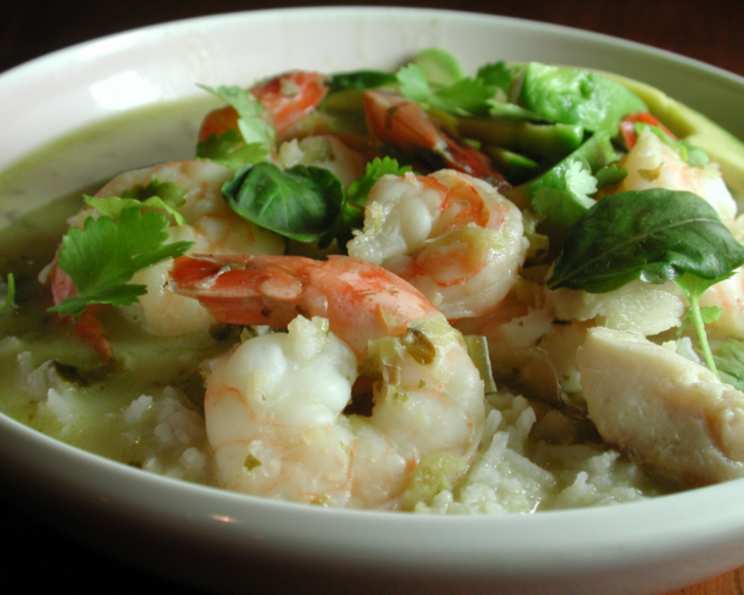
Green Curry with Shrimp and Fish (Kaeng Khiao)
I remember the first time I tasted green curry. It was at a tiny, family-run restaurant tucked away in a bustling Bangkok market. The aroma alone, a fragrant blend of lemongrass, chilies, and coconut milk, was intoxicating. Then came the first bite – an explosion of flavors that danced across my palate: the heat of the chilies, the sweetness of the coconut, the savory depth of the fish sauce, and the bright freshness of the herbs. I was hooked. Now, years later, I’ve developed my own version of this Thai classic, and I’m thrilled to share it with you.
Recipe Overview
- Prep Time: 20 minutes
- Cook Time: 15 minutes
- Total Time: 35 minutes
- Servings: 4
- Dietary Type: Dairy-Free
Ingredients
- 2 tablespoons lemongrass, grated (or dried, ground)
- 1 tablespoon galangal (fresh, dried ground or regular ginger)
- 1 teaspoon cumin
- 1/2 cup fresh cilantro
- 7-8 garlic cloves
- 1 medium green bell pepper
- 5 jalapeno peppers, seeded (more or less, to taste)
- 1 teaspoon shrimp paste
- 1 teaspoon lime zest, grated
- 1 (14 ounce) can coconut milk
- 1 lb white fish fillet, firm, cut in 1/2-inch strips
- 3/4 lb shrimp, shelled and deveined
- 1/4 cup fish sauce
- 2 tablespoons sugar
- 1/2 cup coconut cream
- 3 tablespoons lime juice
- Basil leaves (garnish)
- 1-2 avocado (garnish)
Note: For the white fish, Basa catfish works well, but any firm white fish will do. If you can’t find galangal, regular ginger is a decent substitute.
Equipment Needed
- Blender or Food Processor
- Large Saucepan
- Cutting board
- Knife
Instructions
- Prepare the Green Curry Paste: Combine the lemongrass, galangal (or ginger), cumin, fresh cilantro, garlic cloves, green bell pepper, jalapeno peppers, shrimp paste, and lime zest in a blender or food processor.
- Process the Paste: Blend all ingredients until a smooth paste forms. If the mixture is too dry and not processing smoothly, add a couple of tablespoons of water to help it blend.
- Start the Curry: Pour the can of coconut milk and the green curry paste into a large saucepan.
- Bring to a Boil: Heat the mixture over medium-high heat until it comes to a boil, stirring occasionally to prevent sticking.
- Add the Fish and Shrimp: Gently add the white fish pieces, shrimp, fish sauce, and sugar to the saucepan.
- Simmer: Reduce the heat to medium-low and let the curry simmer gently for about 5 minutes, or until the fish is cooked through and the shrimp turns pink. Avoid overcooking the seafood to keep it tender.
- Stir in the Cream and Lime: Stir in the coconut cream and lime juice. Combine well.
- Taste and Adjust: Taste the curry and adjust the seasonings to your liking. Add more fish sauce for saltiness or lime juice for acidity, if needed. Avoid adding salt directly, as the fish sauce provides the necessary saltiness and depth of flavor.
- Prepare the Avocado: While the curry simmers, peel, seed, and slice the avocado(s) for garnish.
- Serve: Serve the green curry with shrimp and fish hot over white jasmine rice. Garnish with basil leaves and avocado slices, and serve with lime wedges on the side.
Expert Tips & Tricks
- Make-Ahead Paste: The green curry paste can be made a day or two in advance and stored in an airtight container in the refrigerator. This saves time and allows the flavors to meld.
- Chili Heat Control: Adjust the number of jalapeno peppers based on your spice preference. For a milder curry, remove the seeds and membranes from the peppers. For a spicier version, leave the seeds in or add more peppers.
- Coconut Milk Quality: Use full-fat coconut milk for the richest flavor and creamiest texture. The fat content is essential for the authentic taste and consistency of the curry.
- Seafood Freshness: Use the freshest seafood available for the best flavor and texture. If using frozen seafood, thaw it completely before adding it to the curry.
- Vegetable Variations: Feel free to add other vegetables to the curry, such as bamboo shoots, Thai eggplant, or green beans. Add them along with the fish and shrimp for optimal cooking time.
Serving & Storage Suggestions
Serve the green curry hot, ladled over a bed of fluffy jasmine rice. Garnish generously with fresh basil leaves and slices of creamy avocado. A squeeze of fresh lime juice adds a final touch of brightness.
Leftover green curry can be stored in an airtight container in the refrigerator for up to 3 days. The flavors may even improve slightly overnight. To reheat, gently warm the curry in a saucepan over low heat, stirring occasionally. Avoid boiling, as this can toughen the seafood.
For longer storage, the curry can be frozen for up to 2 months. Thaw it completely in the refrigerator before reheating. Note that the texture of the coconut milk may change slightly after freezing, but the flavor will remain delicious.
Nutritional Information
| Nutrient | Amount per Serving | % Daily Value |
|---|---|---|
| Calories | 599.1 kcal | N/A |
| Calories from Fat | 320 g | 53% |
| Total Fat | 35.6 g | 54% |
| Saturated Fat | 23.8 g | 118% |
| Cholesterol | 205.8 mg | 68% |
| Sodium | 1382.2 mg | 57% |
| Total Carbohydrate | 29.6 g | 9% |
| Dietary Fiber | 7.7 g | 30% |
| Sugars | 17.4 g | N/A |
| Protein | 44.7 g | 89% |
Note: Nutritional information is an estimate and can vary based on specific ingredients and portion sizes.
Variations & Substitutions
- Vegan Green Curry: Replace the fish and shrimp with tofu or tempeh for a delicious vegan version. Use soy sauce instead of fish sauce and omit the shrimp paste, or substitute with a vegan shrimp paste alternative.
- Chicken Green Curry: Substitute the fish and shrimp with boneless, skinless chicken thighs cut into bite-sized pieces. Adjust the cooking time accordingly.
- Vegetarian Green Curry: Add more vegetables like broccoli, carrots, and bell peppers to create a hearty vegetarian curry.
- Spice Level Adjustment: Control the heat by adjusting the number of jalapeno peppers. For a milder curry, use fewer peppers or remove the seeds and membranes. For a spicier curry, add more peppers or use hotter varieties like Thai chilies.
- Coconut Milk Alternative: While full-fat coconut milk is recommended for the best flavor and texture, you can use light coconut milk for a lower-fat version.
FAQs (Frequently Asked Questions)
Q: Can I use regular ginger if I can’t find galangal?
A: Yes, regular ginger is a good substitute for galangal. While the flavor profile is slightly different, it will still provide a warm, aromatic base for the curry.
Q: How do I make the curry less spicy?
A: Reduce the number of jalapeno peppers you use in the curry paste. Removing the seeds and membranes from the peppers will also decrease the heat.
Q: Can I freeze this curry?
A: Yes, you can freeze the curry for up to 2 months. Thaw it completely in the refrigerator before reheating. The texture of the coconut milk may change slightly, but the flavor will remain delicious.
Q: What kind of rice is best to serve with green curry?
A: White jasmine rice is the traditional accompaniment to green curry. Its delicate aroma and slightly sticky texture complement the rich, flavorful curry perfectly.
Q: Can I add vegetables to this curry?
A: Absolutely! Feel free to add your favorite vegetables, such as bamboo shoots, Thai eggplant, green beans, broccoli, or bell peppers. Add them along with the fish and shrimp for optimal cooking time.
Final Thoughts
This Green Curry with Shrimp and Fish is a vibrant and flavorful dish that’s sure to impress. Don’t be intimidated by the ingredient list – once you have everything prepped, it comes together quickly. I encourage you to try it and make it your own, adjusting the spice level and adding your favorite vegetables. Share your feedback, and perhaps pair it with a crisp, cold Singha beer for an authentic Thai dining experience. Enjoy!