
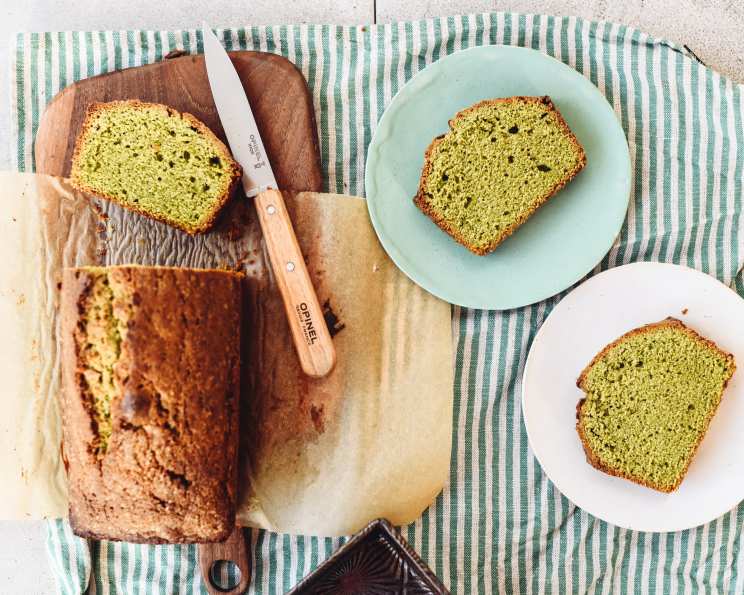
Green Tea Pound Cake: A Slice of Japanese Comfort
The first time I tasted green tea pound cake, I was visiting a small tea house nestled in the Kyoto hills. The air was thick with the scent of matcha and damp moss, and this unassuming cake, served with a delicate scoop of red bean paste, completely stole the show. Its subtle, earthy sweetness was unlike anything I had ever experienced in a pound cake. It was a revelation, a testament to the quiet elegance of Japanese flavors, and I’ve been chasing that perfect balance ever since.
Recipe Overview
- Prep Time: 15 minutes
- Cook Time: 30-40 minutes
- Total Time: 45-55 minutes
- Servings: 6
- Yield: 1 Loaf
- Dietary Type: Vegetarian
Ingredients
- 2 large eggs
- 1 cup flour
- 2/3 cup sugar
- 1/2 cup butter, softened
- 1 tablespoon green tea powder (matcha)
- 1/2 teaspoon baking powder
Equipment Needed
- Mixing bowl
- Electric mixer (optional, but recommended)
- Sifter
- Loaf pan
- Parchment paper (optional, for lining the pan)
Instructions
- Begin by creaming the softened butter in a mixing bowl until it is light and fluffy. An electric mixer will make this process much easier and quicker, but you can certainly use a whisk or sturdy spoon if you prefer. The goal is to incorporate air into the butter, creating a tender crumb in the finished cake.
- Gradually add the sugar to the creamed butter, mixing well until the mixture is smooth and fully combined. Continue to beat the mixture for a minute or two to ensure the sugar is dissolving into the butter.
- In a separate bowl, beat the eggs lightly with a fork or whisk. This helps to break up the yolks and whites, allowing them to incorporate more evenly into the batter.
- Gradually add the beaten eggs to the butter and sugar mixture, stirring well after each addition. Be careful not to add the eggs too quickly, as this can cause the mixture to curdle. If the mixture starts to look curdled, add a tablespoon of the flour to help bring it back together.
- In a separate bowl, sift together the flour, baking powder, and green tea powder (matcha). Sifting is an important step, as it helps to remove any lumps in the flour and baking powder, and ensures that the green tea powder is evenly distributed throughout the batter.
- Gradually add the sifted flour mixture to the egg mixture, mixing until just combined. Be careful not to overmix the batter, as this can develop the gluten in the flour and result in a tough cake.
- Pour the batter into a buttered loaf pan. You can also line the pan with parchment paper for easy removal of the cake after baking.
- Bake in a preheated 340 degrees F (170 degrees C) oven for about 30-40 minutes, or until a toothpick inserted into the center of the cake comes out clean.
- Let the cake cool in the pan for 10 minutes before transferring it to a wire rack to cool completely.
Expert Tips & Tricks
- For a more intense green tea flavor, you can increase the amount of matcha powder to 1 1/2 tablespoons. Be mindful that matcha can sometimes have a slightly bitter taste, so adjust according to your preference.
- To prevent the cake from browning too quickly, you can tent it loosely with foil during the last 10-15 minutes of baking.
- If you find that your butter is not softening quickly enough, you can cut it into small pieces and let it sit at room temperature for a shorter amount of time. You can also microwave it in short bursts (5-10 seconds at a time) until it is softened, but be careful not to melt it.
- For an even more tender cake, try using cake flour instead of all-purpose flour. Cake flour has a lower protein content, which results in a softer crumb.
Serving & Storage Suggestions
This Green Tea Pound Cake is delicious served on its own with a cup of green tea. You can also dust it with powdered sugar or drizzle it with a simple glaze made from powdered sugar and milk. For a more elaborate presentation, serve it with a scoop of vanilla ice cream or a dollop of whipped cream and fresh berries.
The cake can be stored at room temperature in an airtight container for up to 3 days. It can also be stored in the refrigerator for up to a week. For longer storage, you can freeze the cake for up to 2 months. Wrap the cake tightly in plastic wrap and then place it in a freezer-safe bag or container. To thaw, simply leave the cake at room temperature for several hours or overnight. You can also gently reheat slices in the microwave.
Nutritional Information
| Nutrient | Amount per Serving | % Daily Value |
|---|---|---|
| Calories | 482.3 kcal | N/A |
| Calories from Fat | 231g | 48% |
| Total Fat | 25.7 g | 39% |
| Saturated Fat | 15.4 g | 77% |
| Cholesterol | 154 mg | 51% |
| Sodium | 284.4 mg | 11% |
| Total Carbohydrate | 57.5 g | 19% |
| Dietary Fiber | 0.8 g | 3% |
| Sugars | 33.5 g | 133% |
| Protein | 6.6 g | 13% |
Variations & Substitutions
- Gluten-Free: Substitute the all-purpose flour with a gluten-free flour blend. Be sure to use a blend that is designed for baking and contains xanthan gum to help bind the ingredients.
- Dairy-Free: Substitute the butter with a dairy-free butter alternative, such as vegan butter sticks or coconut oil. Be sure to use a solid fat, as liquid oils may not provide the same texture and structure to the cake.
- Citrus Twist: Add the zest of one lemon or orange to the batter for a bright, citrusy flavor.
- Chocolate Chip: Fold in 1/2 cup of white chocolate chips or dark chocolate chips to the batter for a decadent treat.
- Red Bean Paste Swirl: Gently swirl in sweetened red bean paste (anko) into the batter before baking for an authentic Japanese touch.
FAQs (Frequently Asked Questions)
Q: Can I use a different type of sweetener in this recipe?
A: Yes, you can substitute the granulated sugar with other sweeteners such as coconut sugar, maple syrup, or honey. However, keep in mind that this may alter the taste and texture of the cake. If using a liquid sweetener, you may need to reduce the amount of liquid in the recipe slightly.
Q: My cake is browning too quickly. What should I do?
A: If your cake is browning too quickly, you can tent it loosely with foil during the last 10-15 minutes of baking. This will help to prevent the top of the cake from burning.
Q: How do I know when the cake is done?
A: The cake is done when a toothpick inserted into the center comes out clean or with a few moist crumbs attached. You can also check for doneness by gently pressing the top of the cake. If it springs back lightly, it is likely done.
Q: Can I make this cake ahead of time?
A: Yes, this cake can be made ahead of time. Simply wrap it tightly in plastic wrap and store it at room temperature for up to 3 days or in the refrigerator for up to a week.
Q: Is it important to sift the flour?
A: Sifting the flour is important because it helps to remove any lumps and ensures that the green tea powder and baking powder are evenly distributed throughout the batter. This results in a smoother batter and a more evenly textured cake.
Final Thoughts
This Green Tea Pound Cake is a delightful treat that is perfect for any occasion. Its subtle green tea flavor and tender crumb make it a truly special cake. I encourage you to try this recipe and experience the quiet elegance of Japanese flavors in your own kitchen. Don’t be afraid to experiment with different variations and substitutions to create your own signature version. Perhaps pair it with a cup of hojicha tea or a scoop of black sesame ice cream for an even more authentic experience. Enjoy, and let me know how it turns out!