
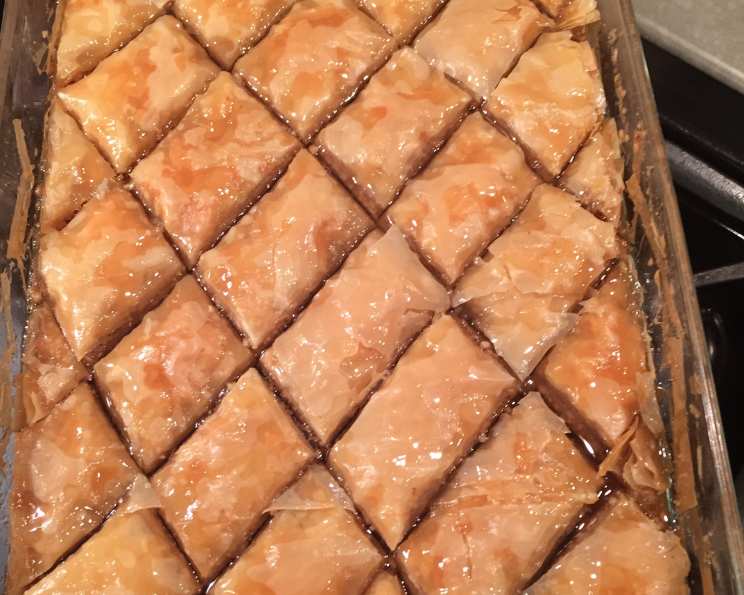
Gretchen’s Baklava: A Symphony of Sweetness and Crunch
The memory is as vivid as the taste: sitting at my grandmother’s sun-drenched kitchen table, the air thick with the scent of cinnamon and honey. She’d just pulled a tray of baklava from the oven, the golden layers glistening under a sticky, sweet glaze. It wasn’t just a dessert; it was an experience. The delicate shatter of phyllo, the satisfying crunch of walnuts, the syrupy sweetness that lingered on your tongue – a perfect harmony of textures and flavors that spoke of love, tradition, and countless hours spent in the kitchen. This recipe, inspired by those cherished memories, is my attempt to recreate that magic, that little piece of edible heaven.
Recipe Overview
- Prep Time: 45 minutes
- Cook Time: 1 hour
- Total Time: 2 hours 30 minutes (plus 24 hours resting)
- Servings: 35-45
- Yield: 1 (15.5″ x 10.5″ x 1″) jelly roll pan
- Dietary Type: Not specified, contains gluten, nuts, and dairy
Ingredients
- 1 lb walnuts, finely chopped
- 1/2 cup sugar
- 2 teaspoons cinnamon
- 1 1/2 cups butter, melted (3 sticks)
- 16 ounces phyllo dough, thawed
- 1 cup sugar
- 1 cup water
- 1 tablespoon lemon juice
- 1 cup honey (net weight 12 oz.)
- 1/2 teaspoon vanilla
Equipment Needed
- Jelly Roll Pan (15.5″ x 10.5″ x 1″)
- Pastry Brush
- Saucepan
Instructions
- Prepare the Nut Mixture: In a bowl, thoroughly combine the finely chopped walnuts, 1/2 cup sugar, and 2 teaspoons of cinnamon. Set this mixture aside. This fragrant blend will form the heart of your baklava, so ensure the walnuts are finely chopped for optimal texture and flavor distribution.
- Prepare the Baking Pan: Using a pastry brush, lightly brush the bottom and sides of a Jelly Roll Pan (15.5″ x 10.5″ x 1″) with melted butter. This will prevent sticking and ensure a beautifully golden crust.
- Layer the First Phyllo Sheets: Open the thawed phyllo dough. Note that phyllo dough must be fully thawed in the refrigerator for around 6 hours, or else the individual sheets will stick together. Layer 6 whole sheets (or 12 half sheets) in the prepared pan, buttering each layer generously with melted butter as you go. Allow the edges to extend over the sides of the pan; these will be trimmed later.
- Spread the First Walnut Layer: Evenly spread 1 cup of the walnut mixture over the buttered phyllo layers.
- Prepare the Remaining Phyllo Sheets: Cut the remaining phyllo dough in half.
- Layer the Second Phyllo Sheets: Layer 8 half sheets of phyllo dough, buttering each layer with melted butter. Stagger the sheets from corner to corner to cover the whole pan, as each sheet will be an inch or so short.
- Spread the Second Walnut Layer: Spread another 1 cup of the walnut mixture evenly over the phyllo.
- Repeat Phyllo and Walnut Layers: Repeat the process of layering 8 half sheets of buttered phyllo followed by 1 cup of the walnut mixture twice more. You will end up with a total of four layers of walnuts.
- Top with Phyllo Sheets: Layer the remaining half sheets of phyllo dough on top, buttering each layer with the remaining melted butter.
- Brush the Top Layer: Brush the very top layer with any remaining melted butter. This will help achieve a beautiful golden-brown color during baking.
- Trim the Edges: Trim off any excess phyllo dough edges extending over the sides of the pan, creating a neat and even rectangle.
- Cut the Baklava: Using a sharp knife, carefully cut halfway through the layers following a diamond or square pattern. Do NOT cut from corner to corner. Cutting now is crucial, as the baklava will be very fragile after baking.
- Bake: Preheat the oven to 300°F (150°C). Bake for 1 hour, or until the baklava is golden brown. Keep an eye on it during the last 15 minutes to prevent burning.
- Prepare the Syrup: While the baklava is baking, about 15 minutes before it’s due to come out of the oven, prepare the syrup. In a saucepan, mix 1 cup of sugar, 1 cup of water, and 1 tablespoon of lemon juice.
- Cook the Syrup: Cook the syrup over medium heat, stirring occasionally, for 15 minutes. The syrup should slightly thicken.
- Finish the Syrup: Remove the syrup from the heat and stir in 1 cup of honey and 1/2 teaspoon of vanilla. Stir until well blended.
- Pour Syrup over Baklava: Remove the baked baklava from the oven and immediately finish cutting all the way through the pre-cut lines. Slowly and evenly pour the hot syrup over the hot baklava. The sizzling sound is a good sign – it means the syrup is being absorbed!
- Cool and Rest: Cool the baklava completely. Let it sit, lightly covered (but not in the refrigerator), for at least 24 hours, or even longer. The longer the baklava sits, the better the flavors meld and the syrup penetrates the layers, resulting in a truly exceptional treat.
- Serve: A nice way to serve individual pieces is to put each one into a muffin cup that has been partially flattened.
Expert Tips & Tricks
- Thawing the Phyllo: Always thaw phyllo dough in the refrigerator overnight. Thawing at room temperature can cause the delicate sheets to stick together, making them difficult to work with.
- Keeping Phyllo Moist: Phyllo dough dries out quickly. Keep the stack covered with a slightly damp towel while you work to prevent it from cracking.
- Buttering Technique: Don’t be shy with the butter! Generously buttering each layer of phyllo is essential for creating the flaky, crispy texture that defines baklava.
- Nut Quality: Use high-quality walnuts for the best flavor. Toasting the walnuts lightly before chopping can also enhance their flavor.
- Syrup Consistency: The syrup should be thick enough to coat the baklava but not so thick that it crystallizes. Adjust the cooking time as needed to achieve the desired consistency.
Serving & Storage Suggestions
Serve Gretchen’s Baklava at room temperature. The beautiful layers and glistening syrup make it an elegant dessert on its own, or you can pair it with a scoop of vanilla ice cream or a dollop of whipped cream.
Store leftover baklava at room temperature in an airtight container for up to a week. Avoid refrigerating it, as this can make the phyllo soggy. You can also freeze baklava for longer storage (up to 2 months). Thaw it at room temperature before serving. Note that freezing may slightly alter the texture of the phyllo.
Nutritional Information
| Nutrient | Amount per Serving | % Daily Value |
|---|---|---|
| Calories | 256.5 kcal | N/A |
| Calories from Fat | 154 g | 60% |
| Total Fat | 17.1 g | 26% |
| Saturated Fat | 6 g | 29% |
| Cholesterol | 20.9 mg | 6% |
| Sodium | 119.5 mg | 4% |
| Total Carbohydrate | 25.3 g | 8% |
| Dietary Fiber | 1.2 g | 4% |
| Sugars | 16.9 g | 67% |
| Protein | 3 g | 6% |
Note: Nutritional information is an estimate and may vary based on specific ingredients and portion sizes.
Variations & Substitutions
- Different Nuts: Experiment with other nuts, such as pistachios, almonds, or a combination of nuts.
- Citrus Zest: Add orange or lemon zest to the nut mixture for a bright, citrusy flavor.
- Spices: Try adding a pinch of ground cloves or cardamom to the nut mixture for a warmer, more complex flavor profile.
- Vegan Baklava: Substitute the butter with a vegan butter alternative and ensure the honey is replaced with agave or maple syrup to make a vegan-friendly version.
FAQs (Frequently Asked Questions)
Q: Why is it important to let the baklava sit for 24 hours?
A: Allowing the baklava to sit allows the syrup to fully absorb into the phyllo layers, creating a moist and flavorful dessert. It also helps the flavors meld together.
Q: Can I use a different size pan?
A: Yes, but you may need to adjust the baking time and the amount of ingredients used to ensure proper layering and baking.
Q: What if my phyllo dough tears?
A: Don’t worry too much about small tears! The layers of butter and nuts will help hold everything together.
Q: Can I make the syrup ahead of time?
A: Yes, you can make the syrup a day or two in advance. Store it in an airtight container in the refrigerator and reheat it before pouring it over the baklava.
Q: Why is my baklava soggy?
A: Soggy baklava can be caused by too much syrup, not baking it long enough, or refrigerating it. Make sure to bake the baklava until golden brown and store it at room temperature.
Final Thoughts
Gretchen’s Baklava is more than just a dessert; it’s an experience, a taste of tradition, and a labor of love. While it requires patience and attention to detail, the end result is a symphony of textures and flavors that will impress your family and friends. So, gather your ingredients, roll up your sleeves, and embark on this culinary adventure. I encourage you to make this recipe your own, experiment with different flavors, and share your creations with those you love. And don’t forget to savor every delicious bite!