
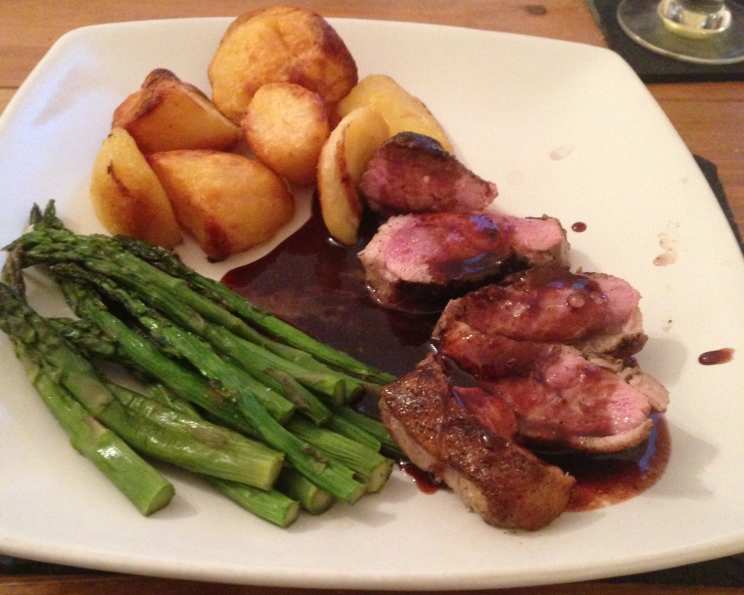
Grilled Duck Breasts With Red Wine and Orange Sauce
The scent of duck roasting always transports me back to crisp autumn evenings in the French countryside. I remember watching my grandmother, a true culinary artist, carefully score the duck skin, coaxing out all the rich flavor. The warm, sweet aromas of simmering wine and citrus would fill her tiny kitchen, creating a symphony of smells that signaled a truly special meal was on its way. This recipe, while employing the grill, captures that same rustic elegance and deep, comforting flavor I associate with those treasured memories.
Recipe Overview
- Prep Time: 1 hour
- Cook Time: 15 minutes
- Total Time: 1 hour 15 minutes
- Servings: 6
- Yield: 6 servings
- Dietary Type: Gluten-Free
Ingredients
- 2 cups freshly squeezed orange juice
- ½ cup honey
- 2 tablespoons sherry wine vinegar
- 4 cups dry red wine
- 2 cups chicken stock
- 2 teaspoons pumpkin pie spice (or use ground allspice)
- 2 tablespoons unsalted butter
- 3 magret duck breasts (fresh, about 12 oz. each, skin on)
- 2 tablespoons sunflower oil or vegetable oil
- Freshly ground black pepper
- Fine sea salt
- 4 tablespoons pumpkin pie spice (or use ground allspice)
Equipment Needed
- Large Skillet
- Sharp Knife
- Cutting Board
- Carving Knife
Instructions
-
Prepare the Red Wine and Orange Sauce: In a large skillet, combine the orange juice and honey. Bring the mixture to a simmer over medium heat. Reduce, stirring frequently, until it thickens to the consistency of a syrup, which should take about 15 minutes. Be patient here, as this step concentrates the flavors.
-
Add Vinegar and Wine: Add the sherry wine vinegar to the reduced orange juice and honey mixture. Stir to combine, and cook for 2 minutes, stirring frequently. Next, add the dry red wine. Raise the heat to high and cook, stirring frequently, until the mixture reduces by half. This should take about 8 to 10 minutes.
-
Incorporate Chicken Stock and Reduce: Add the chicken stock to the skillet. Continue to cook over high heat, stirring frequently, until the mixture reduces to a syrupy consistency, leaving about 1 ½ cups of liquid remaining. This final reduction will take approximately 10 to 15 minutes. The sauce should be thick enough to coat the back of a spoon.
-
Finish the Sauce: Remove the pan from the heat. Add the 2 teaspoons of pumpkin pie spice (or allspice), and season with salt and pepper to taste. Stir well to incorporate the spices evenly. Add the butter and gently swirl it into the sauce with a wooden spoon until it is fully incorporated and the sauce takes on a beautiful, satiny gloss. Keep the sauce warm over very low heat while you prepare the duck breasts.
-
Prepare the Duck Breasts: Using a sharp knife, carefully remove about one-third of the fatty skin from the surface of each duck breast. This helps to render the fat more effectively during cooking, resulting in a crisper skin. With the tip of the knife, score the remaining fat in a crosshatch design, being careful not to cut through to the meat. This also aids in rendering the fat and creates a visually appealing pattern.
-
Season the Duck: Spread the sunflower or vegetable oil evenly over the duck breasts. Then, sprinkle them generously with salt and pepper. Sprinkle 2 teaspoons of the pumpkin pie spice (or allspice) over each breast, placing a teaspoon on the fatty side and a teaspoon on the other side. Press the spices into the surfaces to ensure they adhere well.
-
Cook the Duck: Heat a large skillet over medium heat. Once hot, place the duck breasts, skin side down, in the skillet. Lower the heat just a notch to medium-low and cook for 7-8 minutes, until the skin is crisply browned. As the fat renders from the duck, spoon out the excess from the pan. This prevents the duck from steaming in its own fat and ensures the skin becomes perfectly crispy.
-
Finish Cooking: Turn the breasts and cook for an additional 3-4 minutes, until the meat on the opposite side is lightly browned. The internal temperature should reach 135°F for medium-rare. If you prefer your duck more well-done, cook it for a slightly longer time.
-
Rest and Slice: Transfer the duck breasts to a cutting board and set aside to rest for 5 minutes. This resting period allows the juices to redistribute throughout the meat, resulting in a more tender and flavorful final product. The duck will continue to cook slightly while resting.
-
Slice and Serve: Using a sharp carving knife, cut the duck breasts in half crosswise, then cut each half into ¼ inch slices. Divide the sliced duck among six warmed serving plates, arranging the slices fat side up for visual appeal. Spoon the warm red wine and orange sauce over the duck and serve immediately.
Expert Tips & Tricks
- Score Deeply: Scoring the duck fat deeply is key to rendering it properly, creating that perfect crispy skin we all crave. Don’t be afraid to press firmly, but avoid cutting into the meat.
- Control the Heat: Maintaining medium-low heat while cooking the duck skin-side down is essential to allow the fat to render slowly without burning. Adjust the heat as needed.
- Resting is Crucial: Never skip the resting period! This allows the duck to relax, resulting in a juicier, more tender slice.
- Make-Ahead Option: The red wine and orange sauce can be made a day ahead and stored in the refrigerator. Gently reheat before serving.
- Spice it Up: For an extra layer of flavor, consider adding a pinch of cayenne pepper to the spice rub.
Serving & Storage Suggestions
Serve the grilled duck breasts immediately, garnished with a sprig of fresh rosemary or thyme for a touch of elegance. Creamy polenta, roasted root vegetables, or green beans with toasted almonds make excellent accompaniments.
Leftover duck can be stored in an airtight container in the refrigerator for up to 3 days. The sauce can be stored separately for the same duration. To reheat, gently warm the duck in a skillet or in a low oven (250°F) until heated through. Reheat the sauce separately in a saucepan over low heat. Avoid overheating, which can dry out the duck.
Nutritional Information
| Nutrient | Amount per Serving | % Daily Value |
|---|---|---|
| Calories | 616 kcal | N/A |
| Fat | 23 g | 35% |
| Saturated Fat | 7 g | 35% |
| Cholesterol | 176 mg | 58% |
| Sodium | 226 mg | 9% |
| Carbohydrates | 42 g | 13% |
| Fiber | 1 g | 3% |
| Sugars | 33 g | N/A |
| Protein | 33 g | 64% |
Note: Nutritional information is an estimate and may vary based on specific ingredients and preparation methods.
Variations & Substitutions
- Spice Variation: Experiment with different spice blends. A combination of smoked paprika, garlic powder, and onion powder can offer a smoky, savory flavor profile.
- Fruit Swap: If you don’t have oranges, try using blood oranges or tangerines for a slightly different citrus note.
- Sweetener Adjustment: Maple syrup can be used as a substitute for honey, adding a richer, more complex sweetness to the sauce.
- Wine Alternative: For a non-alcoholic option, use a good quality grape juice or cranberry juice in place of the red wine, but be sure to adjust the sweetness accordingly.
FAQs (Frequently Asked Questions):
Q: Can I use frozen duck breasts for this recipe?
A: Yes, but be sure to thaw them completely in the refrigerator before cooking. Pat them dry with paper towels before seasoning.
Q: How do I know when the duck is cooked to medium-rare?
A: Use a meat thermometer to check the internal temperature. Medium-rare is 130-135°F (54-57°C).
Q: The sauce is too thin. How can I thicken it?
A: Continue simmering the sauce over low heat until it reaches the desired consistency. You can also whisk in a small amount of cornstarch mixed with cold water as a last resort.
Q: Can I grill the duck breasts instead of using a skillet?
A: Absolutely! Preheat your grill to medium heat. Place the duck breasts, skin side down, on the grill grates and cook as directed, monitoring closely to prevent flare-ups.
Q: What wine pairs well with this dish?
A: A Pinot Noir, Cabernet Franc, or other medium-bodied red wine with fruity notes will complement the rich duck and the sweet and savory sauce beautifully.
Final Thoughts
This grilled duck breast with red wine and orange sauce is more than just a recipe; it’s an invitation to create a memorable culinary experience. The combination of crispy duck skin, tender meat, and the rich, flavorful sauce is simply irresistible. Don’t be intimidated by the seeming complexity – the steps are straightforward, and the results are well worth the effort. Gather your ingredients, embrace the process, and prepare to be transported by the exquisite flavors of this classic dish. I encourage you to try it and share your experiences and variations. Bon appétit!