
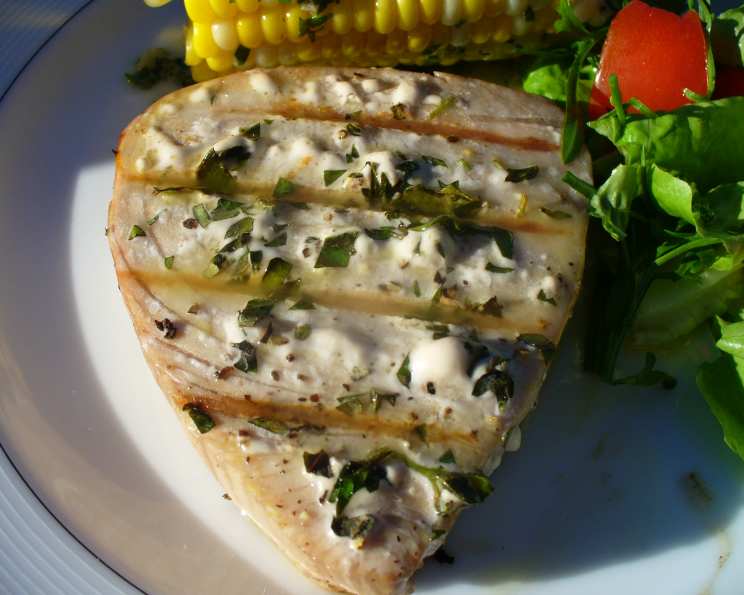
Grilled Fish with Latholemono: A Taste of the Greek Islands
The scent of grilling fish always transports me back to a sun-drenched taverna on the coast of Crete. I remember the gentle sea breeze, the vibrant blue of the Aegean Sea, and the simple, yet profound flavors of freshly caught fish drizzled with a bright, lemony sauce. It was there, amidst the laughter and the clinking of glasses, that I first tasted latholemono, and it has been a staple in my kitchen ever since. This dish captures the essence of Greek summer: fresh, vibrant, and utterly delicious.
Recipe Overview
- Prep Time: 5 minutes
- Cook Time: 8-10 minutes
- Total Time: 13-15 minutes
- Servings: 4
- Dietary Type: Gluten-Free, Dairy-Free
Ingredients
- 4 fish steaks (swordfish or tuna recommended)
- ½ tablespoon olive oil
- Lemon juice (freshly squeezed, from about 1 lemon)
- 1 tablespoon Greek oregano, chopped
- Coarse salt, to taste
For latholemono:
- 2 lemons, juice of (freshly squeezed)
- ½ cup extra virgin olive oil
- 1 pinch sea salt
- 1 garlic clove
Equipment Needed
- Grill
- Blender
Instructions
-
Prepare the Fish: Gently brush the fish steaks with olive oil and lemon juice. Then, sprinkle with salt and the chopped Greek oregano. Allow the fish to sit at room temperature while you prepare the grill. This brief marinade allows the flavors to penetrate slightly.
-
Prepare the Grill: Ensure your grill is clean and preheated to medium-high heat. You want it hot enough to sear the fish, but not so hot that it burns before it cooks through.
-
Grill the Fish: Carefully place the fish steaks onto the preheated grill. Grill for 4-5 minutes on each side, or until the fish is cooked to your liking. The exact cooking time will vary depending on the thickness of the steaks and the type of fish. For tuna, I prefer to leave the inside slightly rare, which requires less cooking time. Swordfish, being firmer, can withstand a slightly longer grilling time. Use a spatula to carefully flip the fish.
-
Prepare the Latholemono: While the fish is grilling, prepare the latholemono. Combine the lemon juice, extra virgin olive oil, sea salt, and garlic clove in a blender. Blend until the mixture is smooth and creamy. The emulsion may separate over time, so it’s best to prepare it immediately before serving.
-
Serve: Once the fish is cooked, remove it from the grill and place it on a serving platter. Drizzle a generous amount of the freshly made latholemono over the grilled fish. Serve immediately and enjoy!
Expert Tips & Tricks
-
Choosing the Right Fish: Select firm-fleshed fish that can withstand the heat of the grill without falling apart. Swordfish, tuna, mahi-mahi, and snapper are excellent choices.
-
Preventing Sticking: To prevent the fish from sticking to the grill, make sure the grill grates are clean and well-oiled. You can use a grill brush to scrape off any residue and then lightly coat the grates with olive oil before placing the fish on the grill.
-
Achieving Grill Marks: For beautiful grill marks, avoid moving the fish around too much while it’s cooking. Allow it to sear properly before flipping.
-
Latholemono Consistency: The key to a good latholemono is using high-quality extra virgin olive oil. This will give the sauce a richer flavor and a smoother texture. If the sauce separates, simply whisk it vigorously to re-emulsify.
-
Garlic Infusion: For a milder garlic flavor, you can gently crush the garlic clove and leave it in the lemon juice and olive oil mixture for about 15 minutes before blending. This will infuse the sauce with garlic flavor without being too overpowering.
Serving & Storage Suggestions
Serve the grilled fish with latholemono immediately after cooking for the best flavor and texture. It pairs perfectly with a simple Greek salad, grilled vegetables, or roasted potatoes.
Leftover latholemono can be stored in an airtight container in the refrigerator for up to 3 days. It may separate, but you can simply whisk it back together before using it as a salad dressing or sauce for other dishes. Grilled fish is best eaten fresh, but leftovers can be stored in the refrigerator for up to 2 days. Reheat gently in a skillet or microwave before serving.
Nutritional Information
| Nutrient | Amount per Serving | % Daily Value |
|---|---|---|
| Calories | 320 kcal | 16% |
| Total Fat | 25g | 38% |
| Saturated Fat | 4g | 20% |
| Cholesterol | 70mg | 23% |
| Sodium | 150mg | 7% |
| Total Carbohydrate | 3g | 1% |
| Dietary Fiber | 1g | 4% |
| Sugars | 1g | 2% |
| Protein | 20g | 40% |
Nutritional information is an estimate and can vary based on specific ingredients and portion sizes.
Variations & Substitutions
-
Herb Variations: Experiment with different herbs such as dill, parsley, or thyme in place of, or in addition to, the Greek oregano. Each herb will impart a unique flavor profile.
-
Spice It Up: For a touch of heat, add a pinch of red pepper flakes to the latholemono or sprinkle them over the fish before grilling.
-
Fish Substitutions: If you don’t have swordfish or tuna on hand, you can use other firm-fleshed fish such as mahi-mahi, snapper, or even salmon. Adjust the grilling time accordingly.
-
Latholemono Alternatives: For a creamier sauce, try adding a tablespoon of Greek yogurt to the latholemono. This will give it a richer texture and a slightly tangy flavor.
FAQs (Frequently Asked Questions)
Q: Can I use dried oregano instead of fresh?
A: While fresh oregano provides a more vibrant flavor, you can use dried oregano. Use about 1 teaspoon of dried oregano in place of 1 tablespoon of fresh.
Q: How do I know when the fish is cooked through?
A: The internal temperature of the fish should reach 145°F (63°C). The fish should also be opaque and flake easily with a fork.
Q: Can I make the latholemono ahead of time?
A: It’s best to make the latholemono immediately before serving, as the emulsion may separate over time. However, you can prepare the ingredients ahead of time and blend them just before serving.
Q: Can I grill the fish indoors?
A: Yes, you can use a grill pan on your stovetop to grill the fish indoors. Be sure to ventilate your kitchen well, as grilling fish can produce a strong aroma.
Q: What if I don’t have a blender for the latholemono?
A: You can whisk the latholemono ingredients together vigorously by hand. It may not be as smooth as when blended, but it will still taste delicious.
Final Thoughts
This Grilled Fish with Latholemono is more than just a recipe; it’s an invitation to experience the simple pleasures of Greek cuisine. I encourage you to try this dish and share it with your loved ones. Don’t be afraid to experiment with different herbs and spices to create your own unique version. Pair it with a crisp white wine and a vibrant Greek salad for a complete and unforgettable meal. Kali Orexi! (Bon appétit!)