
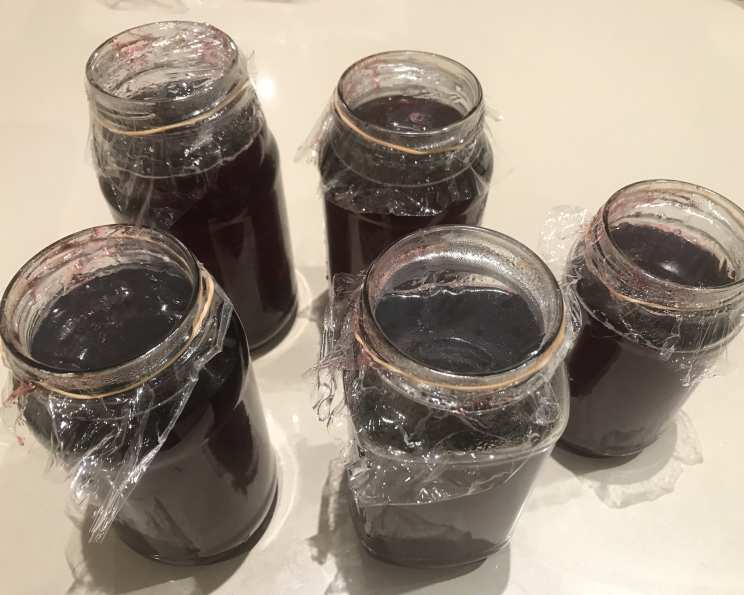
The Sweetest Memories: Crafting Homemade Guava Jelly
My grandmother’s kitchen always smelled of simmering fruit, a fragrant promise of the sweet treats to come. Among my fondest memories are the days she’d be making guava jelly. The air would be thick with the tropical aroma of the fruit cooking down, a scent that transported me straight to a sunny orchard. It wasn’t just the taste of the jelly, a vibrant burst of flavor on warm toast, but the entire experience – the gentle bubbling of the pot, the slow dripping of the juice through cheesecloth, and the satisfying clink of the jars sealing – that made it so special. Now, I carry on this tradition, bringing a piece of my grandmother’s love and sunshine into my own home with every batch.
Recipe Overview
- Prep Time: 30 minutes
- Cook Time: 1 hour
- Total Time: 5 hours 30 minutes (includes cooling and draining time)
- Yields: 2 medium sized jars
- Dietary Type: Vegan, Gluten-Free, Dairy-Free
Ingredients
- 12 very ripe guavas
- 5 cups water (or enough to cover the fruit)
- Sugar (equal to the amount of extracted guava juice)
- Lime juice or lemon juice (1 tablespoon per cup of guava juice)
Equipment Needed
- Large saucepan
- Large bowl
- Muslin cloth or cheesecloth
- String
- Measuring cups and spoons
- Jars for canning
Instructions
-
Begin by preparing the guavas. Wash them thoroughly and then dice them into approximately one-inch cubes. Removing any blemishes will improve the flavor of the final jelly.
-
Place the diced guavas into a large saucepan. Add water, making sure that it just covers the fruit well. It is important not to add too much water at this stage as this will affect the concentration of flavor in the resulting juice.
-
Cover the saucepan and cook the guavas over medium heat until they are very tender, about half an hour. Check for tenderness by piercing a piece of guava with a fork. If it goes through easily, the guavas are ready.
-
Remove the saucepan from the heat and allow the mixture to cool completely. This will make handling the fruit easier in the next step.
-
Prepare a large bowl by covering it with a clean muslin cloth or several layers of cheesecloth. Ensure the cloth is large enough to hang over the sides of the bowl. Gently invert the cooled fruit and water mixture onto the cloth, taking care to catch all the liquid that drips through into the bowl.
-
Gather the four corners of the muslin cloth and tie them together securely with a knot, forming a bag containing the guava pulp. Hang this bag over the bowl, allowing the juice to drip out naturally. Let it drain for about four hours, or even overnight, to extract as much juice as possible. Make sure the bowl is stable and that the bag hangs freely without touching the bottom of the bowl.
-
After the draining period, lightly squeeze out any remaining juice from the bag. Avoid squeezing too hard, as this can release pulp and cloud the jelly. Discard the pulp.
-
Now, it’s time to measure the extracted guava juice. This measurement is crucial for determining the amount of sugar and lime or lemon juice needed.
-
For every cup of guava juice, add one cup of sugar and one tablespoon of lime juice or lemon juice. For example, if you have four cups of juice, you will need four cups of sugar and four tablespoons of lime or lemon juice.
-
Pour the juice, sugar, and lime/lemon juice mixture back into the saucepan. Place the saucepan over medium heat and bring the mixture to a boil, stirring occasionally to ensure the sugar dissolves completely.
-
Once boiling, lower the heat to medium-low and continue to cook, stirring constantly, until the liquid starts to thicken. Be careful, as the liquid tends to boil over. The cooking time will vary depending on the heat and the amount of liquid, but it usually takes around 20-30 minutes.
-
To test for doneness, dip a spoon into the mixture and lift it out. The jelly is ready when it coats the back of the spoon thickly and drips from the spoon in jointed drops, rather than a thin stream. Alternatively, you can place a small spoonful of the hot jelly onto a chilled plate. If it sets quickly and forms a skin, the jelly is ready.
-
Remove the saucepan from the heat and let the jelly stand for about half an hour to allow any foam to settle.
-
While the jelly is standing, prepare your jars for canning. Ensure they are clean and sterilized. You can sterilize them by boiling them in water for 10 minutes or running them through a hot cycle in the dishwasher.
-
Carefully pour the warm jelly into the sterilized jars, leaving about ¼ inch of headspace at the top.
-
Cover the jars with lids and seal them according to standard canning procedures. If you are not canning the jelly, simply allow the jars to cool completely before refrigerating.
Expert Tips & Tricks
- Use very ripe guavas: Ripe guavas have the most flavor and pectin, which is essential for the jelly to set properly.
- Don’t over-squeeze the pulp: Squeezing the pulp too hard can result in a cloudy jelly. Be gentle and let the juice drain naturally.
- Adjust sweetness to your taste: If you prefer a less sweet jelly, you can reduce the amount of sugar slightly, but be aware that this may affect the setting of the jelly.
- Sterilize jars properly: Properly sterilized jars are essential for safe canning. Follow standard canning procedures to ensure the jelly is shelf-stable.
- Consider adding a small cinnamon stick to the saucepan when boiling the juice for a subtle, warm spice note. Remember to remove it before pouring the jelly into the jars.
Serving & Storage Suggestions
Guava jelly is delicious served on toast, crackers, or scones. It also makes a wonderful accompaniment to cheese and charcuterie boards. Use it as a glaze for meats or poultry, or as a filling for pastries and cakes. Properly canned guava jelly can be stored at room temperature for up to a year. Once opened, refrigerate the jelly and use it within a few weeks. If you haven’t canned the jelly, store it in the refrigerator for up to a month.
Nutritional Information
(Estimated values, may vary based on guava variety and sugar content)
| Nutrient | Amount per Serving | % Daily Value |
|---|---|---|
| Calories | 150 kcal | 8% |
| Total Fat | 0g | 0% |
| Saturated Fat | 0g | 0% |
| Cholesterol | 0mg | 0% |
| Sodium | 5mg | 0% |
| Total Carbohydrate | 38g | 13% |
| Dietary Fiber | 1g | 4% |
| Sugars | 37g | – |
| Protein | 0g | 0% |
Variations & Substitutions
- Spiced Guava Jelly: Add a cinnamon stick, star anise, or a few cloves to the saucepan while cooking the juice for a warm, spiced flavor.
- Chili Guava Jelly: Add a pinch of red pepper flakes to the mixture while cooking for a spicy kick. Adjust the amount to your preference.
- Guava-Mango Jelly: Combine guava juice with mango juice for a tropical twist. Use equal parts of each juice and proceed with the recipe as usual.
- Low-Sugar Guava Jelly: Use a sugar substitute suitable for jelly making, but be aware that this may affect the setting properties. You might need to add pectin to help the jelly set.
FAQs (Frequently Asked Questions)
Q: Why is my guava jelly cloudy?
A: Cloudiness can be caused by squeezing the pulp too hard during the draining process. Next time, try to be more gentle and allow the juice to drip out naturally.
Q: My guava jelly didn’t set. What went wrong?
A: Several factors can affect setting. Insufficient pectin in the guavas, not enough sugar, or undercooking the mixture can all prevent the jelly from setting properly. Ensure you use ripe guavas, follow the sugar-to-juice ratio, and cook the mixture until it reaches the correct consistency.
Q: Can I use frozen guavas for this recipe?
A: Yes, you can use frozen guavas. Thaw them completely before dicing and cooking. Be aware that frozen fruit may release more water, so you might need to cook the mixture for a longer time to achieve the desired consistency.
Q: How long does guava jelly last?
A: Properly canned guava jelly can last for up to a year at room temperature. Once opened, refrigerate the jelly and use it within a few weeks. Uncanned guava jelly should be stored in the refrigerator and used within a month.
Q: Can I use a different type of citrus juice instead of lime or lemon?
A: Yes, you can experiment with other citrus juices like orange or grapefruit. However, be aware that this will alter the flavor of the jelly. Lime and lemon juice are traditionally used to balance the sweetness of the guavas and aid in the setting process.
Final Thoughts
Crafting homemade guava jelly is more than just following a recipe; it’s about creating something truly special from simple ingredients. It is a labor of love that yields a delicious reward. The vibrant flavor of guava jelly brings a touch of sunshine to any table, and I encourage you to try this recipe and experience the joy of making your own. Share your creations with friends and family, and let the sweet taste of guava jelly transport you to warm, sunny memories. Enjoy!