
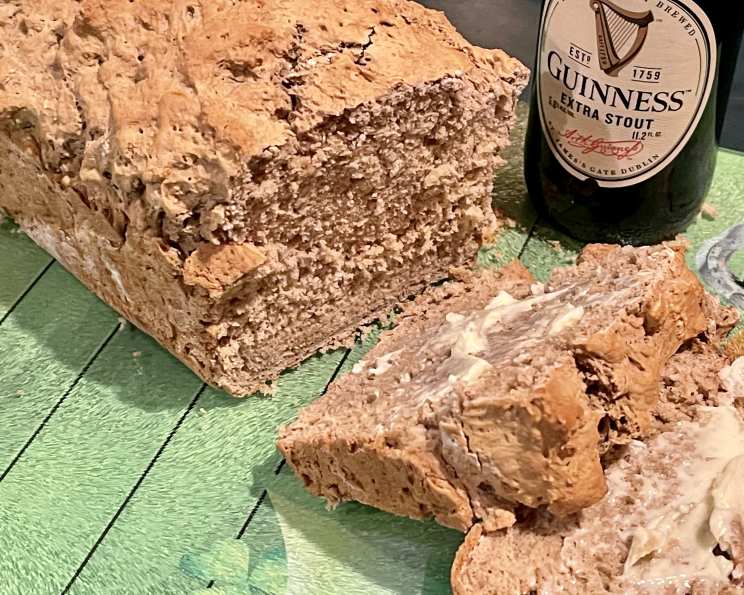
Guinness Beer Bread: A Taste of Ireland in Every Slice
My grandmother, Nana Mae, wasn’t Irish, not a drop. But every St. Patrick’s Day, without fail, a dark, fragrant loaf of beer bread emerged from her oven, filling her small kitchen with a malty, comforting aroma. She’d serve it warm with a generous slab of salted butter, and for a fleeting moment, we were all a little bit Irish, connected by the simple magic of good food and shared tradition. It wasn’t until years later that I realized the secret ingredient was Guinness. Now, every year I bake this loaf and fondly remember Nana Mae.
Recipe Overview
- Prep Time: 15 minutes
- Cook Time: 70 minutes
- Total Time: 1 hour 25 minutes
- Servings: 12
- Yield: 1 loaf
- Dietary Type: Not Vegetarian
Ingredients
- 4 cups flour
- 2 tablespoons baking powder
- 1 teaspoon salt
- 1/4 cup sugar
- 12 ounces Guinness stout
- 2 eggs, slightly beaten
Equipment Needed
- 9x5x3 inch loaf pan
- Large mixing bowl
- Sifter or fine-mesh sieve
- Wire rack
Instructions
- Preheat your oven to 375°F (190°C). Ensure the oven rack is positioned in the center.
- In a large mixing bowl, sift together the flour, baking powder, salt, and sugar. Sifting is crucial for creating a light and airy texture in the bread, preventing a dense loaf.
- Add the Guinness stout and slightly beaten eggs to the dry ingredients.
- Stir the mixture just until blended. Be careful not to overmix the batter, as this can develop the gluten in the flour and result in a tough bread. A few lumps are perfectly fine.
- Grease a 9x5x3 inch loaf pan thoroughly. Use butter, shortening, or cooking spray to prevent the bread from sticking.
- Pour the batter into the prepared loaf pan, spreading it evenly.
- Bake at 375°F (190°C) for approximately 70 minutes. To test for doneness, insert a wooden skewer or toothpick into the center of the loaf. If it comes out clean or with just a few moist crumbs attached, the bread is done. If the skewer comes out with wet batter, continue baking for another 5-10 minutes, checking periodically.
- Once baked, remove the loaf from the oven and let it cool in the pan for about 10 minutes. This helps the bread to set and prevents it from crumbling when you remove it.
- After 10 minutes, remove the bread from the pan and cool it completely on a wire rack. This allows air to circulate around the bread, preventing it from becoming soggy.
Expert Tips & Tricks
- The Guinness Factor: Don’t skimp on the Guinness! The stout not only adds a distinct flavor but also contributes to the bread’s beautiful dark color and moist texture. While you can technically use another dark beer, the flavour profile will change significantly.
- Temperature Matters: Make sure your Guinness isn’t ice-cold when you add it to the batter. Room temperature Guinness incorporates more easily.
- Sweetness Adjustment: If you prefer a sweeter bread, you can increase the amount of sugar to 1/3 cup. You could also substitute brown sugar for a slightly richer, molasses-like flavor.
- Herbaceous Twist: For a savory variation, consider adding a tablespoon of dried rosemary or thyme to the dry ingredients. These herbs complement the malty flavor of the Guinness beautifully.
- Keeping It Moist: To ensure a super-moist loaf, try adding a tablespoon of melted butter to the batter.
- Oven Variations: Every oven is different, so keep a close eye on the bread during the last 20 minutes of baking. If the top starts to brown too quickly, tent it loosely with aluminum foil to prevent burning.
- Slice with Care: Use a serrated bread knife to slice the bread evenly. This will prevent it from tearing or crumbling.
Serving & Storage Suggestions
This Guinness beer bread is best served warm, either on its own or with a generous spread of butter. It’s also delicious with a savory cheese spread, such as Irish cheddar or a creamy blue cheese. For a heartier meal, pair it with a bowl of Irish stew or a creamy potato soup. The malt flavor makes it excellent to dip into beer cheese soup.
To store leftover bread, wrap it tightly in plastic wrap or place it in an airtight container. It will keep at room temperature for 2-3 days, or in the refrigerator for up to a week. For longer storage, you can freeze the bread for up to 2-3 months. To reheat, wrap the bread in foil and bake it at 350°F (175°C) for 10-15 minutes, or until warmed through. You can also toast individual slices for a quick and easy snack.
Nutritional Information
| Nutrient | Amount per Serving | % Daily Value |
|---|---|---|
| Calories | 328 kcal | 16% |
| Total Fat | 1.2 g | 2% |
| Saturated Fat | 0.3 g | 2% |
| Cholesterol | 62 mg | 21% |
| Sodium | 402 mg | 17% |
| Total Carbohydrate | 48.7 g | 16% |
| Dietary Fiber | 1.1 g | 4% |
| Sugars | 4.3 g | – |
| Protein | 6.9 g | 14% |
Note: Nutritional information is an estimate and may vary based on specific ingredients and portion sizes.
Variations & Substitutions
- Gluten-Free Option: While the recipe traditionally uses all-purpose flour, you can substitute a gluten-free flour blend for a gluten-free version. Look for a blend that contains xanthan gum to help bind the ingredients and provide structure to the bread. Note that the texture might be slightly different, potentially a little more crumbly.
- Dairy-Free Version: If you’re dairy-free, you can easily substitute the eggs with flax eggs. To make flax eggs, combine 1 tablespoon of ground flaxseed meal with 3 tablespoons of water per egg. Let the mixture sit for 5 minutes to thicken before adding it to the batter.
- Sweet & Savory Combination: For a unique twist, add a handful of dried cranberries and chopped walnuts to the batter. The sweetness of the cranberries and the crunch of the walnuts create a delicious contrast to the malty flavor of the Guinness.
- Different Beer: While Guinness is the classic choice, you can experiment with other dark beers. A porter or a dark ale can also work well, adding different nuances to the flavor profile.
- Spices: Play around with different spices. A pinch of cinnamon, nutmeg, or allspice can add warmth and complexity to the bread.
FAQs (Frequently Asked Questions)
Q: Can I use self-rising flour instead of all-purpose flour and baking powder?
A: No, it’s not recommended. Self-rising flour already contains baking powder and salt, and using it in this recipe will likely result in a bread that rises too much and then collapses. Stick to all-purpose flour and baking powder for the best results.
Q: My bread is too dry. What did I do wrong?
A: Overbaking is the most common cause of dry bread. Make sure you’re checking for doneness with a skewer, and don’t bake the bread for longer than necessary. Also, ensure you are measuring your flour correctly – spoon the flour into the measuring cup instead of scooping to prevent packing.
Q: Can I make this bread without eggs?
A: Yes, you can substitute the eggs with flax eggs (1 tablespoon ground flaxseed meal mixed with 3 tablespoons water per egg). Let the mixture sit for 5 minutes to thicken before adding it to the batter.
Q: Can I add other ingredients to the batter?
A: Absolutely! Feel free to experiment with different additions, such as dried fruits, nuts, herbs, or cheese. Just be mindful not to add too many ingredients, as this can affect the texture and rise of the bread.
Q: How do I know when the bread is done baking?
A: The best way to check for doneness is to insert a wooden skewer or toothpick into the center of the loaf. If it comes out clean or with just a few moist crumbs attached, the bread is done.
Final Thoughts
So, there you have it – a simple yet deeply satisfying recipe for Guinness beer bread. It’s a loaf that’s both rustic and refined, perfect for any occasion, whether it’s a St. Patrick’s Day celebration or a cozy weeknight dinner. I encourage you to try this recipe and make it your own, experimenting with different variations and serving suggestions. Share your creations and feedback, and most importantly, enjoy the process of baking and the pleasure of sharing good food with loved ones. Sláinte!