
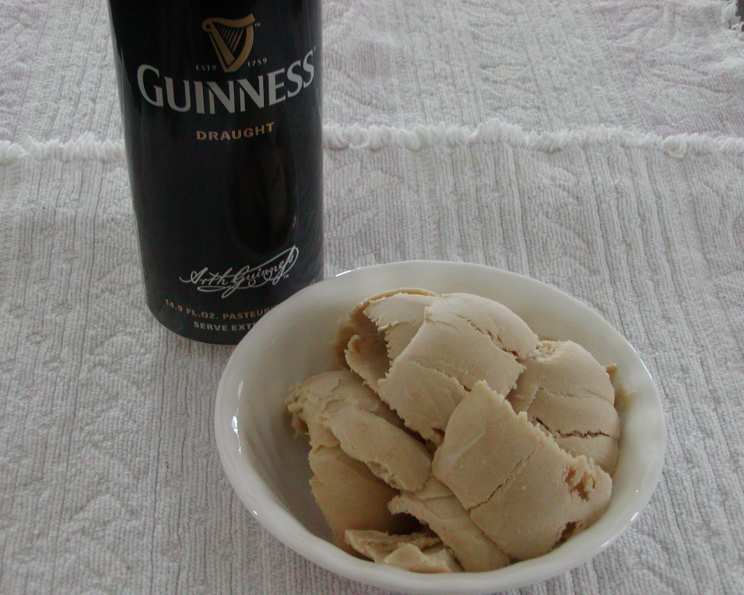
Guinness Ice Cream: A Pint of Pure Indulgence
I remember the first time I tasted Guinness. I was a young, slightly rebellious culinary student, and a seasoned Irish chef let me have a small sip. The initial bitterness intrigued me, followed by the smooth, almost chocolatey finish. It wasn’t love at first taste, but it sparked a curiosity that led me to explore the incredible versatility of this iconic stout, eventually finding its place in desserts like this stunning ice cream. The rich, roasted barley notes of the Guinness perfectly complement the creamy sweetness, creating a flavor experience that’s both sophisticated and deeply satisfying.
Recipe Overview
- Prep Time: 30 minutes
- Cook Time: 10 minutes
- Total Time: 5 hours 10 minutes (includes chilling and freezing)
- Yields: 1 1/2 quarts
- Serves: 12
- Dietary Type: Not Gluten-Free
Ingredients
- 16 ounces Guinness stout
- 2 cups heavy cream
- 1 3/4 cups whole milk
- 15 large egg yolks
- 1 cup white sugar
Equipment Needed
- Large saucepan
- Whisk
- Large heat-proof bowl
- Medium bowl
- Ice bath (large bowl for ice water)
- Fine-mesh strainer
- Ice cream maker
- Airtight container
Instructions
-
In a large saucepan, combine the Guinness stout, heavy cream, and whole milk. Place the saucepan over medium-high heat and bring the mixture to a simmer. Be careful not to let it boil at this stage; you just want it hot enough to infuse the cream and milk with the stout’s flavor.
-
While the cream mixture is heating, prepare the custard base. In a large, heat-proof bowl, vigorously whisk together the egg yolks and white sugar. Continue whisking until the mixture becomes pale yellow and slightly thickened. This ensures the sugar is fully incorporated and the yolks are properly emulsified.
-
Temper the egg yolks. This is a crucial step to prevent the eggs from scrambling when you add the hot cream mixture. Slowly and gradually add the hot Guinness cream to the egg yolk mixture, whisking constantly and vigorously. The goal is to slowly raise the temperature of the egg yolks without cooking them.
-
Strain the mixture. Once the tempered egg mixture is well-blended with the cream, strain it back into the saucepan through a fine-mesh strainer. This step removes any potential lumps or cooked egg bits, resulting in a silky-smooth custard.
-
Cook the custard. Place the saucepan over medium heat and cook the custard, stirring constantly with a spatula or wooden spoon, for about 6 minutes. The custard is ready when it thickens enough to coat the back of a spoon. To test, dip a spoon into the custard and run your finger across the back. If the line remains distinct and doesn’t immediately flow back together, the custard is done. It’s essential to monitor the temperature closely during this stage. Do not let the custard boil, as this will cause the eggs to curdle.
-
Chill the custard. Prepare an ice bath by placing a medium bowl inside a larger bowl filled with ice water. Pour the cooked custard into the medium bowl and stir it occasionally until it is completely cold, about 30 minutes. This chilling process is important for improving the ice cream’s texture. Change the ice as needed to maintain a cold temperature.
-
Churn in the ice cream maker. Once the custard is thoroughly chilled, pour it into an ice cream maker and freeze according to the manufacturer’s instructions. Churning introduces air into the mixture, creating a light and creamy texture.
-
Harden in the freezer. After churning, pack the ice cream into an airtight container and place it in the freezer until it is firm, about 4 hours. This final hardening step allows the ice cream to fully set and develop its final texture.
-
Serve. Once the ice cream is firm, it’s ready to serve.
Expert Tips & Tricks
- Don’t Overcook the Custard: Overcooked custard will result in a grainy ice cream. Use a thermometer to ensure the custard doesn’t exceed 180°F (82°C).
- Chill Completely: The more thoroughly chilled the custard is before churning, the smoother and creamier the final ice cream will be.
- Guinness Selection: Choose a fresh, high-quality Guinness stout for the best flavor. Avoid older cans or bottles, as the flavor may have deteriorated.
- Salt Enhancement: A tiny pinch of salt (about 1/8 teaspoon) added to the custard base can enhance the Guinness flavor and balance the sweetness.
- Alcohol Content: The alcohol in the Guinness will slightly lower the freezing point of the ice cream, resulting in a softer texture. If you prefer a firmer ice cream, you can reduce the amount of Guinness by an ounce or two.
Serving & Storage Suggestions
Serve this Guinness ice cream chilled and slightly softened for optimal flavor and texture. It pairs wonderfully with chocolate-covered pretzels, as the recipe suggests, or with a drizzle of chocolate sauce or a sprinkle of cocoa nibs. For an extra touch, serve it alongside a slice of rich chocolate cake or a decadent brownie.
Store leftover ice cream in an airtight container in the freezer. It will maintain its quality for up to two weeks. After that, the texture may start to deteriorate, and ice crystals may form. Avoid storing it in the freezer door, as temperature fluctuations can affect the texture. It’s best consumed within one week for peak flavor. The ice cream should not be left at room temperature for more than an hour.
Nutritional Information
| Nutrient | Amount per Serving | % Daily Value |
|---|---|---|
| Calories | 487.8 kcal | N/A |
| Calories from Fat | 193 g | 40% |
| Total Fat | 21.5 g | 33% |
| Saturated Fat | 11.8 g | 59% |
| Cholesterol | 288.5 mg | 96% |
| Sodium | 59 mg | 2% |
| Total Carbohydrate | 36.5 g | 12% |
| Dietary Fiber | 0 g | 0% |
| Sugars | 18.6 g | 74% |
| Protein | 7.4 g | 14% |
Variations & Substitutions
- Irish Cream Swirl: Swirl in a ribbon of Irish cream liqueur into the ice cream just before freezing for an extra layer of flavor.
- Chocolate Chunk: Add chopped dark chocolate or chocolate chunks to the ice cream after churning for added texture and richness.
- Coffee Infusion: Steep coffee beans in the cream and milk mixture for a coffee-Guinness ice cream hybrid.
- Vegan Version: While achieving the exact same flavor profile might be difficult, experiment with using a high-quality non-dairy cream and milk alternative like coconut cream and oat milk. You can also use a vegan egg yolk replacement to make the custard.
- Spiced Guinness Ice Cream: Add a pinch of cinnamon, nutmeg, or cardamom to the custard base for a warmer, more festive flavor profile, especially around the holidays.
FAQs (Frequently Asked Questions)
Q: Can I make this ice cream without an ice cream maker?
A: While an ice cream maker is highly recommended for the best texture, you can try the “no-churn” method. After chilling the custard, pour it into a freezer-safe container and freeze for 30 minutes. Then, vigorously whisk the mixture to break up ice crystals. Repeat this process every 30 minutes for 2-3 hours, or until the ice cream reaches your desired consistency.
Q: Why is my ice cream icy instead of creamy?
A: Icy ice cream is usually caused by slow freezing or insufficient fat content. Ensure your custard is thoroughly chilled before churning, and use high-quality heavy cream with a high-fat percentage.
Q: Can I use a different type of stout?
A: While Guinness is the classic choice, you can experiment with other stouts, but be mindful of their flavor profiles. A milk stout might add extra sweetness, while an oatmeal stout may impart a slightly nutty flavor.
Q: How can I prevent the custard from curdling?
A: Tempering the egg yolks properly and cooking the custard over medium heat while stirring constantly are crucial to prevent curdling. If you notice the custard starting to curdle, immediately remove it from the heat and whisk vigorously.
Q: How long does this ice cream last in the freezer?
A: This Guinness ice cream will maintain its quality for up to two weeks when stored in an airtight container in the freezer. After that, the texture may start to deteriorate.
Final Thoughts
This Guinness ice cream is a delightful culinary adventure, a sophisticated treat that captures the essence of Ireland in every spoonful. Don’t be intimidated by the slightly longer process; the result is well worth the effort. I encourage you to try this recipe and experience the harmonious blend of stout and creaminess for yourself. And please, share your creations! Let me know what you think and how you made it your own. Perhaps you will find the perfect pairing—a complementary dessert or drink that elevates the experience to new heights. Happy churning!