
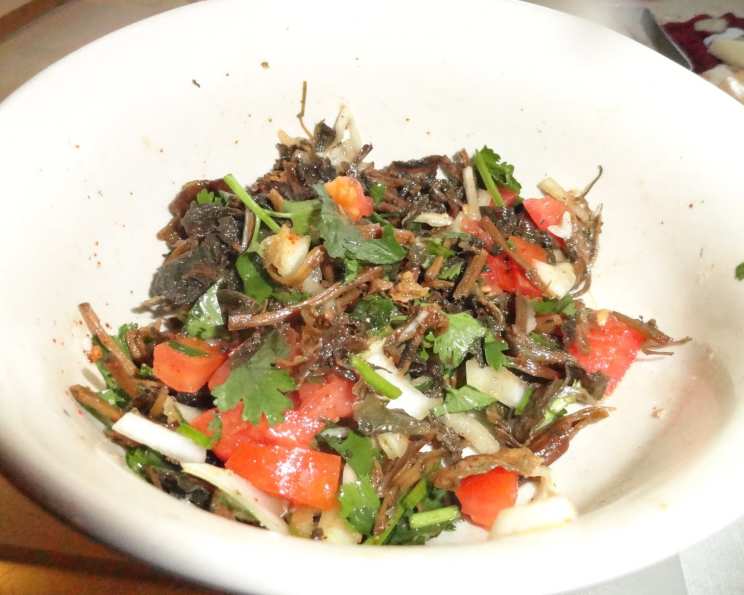
Gundruk Sadheko: A Taste of Nepal in Every Bite
The sharp, earthy aroma of fermenting vegetables always transports me back to my grandmother’s kitchen in the Kathmandu Valley. As children, we’d peek into the earthenware jars, both fascinated and slightly repulsed by the pungent scent, never fully understanding the magic brewing inside. But when she’d finally mix the fermented gundruk with fresh herbs and spices, transforming it into gundruk sadheko, all hesitation vanished. The vibrant, tangy flavor was addictive, a true taste of home.
Recipe Overview
- Prep Time: 30 minutes
- Cook Time: 7-10 days fermentation
- Total Time: 7-10 days
- Servings: Variable, depends on gundruk quantity
- Yield: Approximately 3 cups marinated gundruk
- Dietary Type: Vegan, Gluten-Free
Ingredients
For Gundruk:
- ½ lb mustard greens, cut in 2-in. length
- ½ lb daikon radish, thinly sliced and cut in 2-in. length
- ½ lb napa cabbage, cut in 2-in. length
- ½ lb spinach, torn into 2-in. pieces
For Marinating:
- 1 cup finely chopped red onion
- 1 cup finely chopped tomatoes
- 1 tablespoon garlic, finely minced
- 1 tablespoon ginger, finely minced
- 1 tablespoon fresh red chile, finely minced (adjust to taste)
- 2 tablespoons finely chopped cilantro
- 1 tablespoon lemon juice
- 2 tablespoons mustard oil (vegetable oil can also be used)
- ½ teaspoon Szechwan pepper (timur)
- 1 pinch asafoetida powder
- Salt and pepper to taste
Equipment Needed
- Large mixing bowl
- Large tray for sun-drying
- Large, thick, sterilized jar with a tight-fitting lid
Instructions
- Gundruk Preparation: Begin by combining all the vegetables in a large mixing bowl. Rinse them thoroughly and drain well.
- Sun-Drying: Spread the vegetables evenly on a large tray. Allow them to sun-dry for a full day, turning frequently. This step helps reduce moisture content and concentrates the flavors. The vegetables will wilt noticeably. If sunshine is limited, use a dehydrator on a low setting, or very low oven (lowest setting with the door slightly ajar).
- Packing: Collect the slightly wilted vegetables and place them in a large bowl. Pack them tightly into a large, thick, sterilized jar. Compact the vegetables as much as possible, pressing down firmly. This helps initiate the fermentation process.
- Initial Fermentation: Tighten the lid of the jar securely. Let the jar stand in a warm place for two days. The ideal temperature is around 70-75°F (21-24°C).
- Liquid Removal: After the two-day period, carefully open the lid. You’ll likely see liquid pooling on top of the vegetable mixture. Pour out this liquid. It’s a byproduct of the initial fermentation.
- Continued Fermentation: Press down on the vegetable mixture again to further compact it. Close the lid tightly. Allow the gundruk to ferment for another 3-5 days, or even longer depending on your preference for sourness. Taste it daily after the third day.
- Flavor Development: During this final fermentation phase, the vegetables will develop their characteristic acidic and tangy flavors. The longer it ferments, the stronger the flavor.
- Storage: Once the gundruk has reached your desired level of sourness, store it in the refrigerator. This will slow down the fermentation process.
- Gundruk Marination: In a mixing bowl, combine three cups of the freshly fermented gundruk (adjust quantity based on your preference and desired batch size) with all the other marinating ingredients: red onion, tomatoes, garlic, ginger, red chile, cilantro, lemon juice, mustard oil, Szechwan pepper (timur), asafoetida powder, salt, and pepper.
- Mixing: Toss all the ingredients well to ensure they are thoroughly incorporated. The mustard oil adds a distinctive flavor, but vegetable oil is a suitable substitute if you prefer a milder taste.
- Refrigeration: Cover the bowl and refrigerate the gundruk sadheko for at least 30 minutes before serving. This allows the flavors to meld together beautifully.
Expert Tips & Tricks
- Jar Sterilization: Sterilize the jar by boiling it in water for 10 minutes or running it through a dishwasher cycle. This prevents unwanted bacteria growth during fermentation.
- Salt: Salt inhibits the growth of bad bacteria during fermentation, so don’t skip this.
- Timur (Szechwan Pepper): Don’t be shy with the timur. Its unique citrusy and slightly numbing quality is essential to the authentic flavor of gundruk sadheko. Toast it lightly in a dry pan before grinding for a more intense flavor.
- Adjusting Spice: Adjust the amount of red chile to your preferred level of spiciness. Remove the seeds for a milder heat.
- Fermentation Time: The fermentation time can vary depending on the temperature and humidity of your environment. Taste the gundruk regularly to achieve your desired level of sourness.
- Drying: If you don’t have access to direct sunlight, you can use a food dehydrator or an oven on a very low setting to dry the vegetables. Just be careful not to overheat them.
- Gundruk too Sour? If the gundruk is too sour for your liking, soak it in water for a few minutes before marinating. This will leach out some of the acidity.
Serving & Storage Suggestions
Serve gundruk sadheko as a condiment alongside rice, dal, or other Nepali dishes. It’s also delicious as a side dish with grilled meats or tofu. It can also be served as an appetizer, with beaten rice (chiura).
Store leftover gundruk sadheko in an airtight container in the refrigerator for up to a week. The flavors will continue to develop over time. Freezing is not recommended as it can alter the texture of the fermented vegetables. Due to its fermentation and high salt content, it does not spoil easily at room temperature, but refrigeration is recommended for optimal preservation of flavor and texture.
Nutritional Information
| Nutrient | Amount per Serving | % Daily Value |
|---|---|---|
| Calories | 85 kcal | 4% |
| Total Fat | 6g | 8% |
| Saturated Fat | 1g | 5% |
| Cholesterol | 0mg | 0% |
| Sodium | 50mg | 2% |
| Total Carbohydrate | 8g | 3% |
| Dietary Fiber | 3g | 11% |
| Sugars | 3g | 6% |
| Protein | 3g | 6% |
Note: Nutritional information is an estimate and may vary based on specific ingredients and serving sizes.
Variations & Substitutions
- Spicy Gundruk: For an extra kick, add more fresh red chile or a pinch of cayenne pepper to the marinade.
- Herby Gundruk: Experiment with different fresh herbs like mint or basil in addition to the cilantro.
- Lemon/Lime: You can substitute lime juice for lemon juice, or use a combination of both.
- Oil Variations: Infuse your mustard oil with garlic or chili flakes for added depth.
FAQs (Frequently Asked Questions)
Q: Can I use different vegetables for the gundruk?
A: Absolutely! While mustard greens, radish, cabbage, and spinach are traditional, you can experiment with other hearty greens like kale or collard greens.
Q: How long does it take for the gundruk to ferment?
A: The fermentation time varies depending on the temperature and humidity. Usually, 3-5 days after the initial 2-day period is enough, but it’s best to taste it daily to determine when it’s reached your desired level of sourness.
Q: Can I make gundruk in the winter when there is no sun?
A: Yes, you can use a food dehydrator or an oven on a very low setting to dry the vegetables. Keep the oven door slightly open to allow moisture to escape.
Q: Is mustard oil essential for gundruk sadheko?
A: While mustard oil adds a distinct flavor that’s considered traditional, vegetable oil can be used as a substitute for a milder taste. You can also use other oils like sesame oil for a different flavor profile.
Q: How can I reduce the strong smell during fermentation?
A: While the fermentation process does have a strong smell, keeping the jar in a well-ventilated area can help. Also, ensure the lid is tightly sealed to minimize odor leakage.
Final Thoughts
Gundruk sadheko is more than just a condiment; it’s a culinary journey to the heart of Nepal. Don’t be intimidated by the fermentation process – it’s surprisingly simple and rewarding. The tangy, spicy flavor is truly unique and will add a delicious dimension to your meals. I encourage you to try this recipe and experience the taste of Nepal for yourself. Feel free to share your feedback and any variations you try. Pair it with a glass of chilled lassi or a refreshing Nepali beer for a complete culinary experience.