
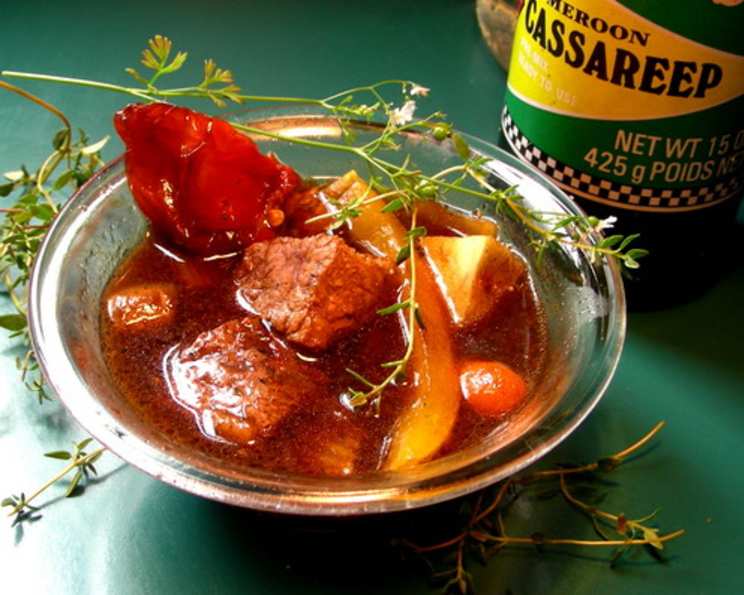
Guyana Pepper Pot: A Culinary Journey Through Time
My grandmother, a proud Guyanese woman with a mischievous twinkle in her eye, always had a pot simmering on the stove. It wasn’t just any pot; it was the Pepper Pot, a living, breathing culinary heirloom. The rich, dark aroma of cassareep, mingled with cinnamon and savory meat, would envelop you the moment you stepped inside her home, a warm welcome that promised a taste of history and heritage with every spoonful. It’s a flavor I still chase, a connection to my roots that transcends generations.
Recipe Overview
- Prep Time: 20 minutes
- Cook Time: 1 hour
- Total Time: 1 hour 20 minutes
- Servings: 12
- Yields: 1 pot
- Dietary Type: Potentially Gluten-Free (check cassareep ingredients)
Ingredients
- 1 lb stewing beef or beef brisket
- 1 lb pork trotters (or cow’s heels) (optional)
- ½ lb pigs tail (optional)
- ½ cup Amerindian seasoning (cassareep)
- 1 red hot pepper
- 1 cinnamon stick (1 in x 1 in)
- 1 ounce sugar
- Salt to taste
- 2 stalks basil
- 1 bunch fine fresh thyme
- 1 large chopped onion
- 3 chopped garlic cloves
Equipment Needed
- Large Stockpot or Dutch Oven
Instructions
- Begin by preparing the pig tails. If using, soak the pig tails in cold water for at least 30 minutes, then scald them in boiling water for a few minutes. This helps to remove excess salt and impurities.
- If you’re including cow heel or pork trotters, place them in a large, covered pot with enough water to cover them generously. Bring to a boil over high heat.
- Once boiling, reduce heat to a simmer and skim off any foam or impurities that rise to the surface. This will ensure a cleaner, more flavorful broth.
- Continue to simmer the cow heel or trotters until they are about halfway tender. This might take around 30-45 minutes, depending on their size and thickness.
- Once the cow heel or trotters are partially cooked, add the remaining meats – the stewing beef or beef brisket, and the pig tails if you are using them. Add hot water to the pot, ensuring all the meat is covered.
- Add the cassareep, red hot pepper, cinnamon stick, sugar, and salt to the pot.
- Now, add the aromatics: basil, fresh thyme, chopped onion, and chopped garlic cloves.
- Bring the pot back to a simmer, then reduce the heat to low. Cover the pot and allow the Pepper Pot to simmer gently for approximately one hour, or until all the meats are tender and easily pierced with a fork.
- Taste the Pepper Pot and adjust the seasoning with additional salt and sugar as needed. The balance of sweet and savory is crucial to the unique flavor profile.
- Serve hot with your choice of accompaniments.
Expert Tips & Tricks
- Cassareep is key: The quality of your cassareep directly impacts the flavor and color of the Pepper Pot. Look for a dark, rich cassareep with a slightly sweet and bitter aroma. If you can find authentic Guyanese cassareep, that’s ideal.
- Don’t be afraid of the heat: The red hot pepper adds a subtle warmth and depth of flavor, but it shouldn’t be overpowering. If you prefer a milder flavor, you can remove the seeds from the pepper before adding it to the pot.
- Low and slow is the way to go: Simmering the Pepper Pot gently over low heat allows the flavors to meld and deepen, resulting in a richer, more complex dish.
- Experiment with meats: While the traditional recipe calls for beef, pork, and pig tails, you can experiment with other cuts of meat, such as oxtail or lamb. Just be sure to adjust the cooking time accordingly.
Serving & Storage Suggestions
Pepper Pot is traditionally served with dense, crusty bread and butter for dipping into the flavorful gravy. It’s also excellent with rice or roti.
This dish develops its flavor over time. If you have leftovers, do not refrigerate immediately unless you plan to eat it within 24 hours. The traditional method is to reheat the pot to a rolling boil every day if left unrefrigerated. This helps to prevent spoilage. If refrigerating, store in an airtight container for up to 3-4 days. Reheat thoroughly before serving. For longer storage, the Pepper Pot can be frozen for up to 2-3 months. Thaw overnight in the refrigerator before reheating.
Nutritional Information
| Nutrient | Amount per Serving | % Daily Value |
|---|---|---|
| Calories | 250 kcal | 13% |
| Total Fat | 12g | 18% |
| Saturated Fat | 5g | 25% |
| Cholesterol | 75mg | 25% |
| Sodium | 150mg | 7% |
| Total Carbohydrate | 10g | 3% |
| Dietary Fiber | 2g | 8% |
| Sugar | 5g | N/A |
| Protein | 20g | 40% |
Note: Nutritional information is an estimate and may vary based on specific ingredients and portion sizes.
Variations & Substitutions
- Vegetarian Pepper Pot: While traditionally a meat-based dish, you can create a vegetarian version using hearty vegetables like butternut squash, sweet potatoes, and mushrooms. Be sure to use a rich vegetable broth and adjust the seasoning accordingly.
- Spicy Pepper Pot: For an extra kick, add more red hot peppers or a dash of hot sauce to the pot.
- Sweet Pepper Pot: If you prefer a sweeter flavor, you can add a little more sugar or a drizzle of molasses to the pot.
- Gluten-Free Pepper Pot: Ensure that your cassareep is gluten-free, as some brands may contain added gluten.
FAQs (Frequently Asked Questions)
Q: What is cassareep?
A: Cassareep is a thick, dark brown liquid made from the grated root of the cassava plant. It’s a key ingredient in Pepper Pot and acts as both a preservative and a flavoring agent.
Q: Can I use a different type of meat?
A: Yes, you can experiment with different types of meat, such as oxtail, lamb, or even chicken. Just be sure to adjust the cooking time accordingly.
Q: How spicy is Pepper Pot?
A: The spiciness of Pepper Pot can vary depending on the amount of red hot pepper used. You can adjust the amount to suit your taste.
Q: Can I make Pepper Pot ahead of time?
A: Absolutely! Pepper Pot is actually better the next day, as the flavors have had time to meld and deepen. Just be sure to store it properly and reheat thoroughly before serving.
Q: Where can I find cassareep?
A: Cassareep can be found in some international grocery stores, particularly those that carry Caribbean or South American products. You can also purchase it online.
Final Thoughts
Pepper Pot is more than just a recipe; it’s a taste of history, a celebration of culture, and a connection to family. I encourage you to try this recipe and experience the rich, complex flavors of Guyana. Don’t be afraid to experiment and make it your own. And most importantly, share it with the people you love. After all, the best meals are the ones that are shared with good company. And feel free to offer your own unique variations or tips. I’m always eager to hear how others are carrying on this rich culinary tradition!