
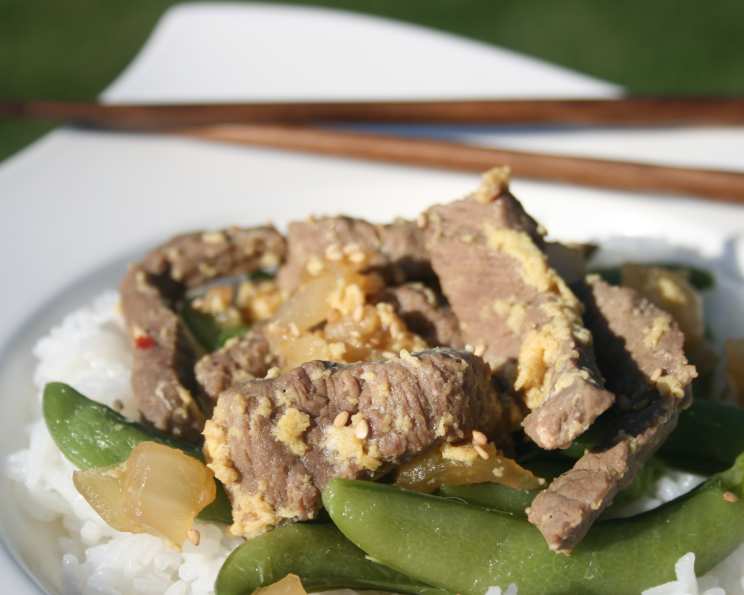
Gyudon: A Taste of Tokyo in Your Kitchen
The first time I had Gyudon, I was jet-lagged and wandering the neon-lit streets of Shinjuku. The savory-sweet aroma of simmering beef and onions pulled me into a tiny, bustling restaurant. Watching the chef expertly assemble the bowls, layering glistening beef over steaming rice, was mesmerizing. One bite, and I was hooked. It was pure comfort food, a taste of Japan that I’ve been chasing ever since.
Recipe Overview
- Prep Time: 10 minutes
- Cook Time: 15 minutes
- Total Time: 25 minutes
- Servings: 2
- Yield: 2 bowls
- Dietary Type: Not Gluten-Free
Ingredients
- ½ lb beef, thinly sliced
- 1 onion, chopped
- 1 egg, lightly beaten
- 1 tablespoon vegetable oil
- ⅔ cup water or ⅔ cup chicken stock
- 2 ½ tablespoons Kikkoman soy sauce
- 1 ½ tablespoons Chinese wine
- 1 ½ tablespoons sugar
- Pepper, to taste
- Japanese grounded chili, to taste
- 2 cups cooked rice
Equipment Needed
- Wok or large skillet
Instructions
-
First, create the flavorful base. In a bowl, combine ⅔ cup water (or chicken stock), 2 ½ tablespoons Kikkoman soy sauce, 1 ½ tablespoons Chinese wine, and 1 ½ tablespoons sugar. Whisk until the sugar is dissolved. This is your warishita, the soul of Gyudon.
-
Next, prepare the beef. Pour ⅓ cup of the soy sauce mixture over the ½ lb of thinly sliced beef. Marinate for at least 10 minutes, allowing the beef to absorb the flavors. The longer it marinates, the more flavorful it will be.
-
Heat 1 tablespoon of vegetable oil in a wok or large skillet over medium-high heat.
-
Add the 1 chopped onion and stir-fry until softened and translucent, about 3-5 minutes. The onions should be tender and slightly caramelized.
-
Add the marinated beef to the wok. Be sure not to overcrowd the pan so that the beef can sear properly. Stir-fry until the beef is cooked through, approximately 3 minutes. It should no longer be pink.
-
Pour the remaining soy sauce mixture into the wok. Bring to a simmer and cook for 2 minutes, allowing the sauce to reduce slightly and thicken.
-
Gently pour the 1 lightly beaten egg into the wok, distributing it evenly over the beef and onion mixture. Cover the wok and cook for 2 minutes, or until the egg is set but still slightly runny. The egg adds richness and binds everything together.
-
To serve, spoon the Gyudon mixture over 2 cups of hot, freshly cooked rice in bowls.
-
Season with Japanese grounded chili and pepper to taste for an extra kick.
Expert Tips & Tricks
- Beef Selection: The quality of your beef significantly impacts the final dish. Look for thinly sliced ribeye or sirloin for the best flavor and tenderness. If you can’t find pre-sliced beef, partially freeze a steak and slice it thinly yourself.
- Onion Sweetness: Yellow onions are the traditional choice, but you can experiment with other varieties like sweet onions for a milder flavor.
- Egg Perfection: For a richer, more decadent dish, use two eggs instead of one. If you prefer a fully cooked egg, cook it for a longer time, but be careful not to overcook it.
- Dashi Enhancement: While this recipe is designed to be simple, adding a touch of dashi powder to the warishita will elevate the umami flavor.
- Make-Ahead Tip: The beef and onion mixture can be prepared ahead of time and stored in the refrigerator for up to 24 hours. Reheat gently before adding the egg and serving.
Serving & Storage Suggestions
Serve your Gyudon immediately while it’s hot and the rice is fluffy. Garnish with chopped green onions or pickled ginger (beni shoga) for added flavor and visual appeal. Leftovers can be stored in an airtight container in the refrigerator for up to 2 days. To reheat, gently warm the beef mixture in a skillet or microwave until heated through. Freshly cooked rice is always best, but leftover rice can also be reheated. It’s not recommended to freeze Gyudon, as the texture of the beef and egg may change upon thawing.
Nutritional Information
| Nutrient | Amount per Serving | % Daily Value |
|---|---|---|
| Calories | 587 kcal | N/A |
| Calories from Fat | N/A | 69% |
| Total Fat | 45 g | 138% |
| Saturated Fat | 17.6 g | 176% |
| Cholesterol | 102.7 mg | 68% |
| Sodium | 663 mg | 55% |
| Total Carbohydrate | 34.6 g | 23% |
| Dietary Fiber | 0.85 g | 6% |
| Sugars | 6.1 g | 48% |
| Protein | 9.95 g | 39% |
Note: Nutritional information is an estimate and can vary based on specific ingredients and portion sizes.
Variations & Substitutions
- Spicy Gyudon: Add a dash of sriracha or gochujang to the warishita for a fiery kick.
- Vegetarian Gyudon: Substitute the beef with sliced mushrooms or tofu for a vegetarian-friendly version.
- Gluten-Free Gyudon: Use tamari instead of soy sauce to make the recipe gluten-free.
- Egg-Free Gyudon: Omit the egg altogether or top the Gyudon with a poached egg separately.
- Kimchi Gyudon: Add a spoonful of kimchi on top for a spicy and tangy twist.
FAQs (Frequently Asked Questions)
Q: Can I use a different cut of beef?
A: Yes, you can. Flank steak or sirloin are good alternatives. Just make sure the beef is thinly sliced for quick cooking.
Q: Can I use sake instead of Chinese wine?
A: Yes, sake is a suitable substitute for Chinese wine in this recipe.
Q: How do I prevent the beef from becoming tough?
A: Avoid overcooking the beef. Stir-fry it quickly until it’s just cooked through.
Q: Can I make this in a slow cooker?
A: While possible, it’s not ideal. The beef may become too tender and fall apart. This recipe is designed for quick cooking.
Q: What kind of rice is best for Gyudon?
A: Japanese short-grain rice is the most authentic choice, but any medium-grain rice will work well. Ensure that the rice is freshly cooked and slightly sticky.
Final Thoughts
Gyudon is more than just a quick meal; it’s a comforting taste of Japanese culture. This recipe is a simplified version, perfect for weeknights when you’re craving something delicious and satisfying. Don’t be afraid to experiment with variations and find your own perfect Gyudon. I encourage you to try this recipe, share your creations, and maybe even pair it with a refreshing glass of Japanese beer. Kanpai!