
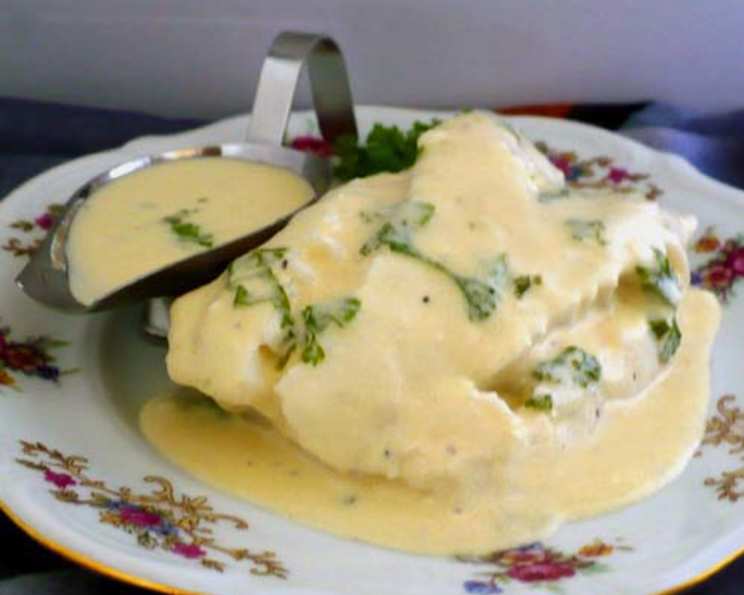
Haddock in Mustard Sauce: A Culinary Embrace
I remember the first time I tasted Haddock in Mustard Sauce. It was a blustery autumn evening, and my grandmother, a woman whose cooking could soothe any storm, had prepared it. The creamy, tangy sauce, enveloping the delicate flakes of fish, was a revelation. The aroma alone, a blend of warm stock, sharp mustard, and fresh parsley, still evokes feelings of comfort and familial love. It wasn’t just a meal; it was an embrace.
Recipe Overview
- Prep Time: 10 minutes
- Cook Time: 20 minutes
- Total Time: 30 minutes
- Servings: 6
- Yield: 6 servings
- Dietary Type: Pescatarian
Ingredients
- 4 cups fish stock
- 1 cup milk
- 3 lbs haddock fillets
- 1/4 teaspoon salt
- 1/4 teaspoon black pepper, freshly ground
- 1/2 cup heavy cream
- 3 tablespoons Dijon mustard
- 1/4 teaspoon sugar
- 2 tablespoons sour cream
- 4 tablespoons unsalted butter, cut in pieces and at room temperature
- 2 tablespoons flat leaf parsley, minced
Equipment Needed
- Large skillet
- Heated platter
- Whisk
- Strainer
Instructions
-
In a large skillet, combine the fish stock and milk. The skillet needs to be large enough to hold all of the haddock fillets in a single layer, ensuring even cooking.
-
Bring the mixture to a simmer over medium heat. A gentle simmer is key – you want to poach the fish gently, not boil it aggressively.
-
Add the haddock fillets, salt, and pepper to the simmering liquid. Cook uncovered for 5-7 minutes, or until the haddock just flakes when you touch it gently with a fork. Be careful not to overcook, as the fish will become dry. Start checking for doneness around the 5-minute mark.
-
Carefully move the cooked haddock fillets to a heated platter using a slotted spatula to drain excess liquid. Cover the platter and keep warm. This prevents the haddock from cooling down while you prepare the sauce.
-
Increase the heat under the skillet to high and bring the poaching liquid to a boil. Reduce the liquid to 1 cup, which should take about 10 minutes. This concentrates the flavors of the stock and milk, forming the base of your sauce.
-
Reduce the heat to medium and add the heavy cream to the reduced poaching liquid. Cook for 2 more minutes, allowing the cream to thicken slightly.
-
Remove the skillet from the heat. Whisk in the Dijon mustard, sugar, and sour cream. The residual heat will gently melt and incorporate the ingredients, creating a smooth and flavorful sauce. Return to low heat just to keep it warm.
-
Gradually whisk in the unsalted butter, a bit at a time, until fully incorporated and the sauce is glossy and emulsified. Room temperature butter will incorporate more easily. Whisking constantly prevents the sauce from breaking.
-
Add any juices that have accumulated on the platter from the haddock back into the sauce. These juices contain valuable flavor that will enhance the final dish.
-
Strain the sauce over the haddock fillets on the platter. This step ensures a smooth, velvety texture, removing any small pieces of cooked fish or solids.
-
Sprinkle with minced flat leaf parsley for a burst of fresh flavor and vibrant color. Serve immediately and enjoy.
Expert Tips & Tricks
- Don’t overcook the fish! Haddock is delicate and can become dry quickly. Err on the side of slightly undercooked, as it will continue to cook slightly from the residual heat.
- For a richer sauce, use a high-quality, full-fat heavy cream.
- If the sauce becomes too thick, add a splash of milk or fish stock to thin it out.
- Taste the sauce before straining and adjust the seasoning as needed. A pinch of cayenne pepper can add a subtle kick.
- If you don’t have sour cream, a tablespoon of crème fraîche or Greek yogurt can be used as a substitute.
- To prevent the sauce from breaking, ensure the butter is at room temperature and whisk constantly while incorporating it.
- Make sure the butter is not browned while incorporating it.
Serving & Storage Suggestions
Haddock in Mustard Sauce is best served immediately while the fish is tender and the sauce is creamy and warm. Garnish with extra fresh parsley for visual appeal.
Serving Suggestions:
- Serve alongside steamed asparagus, green beans, or a simple salad.
- Mashed potatoes, rice pilaf, or quinoa are excellent accompaniments to soak up the delicious sauce.
- A crisp, dry white wine, such as Sauvignon Blanc or Pinot Grigio, pairs perfectly with this dish.
Storage Suggestions:
- Leftovers can be stored in an airtight container in the refrigerator for up to 2 days.
- The sauce may separate slightly upon reheating. Whisk it vigorously to restore its creamy texture.
- Reheat gently over low heat on the stovetop or in the microwave, being careful not to overcook the fish.
- Freezing is not recommended, as the sauce may become grainy and the fish may lose its texture.
Nutritional Information
| Nutrient | Amount per Serving | % Daily Value |
|---|---|---|
| Calories | 401 kcal | N/A |
| Total Fat | 20.5g | 31% |
| Saturated Fat | 11.5g | 57% |
| Cholesterol | 186.1mg | 62% |
| Sodium | 609.2mg | 25% |
| Total Carbohydrate | 3.5g | 1% |
| Dietary Fiber | 0.3g | 1% |
| Sugars | 0.4g | 1% |
| Protein | 48.8g | 97% |
Note: Nutritional information is an estimate and may vary based on specific ingredients and preparation methods.
Variations & Substitutions
- Other Fish: While this recipe calls for haddock, other white fish such as cod, pollock, or halibut can be substituted. Adjust the cooking time as needed based on the thickness of the fillets.
- Cream Alternatives: For a lighter version, use half-and-half or a combination of milk and a tablespoon of cornstarch instead of heavy cream.
- Mustard Variations: Experiment with different types of mustard, such as whole-grain mustard or honey mustard, for a unique flavor profile.
- Herb Infusion: Add fresh herbs like thyme, tarragon, or chives to the poaching liquid for an extra layer of flavor.
- Lemon Zest: A pinch of lemon zest added to the sauce will brighten the flavors and add a touch of acidity.
FAQs (Frequently Asked Questions)
Q: Can I use frozen haddock fillets?
A: Yes, but make sure to thaw them completely before cooking. Pat them dry with paper towels to remove excess moisture.
Q: How do I know when the haddock is cooked through?
A: The haddock is done when it flakes easily with a fork and is opaque throughout. Avoid overcooking, as it will become dry.
Q: Can I make the sauce ahead of time?
A: The sauce is best made fresh, but you can prepare it up to a few hours in advance. Reheat gently over low heat, whisking frequently, before serving.
Q: What if my sauce is too thin?
A: You can thicken the sauce by simmering it for a few more minutes, allowing it to reduce further. Alternatively, whisk in a small amount of cornstarch slurry (1 tablespoon cornstarch mixed with 2 tablespoons cold water).
Q: Can I add vegetables to this dish?
A: Absolutely! Consider adding asparagus, peas, or sautéed mushrooms to the skillet during the last few minutes of cooking.
Final Thoughts
This Haddock in Mustard Sauce is more than just a recipe; it’s an invitation to create a comforting and memorable meal. With its delicate flavors and creamy texture, it’s sure to become a family favorite. Don’t hesitate to experiment with variations and substitutions to make it your own. I encourage you to try this recipe and share your feedback. Perhaps pair it with a crisp white wine and some crusty bread to soak up every last drop of that delicious sauce. Happy cooking!