
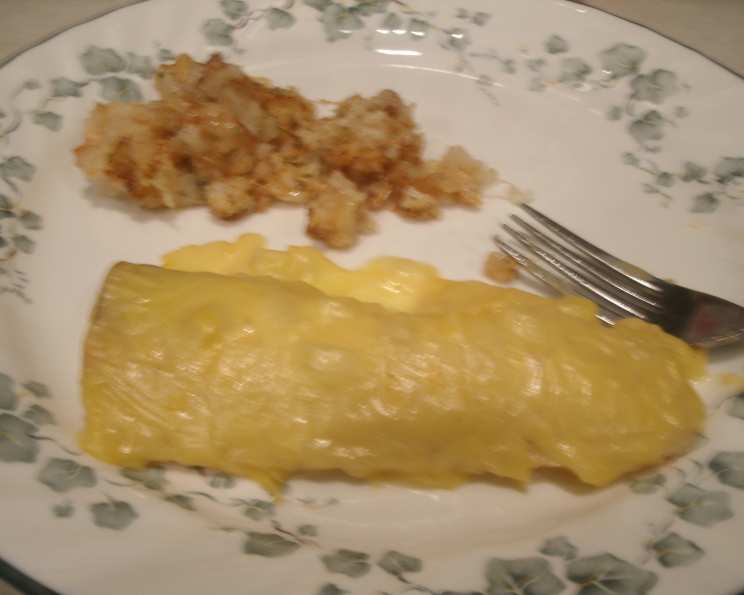
Haddock Mornay: A Wisconsin Supper Club Classic
My grandmother, bless her heart, was the queen of comfort food. Weekends at her house always meant a parade of creamy casseroles, bubbling baked dishes, and enough butter to make Paula Deen blush. While she had a repertoire of classics, one dish always stood out: Haddock Mornay. I remember the anticipation as the rich, cheesy aroma wafted from the kitchen, a promise of flaky fish bathed in a velvety sauce, just begging to be spooned over a bed of fluffy rice. The first bite was always pure bliss, a taste of warmth and home that I still crave to this day. This recipe, a true Wisconsin treasure, aims to recreate that same feeling.
Recipe Overview
- Prep Time: 20 minutes
- Cook Time: 50-70 minutes
- Total Time: 1 hour 10 minutes – 1 hour 30 minutes
- Servings: 8-10
- Yield: 1 large baking dish
- Dietary Type: Pescatarian
Ingredients
- 4-5 lbs haddock or 4-5 lbs cod, cut in 8 serving-size portions
- Melted butter or margarine, to baste fish
- Salt
- Pepper
For the Sauce:
- 4 tablespoons butter
- 3 tablespoons minced onions
- 5 tablespoons flour
- 1 quart hot milk or 1 quart half-and-half
- 1 teaspoon chicken base or 1 chicken bouillon cube
- Salt, to taste
- White pepper, to taste
- 2 cups grated medium-aged cheddar cheese
- 2 tablespoons parmesan cheese
- 2 drops Worcestershire sauce
- ¼ cup sherry wine
- Additional parmesan cheese and grated cheddar cheese mixed with a few breadcrumbs (to garnish) (optional)
Equipment Needed
- Large shallow baking dish
- Heavy saucepan
- Whisk
- Measuring cups and spoons
Instructions
- Preheat your oven to 350°F (175°C).
- Arrange the haddock or cod fillets in a large, shallow baking dish. Ensure the fillets are not overcrowded so they bake evenly.
- Lightly brush the fish fillets with melted butter or margarine. This helps keep the fish moist and adds a touch of richness.
- Season the fillets generously with salt and pepper. Don’t be shy with the seasoning – it’s essential for bringing out the natural flavors of the fish.
- Cover the baking dish with a piece of buttered brown paper or parchment paper. This creates a moist environment, preventing the fish from drying out during baking.
- Bake for 35-40 minutes, or until the fish is cooked through. The fish should be opaque and flake easily with a fork.
- Ten minutes before the fish is done, carefully drain off any excess liquid from the baking dish. Then, remove the parchment paper. This step ensures that the fish isn’t sitting in watery juices and allows it to brown slightly.
- The fish should be just barely done, still retaining plenty of moisture in the flesh. Overcooked fish is dry and tough, so keep a close eye on it.
- While the fish is baking, prepare the Mornay sauce. In a heavy saucepan, melt 4 tablespoons of butter over medium heat.
- Add the 3 tablespoons of minced onions to the melted butter and sauté until softened and translucent, about 3-5 minutes. This step is crucial for developing the flavor base of the sauce.
- Add 5 tablespoons of flour to the saucepan, stirring constantly with a whisk to combine it with the butter and onions.
- Sauté the flour mixture (this is your roux) over low heat, stirring continuously for 3-4 minutes. This process cooks the flour, removing its raw taste and thickening the sauce. Don’t let it brown too much; a pale golden color is ideal.
- Gradually add the 1 quart of hot milk or half-and-half to the roux, whisking constantly to prevent lumps from forming. The milk should be hot to help the sauce thicken smoothly.
- Stir in the 1 teaspoon of chicken base or 1 chicken bouillon cube. This adds a savory depth to the sauce.
- Continue to stir the sauce until it thickens to a medium-thick consistency. This may take several minutes, so be patient and keep stirring.
- Season the sauce with salt and white pepper to taste. White pepper is traditionally used in Mornay sauce for its delicate flavor and light color.
- Once the sauce reaches the desired consistency, remove it from the heat. Add the 2 cups of grated medium-aged cheddar cheese, 2 tablespoons of parmesan cheese, and 2 drops of Worcestershire sauce. Blend well until the cheeses are melted and the sauce is smooth and creamy.
- Stir in the ¼ cup of sherry wine. The sherry adds a subtle nutty sweetness and complexity to the sauce.
- Pour the hot Mornay sauce evenly over the baked haddock or cod fillets, ensuring that the fish is completely covered.
- If desired, top the dish with a mixture of additional parmesan cheese, grated cheddar cheese, and a few breadcrumbs. This creates a golden, crispy topping.
- Bake in a preheated 325°F (160°C) oven for 20-30 minutes, or until the sauce is bubbling and the topping, if used, is golden brown.
- Serve immediately.
Expert Tips & Tricks
- For an even richer sauce, use heavy cream instead of milk or half-and-half.
- If your sauce becomes lumpy, try using an immersion blender to smooth it out.
- To prevent the cheese from separating in the sauce, make sure the sauce isn’t too hot when you add the cheese.
- Feel free to experiment with different types of cheese. Gruyere, Swiss, or Monterey Jack would all be delicious in this dish.
- Prepare the sauce ahead of time and store it in the refrigerator. When you’re ready to bake the dish, simply reheat the sauce gently before pouring it over the fish.
- If you like a little heat, add a pinch of cayenne pepper to the sauce.
Serving & Storage Suggestions
Serve Haddock Mornay immediately while it’s hot and bubbly. It’s delicious served over a bed of fluffy rice, mashed potatoes, or pasta. A side of steamed green beans or asparagus complements the richness of the dish perfectly.
Leftovers can be stored in an airtight container in the refrigerator for up to 3 days. To reheat, bake in a preheated oven at 325°F (160°C) until heated through and bubbling, or microwave in short intervals, stirring occasionally. Ensure the center is thoroughly heated. It’s best not to freeze this dish, as the sauce may separate upon thawing.
Nutritional Information
| Nutrient | Amount per Serving | % Daily Value |
|---|---|---|
| Calories | 502 kcal | N/A |
| Calories from Fat | 191 g | 38% |
| Total Fat | 21.2 g | 32% |
| Saturated Fat | 12.9 g | 64% |
| Cholesterol | 212.7 mg | 70% |
| Sodium | 902.4 mg | 37% |
| Total Carbohydrate | 11.2 g | 3% |
| Dietary Fiber | 0.2 g | 0% |
| Sugars | 0.6 g | 2% |
| Protein | 57.5 g | 114% |
Variations & Substitutions
- For a gluten-free version, use a gluten-free flour blend in the Mornay sauce.
- Instead of haddock or cod, try using other types of white fish, such as halibut or flounder.
- Add some chopped vegetables, such as mushrooms, bell peppers, or spinach, to the Mornay sauce for added flavor and nutrition.
- For a spicier dish, add a pinch of red pepper flakes to the Mornay sauce.
- If you don’t have sherry wine on hand, you can substitute it with dry white wine or chicken broth.
FAQs (Frequently Asked Questions)
Q: Can I make this dish ahead of time?
A: Yes, you can prepare the dish ahead of time and bake it later. Just be sure that the center of the sauce is bubbling when reheated. This will take about 1 hour.
Q: Can I use frozen fish for this recipe?
A: Yes, you can use frozen fish, but be sure to thaw it completely before baking. Pat the fish dry with paper towels to remove excess moisture.
Q: What if my sauce is too thick?
A: If your sauce is too thick, simply add a little more hot milk or half-and-half until it reaches the desired consistency.
Q: Can I use pre-shredded cheese for the sauce?
A: While you can use pre-shredded cheese, freshly grated cheese melts more smoothly and evenly into the sauce.
Q: What’s the best way to prevent the fish from drying out?
A: Covering the fish with buttered parchment paper during the initial baking helps to keep it moist. Also, be careful not to overbake the fish.
Final Thoughts
This Haddock Mornay recipe is more than just a dish; it’s a journey back to my childhood, a taste of simpler times, and a reminder of the love that goes into homemade meals. I encourage you to give it a try, adapt it to your own preferences, and share it with the people you care about. And please, let me know what you think! What variations did you try? What pairings did you discover? The best part of cooking is sharing the experience and creating new memories around the table. Enjoy!