
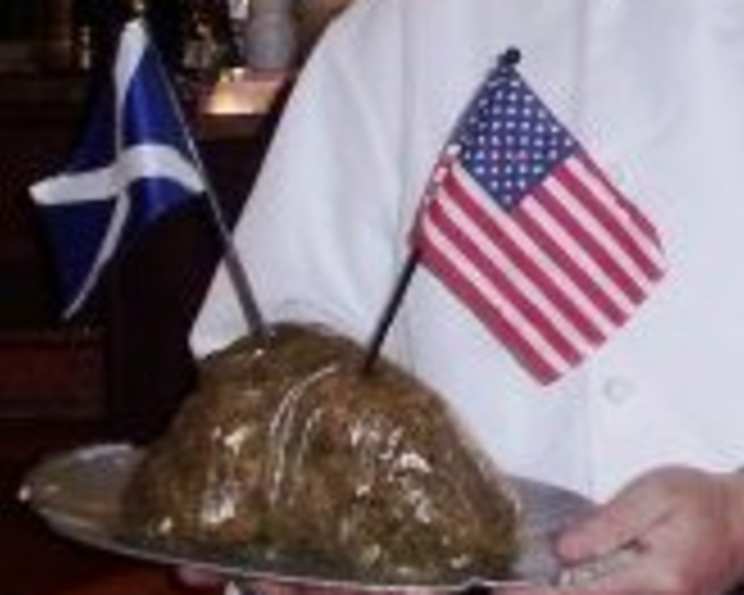
Haggis, Colorado Style: A Culinary Ode to Scotland in the Rockies
The crisp mountain air always carried a hint of woodsmoke that autumn. That particular year, it was also infused with something far more exotic: the earthy, savory aroma of haggis. My Uncle Angus, a transplanted Scot with a twinkle in his eye and a kilt for every occasion, was hosting his annual Burns Supper. As a young, somewhat bewildered American cousin, I was tasked with “stirring the pot,” a euphemism for keeping a watchful eye on the bubbling concoction that smelled both intriguing and faintly alarming. That first bite, served with a healthy dollop of mashed turnips and potatoes, was a revelation. It wasn’t just food; it was a story, a history, a connection to a land and heritage I was just beginning to understand. This recipe, a Rocky Mountain adaptation of that very dish, is my attempt to share that experience.
Recipe Overview
- Prep Time: 1 hour
- Cook Time: 2 hours
- Total Time: 3 hours
- Servings: 600
- Yield: 75 pounds
- Dietary Type: Not Gluten-Free
Ingredients
- 15 lbs lamb hearts
- 15 lbs lamb kidneys
- 15 lbs lamb liver
- 30 lbs chopped onions
- 10 lbs steel cut oats
- 1 cup chopped garlic
- 1 (1 ounce) can rubbed sage
- 1 (1 ounce) can rubbed thyme
- 1 (1 ounce) can flaked rosemary
- 2 (1 ounce) packages fresh rosemary
- 1 (1 ounce) can white pepper
- Salt, to taste
- 15 large Reynolds oven cooking bags
- Cow stomach (tripe) – for presentation purposes (optional)
Equipment Needed
- Large stockpot (shrimp boiler or turkey fryer with cage recommended)
- Large mixing bowls
- Food processor (Cuisinart)
- Measuring cups and spoons
- Large spoon or paddle
- Butcher’s twine (if using tripe)
Instructions
-
Begin by thoroughly boiling the lamb hearts, lamb kidneys, and lamb liver in a large stockpot. A shrimp boiler or turkey fryer with a cage works particularly well for this task, allowing you to easily remove the cooked organs later. Cook for approximately 1 hour. The meat should be cooked through and slightly tender.
-
While the organs are cooking, chop the onions. In a large bowl, combine the chopped onions with the rubbed sage, rubbed thyme, flaked rosemary, fresh rosemary, white pepper, and salt. Mix all these ingredients together thoroughly. Then, add the steel cut oats and chopped garlic. Ensure everything is evenly distributed.
-
Once the lamb organs have finished boiling, carefully remove them from the stockpot and allow them to cool slightly. Be cautious, as they will be hot. Once cool enough to handle, chop the cooked lamb hearts, lamb kidneys, and lamb liver into small pieces. A food processor (such as a Cuisinart) can be used for this step. Work in batches, and be careful not to over-process the meat into a paste-like consistency. You want a finely chopped, but still textured, result.
-
In the large bowl containing the onion, herb, and oat mixture, add the chopped lamb organs. Using a large spoon or your hands (if you prefer), mix the meat thoroughly with the rest of the ingredients. Ensure everything is well combined. The mixture should be homogenous.
-
Now, prepare the Reynolds oven bags. Divide the haggis mixture evenly among the 15 bags.
-
Carefully tie off each bag, ensuring to eliminate as much air as possible to prevent the bags from bursting during the next cooking phase. This step is crucial.
-
Return the filled Reynolds oven bags to the large stockpot. Boil the bags of haggis for a further 1 hour, ensuring the bags are fully submerged in the water.
-
If you’re using the cow stomach (tripe) for presentation, after boiling the bags for 30 minutes, carefully remove one or two bags and stuff the haggis mixture into the prepared tripe. Secure the ends with butcher’s twine. Return the tripe-encased haggis to the boiling water for the remaining 30 minutes, alongside the remaining bags.
-
Once cooked, carefully remove the bags (and tripe, if using) from the stockpot. Allow them to cool slightly before opening.
-
Serve the haggis hot with bashed neeps and tatties (mashed turnips and potatoes).
Expert Tips & Tricks
- Don’t over-process the meat: The texture of the haggis is important. Avoid turning the cooked organs into a paste. Pulse the food processor rather than letting it run continuously.
- Air is the enemy: Removing as much air as possible from the Reynolds oven bags is essential to prevent them from bursting during cooking. Press down on the filled bags before tying them off.
- Freezing for later: This recipe yields a large quantity, perfect for freezing. However, be aware that Reynolds oven bags can become brittle when frozen. Consider transferring the cooked haggis to freezer-safe containers before freezing.
- Herbs are key: The specific blend of herbs is crucial for the characteristic haggis flavor. Don’t skimp on the sage, thyme, and rosemary.
- Salt to taste: Add salt gradually and taste as you go. Remember that the boiling process can reduce the saltiness.
Serving & Storage Suggestions
Serve your Colorado-style haggis piping hot alongside traditional “bashed neeps and tatties” (mashed turnips and potatoes). A dram of good Scotch whisky is the perfect accompaniment. Garnish with a sprig of fresh rosemary for an extra touch.
Leftover haggis can be stored in an airtight container in the refrigerator for up to 3 days. For longer storage, freeze the haggis in freezer-safe containers for up to 3 months.
To reheat, thaw the haggis completely in the refrigerator. You can then reheat it in the microwave, in a saucepan over low heat, or in the oven. If reheating in the oven, add a little water or broth to prevent it from drying out. Be sure to heat thoroughly until piping hot.
Nutritional Information
(Note: Nutritional information is an estimate, as the exact composition can vary based on ingredient sourcing and preparation methods.)
| Nutrient | Amount per Serving (estimated) | % Daily Value (estimated) |
|---|---|---|
| Calories | 80 kcal | N/A |
| Calories from Fat | N/A | N/A |
| Total Fat | 2.1 g | 3% |
| Saturated Fat | 0.7 g | 3% |
| Cholesterol | 95.8 mg | 31% |
| Sodium | 36.9 mg | 1% |
| Total Carbohydrate | 7.6 g | 2% |
| Dietary Fiber | 1.2 g | 5% |
| Sugars | 1 g | N/A |
| Protein | 7.5 g | 15% |
Variations & Substitutions
- Gluten-Free Haggis: Replace the steel-cut oats with gluten-free oats or a mixture of quinoa and rice.
- Vegetarian Haggis (for the adventurous): Substitute the lamb organs with a combination of lentils, mushrooms, and walnuts for a hearty, vegetarian version. Add a splash of soy sauce or tamari for umami.
- Spice It Up: Add a pinch of cayenne pepper or a dash of hot sauce to the haggis mixture for a little extra heat.
- Regional Twist: Incorporate local Colorado ingredients, such as roasted green chilies or juniper berries, for a unique flavor profile.
FAQs (Frequently Asked Questions)
Q: Why use Reynolds oven bags instead of a traditional sheep’s stomach?
A: In the United States, sheep’s stomachs are not always readily available or prepared for human consumption. Reynolds oven bags provide a practical and safe alternative for cooking the haggis.
Q: Can I use different types of oats?
A: While steel-cut oats are traditional, you can substitute with rolled oats in a pinch. However, the texture will be slightly different. Steel-cut oats provide a heartier, chewier texture.
Q: How do I know when the haggis is cooked through?
A: The haggis is cooked when the internal temperature reaches 160°F (71°C). Use a meat thermometer to check the temperature.
Q: Can I freeze the haggis in the Reynolds oven bags?
A: While technically possible, it’s not recommended. Reynolds oven bags can become brittle when frozen, increasing the risk of tearing. It’s best to transfer the cooked haggis to freezer-safe containers before freezing.
Q: What are neeps and tatties?
A: Neeps and tatties are traditional Scottish sides that are served with haggis. “Neeps” refers to turnips, and “tatties” refers to potatoes. Both are mashed and seasoned with butter, salt, and pepper.
Final Thoughts
Making haggis is a labor of love, a culinary journey that connects you to tradition and history. While this Colorado adaptation may differ from the original in some aspects, it captures the essence of this iconic dish: its rich, savory flavor, its hearty texture, and its ability to bring people together. So, gather your ingredients, roll up your sleeves, and embark on this delicious adventure. Don’t be afraid to experiment, to add your own personal touch, and to share your creation with friends and family. And, of course, don’t forget the Scotch! Slàinte mhath!