
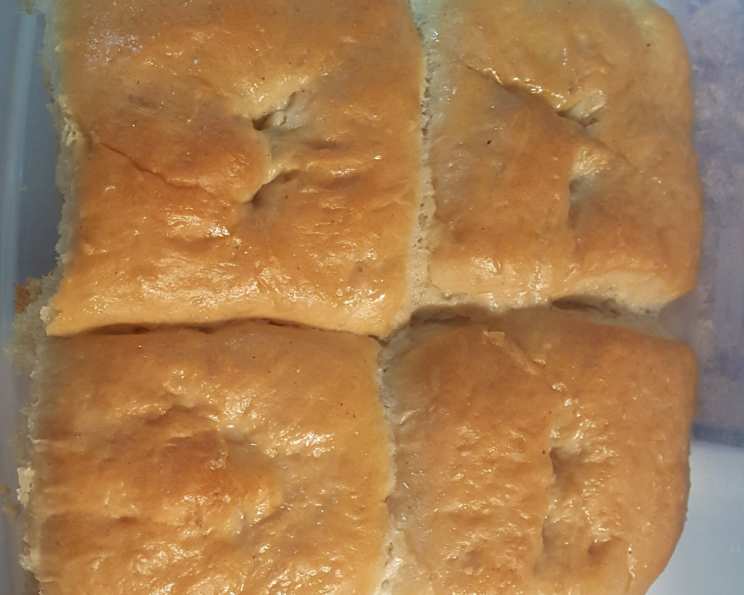
Haitian Bread (Pain Haitien): A Taste of Sunshine
Growing up, the scent of baking bread was a constant comfort, but there was something truly special about the days my aunt Marie made Pain Haitien. It wasn’t just the sweet, yeasty aroma that filled her small kitchen, but the warmth and care she poured into each loaf. I remember standing on a stool, mesmerized as she expertly kneaded the dough, her hands moving with a rhythm passed down through generations. The slight hint of nutmeg, the golden-brown crust, and the soft, slightly sweet interior—it was more than just bread; it was a taste of home, a symbol of family, and a slice of Haitian sunshine.
Recipe Overview:
- Prep Time: 1 hour 20 minutes
- Cook Time: 35 minutes
- Rise Time: 1 hour 20 minutes (50 minutes + 30 minutes)
- Total Time: 2 hours 25 minutes
- Servings: 24 squares
- Dietary Type: Vegetarian
Ingredients:
- 2 (1/4 ounce) packages active dry yeast
- 1 1/2 cups warm water
- 1/4 cup honey
- 2 tablespoons vegetable oil
- 1 teaspoon salt
- 3/4 teaspoon ground nutmeg
- 4 cups flour
- 1/4 teaspoon instant coffee
- 2 tablespoons milk
Equipment Needed:
- Large bowl
- Measuring cups and spoons
- Lightly floured surface
- Greased bowl
- Greased jelly roll pan (approximately 15x10x1-inch)
- Sharp knife
- Oven
- Pastry brush or similar
Instructions:
-
Preheat your oven to 350°F (175°C).
-
In a large bowl, dissolve the yeast in the warm water. Ensure the water isn’t too hot, as this can kill the yeast. Lukewarm is ideal. Let it sit for a few minutes until foamy, indicating the yeast is active.
-
Stir in the honey, vegetable oil, salt, nutmeg, and 2 cups of the flour. Mix well to combine.
-
Beat the mixture until very smooth, about 1 minute. This initial beating helps develop the gluten and creates a good structure for the bread.
-
Gradually add enough of the remaining flour to make a stiff dough. You may not need to use all the flour. The dough should be firm enough to knead without being overly sticky.
-
Turn the dough onto a lightly floured surface and knead until smooth and elastic, about 5 minutes. Kneading develops the gluten, which is crucial for a good bread texture.
-
Place the kneaded dough in a greased bowl, cover it, and let it rise in a warm place until it has about doubled in size, about 50 minutes. A warm, draft-free environment is essential for proper rising. You can cover it with a damp towel.
-
Punch down the dough to release the air. This helps redistribute the yeast and evens out the texture.
-
Press the dough into a greased jelly roll pan (about 15x10x1-inch). Ensure the dough is evenly distributed in the pan.
-
Cut the dough into about 2½-inch squares with a sharp knife, cutting two-thirds of the way through the dough. This creates the individual bread squares and allows them to separate easily after baking. Do not cut all the way through at this point.
-
Cover the pan and let the dough rise again until it has doubled in size, about 30 minutes. This second rise is important for creating a light and airy texture.
-
Dissolve the instant coffee in the milk to create a wash.
-
Brush the coffee-milk mixture over the dough. This will give the bread a beautiful golden-brown color and add a subtle depth of flavor.
-
Bake until the bread is golden brown, about 35 minutes. Check for doneness by inserting a toothpick into the center; it should come out clean.
-
Remove the bread from the oven and let it cool slightly. Then, break the bread into squares to serve.
Expert Tips & Tricks:
- Yeast Activation: Always check the expiration date of your yeast. To test if your yeast is active, mix it with warm water and a pinch of sugar (instead of honey). If it doesn’t foam after 5-10 minutes, it’s likely dead and you’ll need to get fresh yeast.
- Kneading Perfection: Proper kneading is key. The dough should be smooth and elastic, not sticky. If it’s too sticky, add a little more flour, one tablespoon at a time.
- Even Rising: Ensure a warm environment for rising. A slightly warmed oven (turned off) or a sunny spot works well. Avoid drafts, as they can inhibit the rising process.
- Coffee Infusion: If you’re not a coffee fan, you can omit the coffee from the milk wash or substitute it with a sprinkle of granulated sugar for added sweetness and browning.
- Doneness Check: If the bread is browning too quickly, tent it with foil during the last 10-15 minutes of baking to prevent burning.
Serving & Storage Suggestions:
Haitian bread is best served warm, fresh from the oven. It’s delicious on its own or paired with a hot cup of coffee or tea. Leftovers can be stored in an airtight container at room temperature for up to 2 days. For longer storage, wrap the bread tightly in plastic wrap and freeze it for up to 2 months. To reheat, thaw the bread completely and warm it in a low oven (300°F/150°C) for about 10 minutes, or until heated through. You can also reheat individual squares in the microwave for a few seconds.
Nutritional Information:
| Nutrient | Amount per Serving | % Daily Value |
|---|---|---|
| Calories | 100 kcal | N/A |
| Total Fat | 1.4 g | 2% |
| Saturated Fat | 0.2 g | 1% |
| Cholesterol | 0.2 mg | 0% |
| Sodium | 98.8 mg | 4% |
| Total Carbohydrate | 19.1 g | 6% |
| Dietary Fiber | 0.7 g | 2% |
| Sugars | 3 g | N/A |
| Protein | 2.5 g | 4% |
Variations & Substitutions:
- Spiced Up: Add a pinch of ground cloves or cinnamon to the dough for a warmer, spicier flavor profile.
- Citrus Zest: Incorporate the zest of one orange or lemon for a bright, aromatic twist.
- Sweetened with Coconut: Substitute half of the water with coconut milk for a richer, slightly sweeter flavor.
- Whole Wheat Delight: Replace half of the all-purpose flour with whole wheat flour for a nuttier taste and added fiber.
- Vegan Version: Ensure the honey used is vegan-friendly (some vegans avoid honey). You can also use maple syrup or agave nectar as a substitute.
FAQs (Frequently Asked Questions):
Q: Can I use a stand mixer instead of kneading by hand?
A: Yes, you can use a stand mixer with a dough hook attachment. Knead on low speed for about 8 minutes until the dough is smooth and elastic.
Q: What if my dough doesn’t rise?
A: Make sure your yeast is fresh and the water is warm, not hot. Also, ensure the rising environment is warm and draft-free. If it still doesn’t rise, the yeast might be inactive, and you’ll need to start again with fresh yeast.
Q: Can I make this bread ahead of time?
A: Yes, you can prepare the dough up to the first rise, then refrigerate it overnight. Let it come to room temperature before proceeding with the recipe.
Q: What is the best way to prevent the bread from drying out?
A: Store the bread in an airtight container at room temperature. You can also wrap it tightly in plastic wrap and freeze it for longer storage.
Q: Can I use a different type of oil?
A: Yes, you can substitute the vegetable oil with another neutral oil, such as canola oil or sunflower oil. Olive oil is not recommended as its flavor might be too strong.
Final Thoughts:
This Haitian Bread (Pain Haitien) recipe is more than just a set of instructions; it’s an invitation to experience a taste of Haitian culture and a glimpse into the warmth of its people. I encourage you to try this recipe and share the joy of baking with your loved ones. Don’t be afraid to experiment with the variations and make it your own. And, of course, I would love to hear your feedback and see your creations! Enjoy this taste of sunshine, and may your kitchen be filled with the delightful aroma of freshly baked Pain Haitien.