
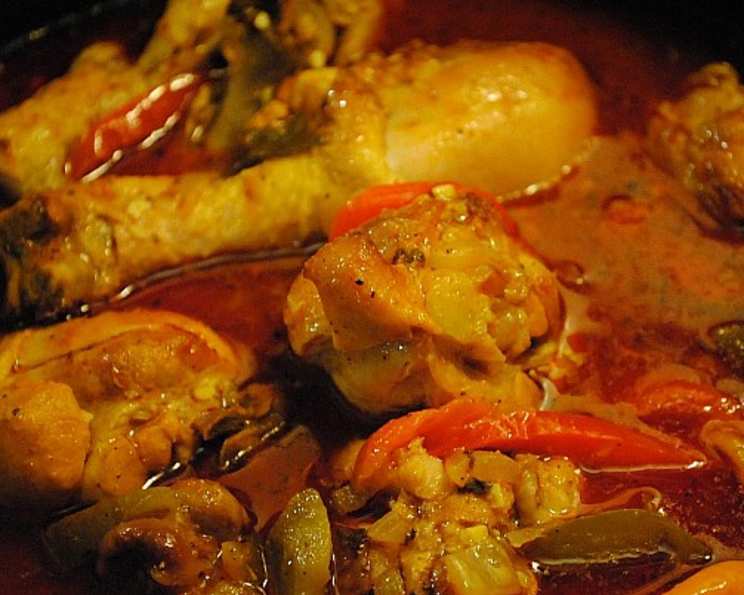
Haitian Chicken in Sauce: A Culinary Journey to the Caribbean
The aroma alone transports me back to my Abuela’s kitchen, the heart of our family in Little Haiti. I remember Sundays filled with laughter, the rhythmic chopping of vegetables, and that intoxicating scent of chicken simmering in a rich, flavorful sauce. This wasn’t just a meal; it was a celebration of heritage, a warm embrace in every bite, and a reminder of the love that binds us together. This Haitian Chicken in Sauce recipe, while not exactly hers, evokes that same comforting feeling, a taste of home I can share with you.
Recipe Overview
- Prep Time: 20 minutes
- Cook Time: 35 minutes
- Total Time: 55 minutes
- Servings: 4
- Yield: Approximately 6 cups
- Dietary Type: Gluten-Free (naturally), Dairy-Free
Ingredients
- 1 (3 1/2-4 lb) fryer chicken, cut into 8 pieces
- 1 large onion, sliced thin
- 1 scotch bonnet pepper, chopped fine (use caution and adjust to your spice preference!)
- 3 garlic cloves, smashed or 3 minced garlic
- 3/4 cup tomato sauce
- 3 tablespoons sugar or 3 tablespoons Splenda sugar substitute
- Salt, to taste
- 2-3 limes or 2-3 lemons
- Vegetable oil
- Optional: Sliced olives
- Optional: Low-sodium, low-fat chicken broth
- Optional garnish: Lettuce and onion rounds for serving
- Optional side: Cooked white or brown rice
Equipment Needed
- Large bowl
- Heavy ovenproof pan (cast iron skillet or Dutch oven works well)
- Stovetop
- Oven
- Knife
- Cutting board
Instructions
-
Begin by thoroughly washing the chicken pieces under cold water. Pat them completely dry with paper towels; this crucial step ensures proper browning.
-
In a large bowl, squeeze the juice of the limes or lemons over the chicken pieces, making sure each piece is well coated. Next, generously sprinkle salt over the chicken, again ensuring even coverage. Allow the chicken to marinate for at least 15 minutes, or up to an hour in the refrigerator for a deeper flavor penetration.
-
While the chicken marinates, prepare the other ingredients. Slice the onion thinly. Carefully chop the scotch bonnet pepper – remember to handle it with caution, as it is very spicy. Remove the seeds and membranes for a milder heat. Smash the garlic cloves (or mince them if you prefer).
-
Preheat your oven to 375°F (190°C). This ensures even cooking throughout the process.
-
Place your heavy ovenproof pan over medium-high heat. Pour in enough vegetable oil to generously coat the bottom of the pan; about ¼ inch deep is ideal. Allow the oil to heat up until it shimmers but isn’t smoking.
-
Carefully add the chicken pieces to the hot oil, being mindful not to overcrowd the pan. Work in batches if necessary to maintain proper searing temperature. Fry the chicken pieces for about 5 minutes per side, until golden brown. This step develops a rich, savory crust.
-
While the chicken is frying, prepare the sauce. In a separate bowl, combine the smashed garlic (or minced garlic), sugar (or Splenda), tomato sauce, and salt. Mix well until the sugar is dissolved and the mixture is homogenous.
-
After frying the chicken for about 5 minutes, add the sliced onions and chopped scotch bonnet pepper to the pan. Continue to cook for another 5-7 minutes, stirring occasionally, until the onions are softened and translucent, and the pepper has released its fragrant heat.
-
Remove the pan from the heat and carefully drain any excess oil. This prevents the dish from becoming greasy.
-
Pour the tomato mixture over the chicken and vegetables in the pan. Stir well to ensure that all the chicken pieces are evenly coated with the sauce. At this point you can add 1/4 cup of brandy or cognac for extra depth of flavor if desired.
-
Place the pan in the preheated oven and bake uncovered for 20 minutes, or until the chicken is cooked through and the sauce has thickened. The internal temperature of the chicken should reach 165°F (74°C). If the sauce becomes too thick during baking, add a little chicken broth, as needed.
-
If using, stir in sliced olives at the end of the cooking process.
-
Transfer the chicken to a serving platter. For an elegant presentation, line the platter with lettuce and onion rounds. Serve hot with diri blanc (plain white rice), pouring the flavorful sauce generously over the rice. This dish is also delicious with brown rice and string beans almondine.
Expert Tips & Tricks
- Spice Level Control: Scotch bonnet peppers pack a serious punch. For a milder flavor, remove the seeds and membranes, or substitute with a milder pepper like a jalapeno. You can also add a pinch of cayenne pepper for a hint of heat without overpowering the dish.
- Marinating Time: The longer the chicken marinates, the more flavorful it will be. Ideally, marinate the chicken for at least 30 minutes, or even overnight in the refrigerator.
- Browning is Key: Don’t skip the browning step. This adds a depth of flavor that is essential to the dish. Make sure the pan is hot enough before adding the chicken.
- Sauce Consistency: If the sauce becomes too thick during baking, add a splash of chicken broth to thin it out. If the sauce is too thin, you can simmer it on the stovetop after baking to reduce it to your desired consistency.
- Flavor Boost: For an extra layer of flavor, add a bay leaf or a sprig of thyme to the sauce during baking. Remember to remove them before serving.
Serving & Storage Suggestions
This Haitian Chicken in Sauce is best served hot, ideally over a bed of fluffy white rice, allowing the sauce to soak in and create a harmonious blend of flavors. Garnish with fresh parsley or cilantro for a pop of color.
Leftovers can be stored in an airtight container in the refrigerator for up to 3 days. To reheat, gently warm the chicken and sauce in a saucepan over medium heat, or microwave on medium power until heated through. Add a splash of chicken broth if the sauce has thickened too much.
Freezing is not recommended, as the texture of the chicken may change upon thawing.
Nutritional Information
(Estimated, per serving)
| Nutrient | Amount per Serving | % Daily Value |
|---|---|---|
| Calories | 550 kcal | 28% |
| Total Fat | 30g | 46% |
| Saturated Fat | 8g | 40% |
| Cholesterol | 75mg | 25% |
| Sodium | 400mg | 17% |
| Total Carbohydrate | 25g | 8% |
| Dietary Fiber | 3g | 12% |
| Sugars | 15g | N/A |
| Protein | 40g | 80% |
Variations & Substitutions
- Spice Level: Adjust the amount of scotch bonnet pepper to your preference. Use a milder pepper or remove the seeds and membranes for less heat.
- Sweetener: You can use honey or maple syrup instead of sugar or Splenda.
- Chicken: Boneless, skinless chicken thighs can be used instead of a whole fryer chicken. Adjust cooking time accordingly.
- Vegetarian: For a vegetarian version, substitute the chicken with firm tofu or chickpeas.
FAQs (Frequently Asked Questions)
Q: Can I make this dish ahead of time?
A: Yes, you can prepare the chicken and sauce ahead of time and store it in the refrigerator for up to 24 hours before baking.
Q: How do I know when the chicken is cooked through?
A: The internal temperature of the chicken should reach 165°F (74°C). You can use a meat thermometer to check.
Q: What if I don’t have a scotch bonnet pepper?
A: You can substitute with another hot pepper, such as a habanero or jalapeno, or use a pinch of cayenne pepper for heat.
Q: Can I use canned tomatoes instead of tomato sauce?
A: Yes, you can use canned crushed tomatoes. You may need to cook the sauce a bit longer to reduce the liquid.
Q: What side dishes go well with Haitian Chicken in Sauce?
A: Plain white rice (diri blanc) is a classic pairing. Other great options include brown rice, plantains, and a simple green salad.
Final Thoughts
This Haitian Chicken in Sauce is more than just a recipe; it’s a journey to the heart of Haitian cuisine, a celebration of vibrant flavors and comforting aromas. I encourage you to try this recipe and experience the warmth and richness of this beloved dish. Don’t be afraid to experiment with the spice level and customize it to your liking. Once you’ve tasted this delightful dish, I’m confident it will become a regular part of your culinary repertoire. Bon appétit!