
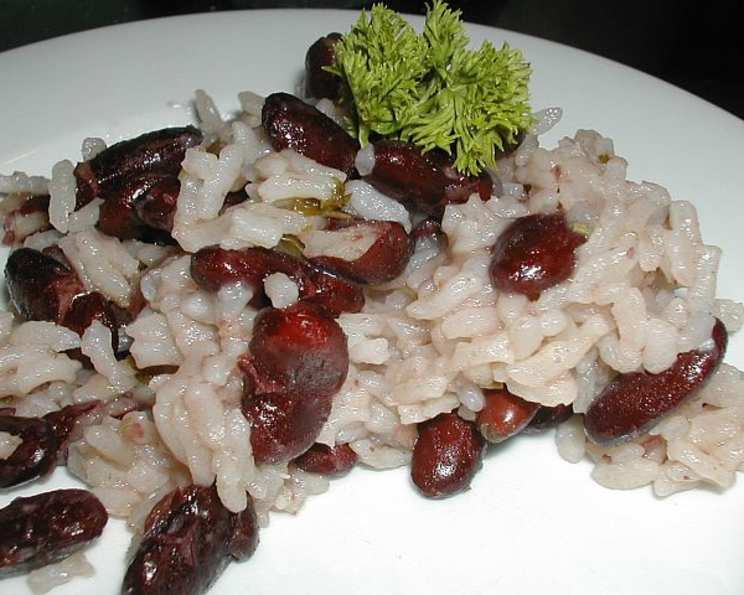
Haitian Rice and Beans: A Taste of Tradition
The first time I tasted Haitian rice and beans, diri ak pwa, was at a small family gathering in Little Haiti, Miami. The aroma alone was intoxicating – a fragrant blend of herbs, spices, and earthy beans that immediately transported me. Served alongside stewed chicken and pikliz, it was more than just a side dish; it was the heart of the meal, a comforting and flavorful foundation that brought everyone together. That simple plate sparked a lifelong appreciation for Haitian cuisine and the rich history woven into every bite.
Recipe Overview
- Prep Time: 20 minutes
- Cook Time: 2 hours
- Total Time: 2 hours 20 minutes
- Servings: 4
- Dietary Type: Vegan
Ingredients
- 1 quart water
- 1 cup dried red beans, rinsed
- ½ tablespoon salt
- 8 parsley sprigs
- 3 scallions or 3 green onions, chopped
- 2 garlic cloves
- ¼ teaspoon dried rosemary
- 2 tablespoons olive oil
- 1 cup rice
Equipment Needed
- Large pot
- Dutch oven or heavy-bottomed pot with a lid
- Mortar and pestle (optional, but recommended)
Instructions
- Begin by bringing the quart of water to a boil in a large pot.
- Add the rinsed dried red beans to the boiling water.
- Cover the pot and allow the beans to cook for 1 ½ hours, or until they are tender.
- Once cooked, drain the beans, but be sure to reserve the liquid. Set the cooked beans aside.
- Measure the reserved bean liquid. Add enough additional water to the liquid to equal 2 ½ cups. Set this liquid aside as well. This is essential for infusing the rice with the rich bean flavor.
- Now, prepare the seasoning paste. In a mortar, pound together the ½ tablespoon of salt, the 8 parsley sprigs, the 3 chopped scallions (or green onions), the 2 garlic cloves, and the ¼ teaspoon of dried rosemary until you form a fragrant paste. If you don’t have a mortar and pestle, you can finely mince the ingredients and mix them together very well.
- Heat the 2 tablespoons of olive oil in a Dutch oven or a heavy-bottomed pot over medium heat.
- Add the seasoning paste to the pot and sauté for about a minute until fragrant.
- Add the 1 cup of rice to the Dutch oven and stir continuously until the rice is well coated with the oil and seasoning paste. This step is crucial for ensuring the rice doesn’t stick and absorbs the flavors evenly.
- Pour in the reserved liquid (the 2 ½ cups of bean water mixture) and bring the mixture to a boil, stirring occasionally.
- Once boiling, add the cooked red beans to the pot and bring everything back to a boil.
- Reduce the heat to low, cover the pot tightly, and cook undisturbed for 20 minutes. It is very important to not lift the lid during this time as the steam is essential for cooking the rice properly.
- After 20 minutes, remove the cover and stir gently.
- Continue cooking for about 5 minutes longer, or until no liquid remains in the pot. Keep a close eye on the rice to prevent it from burning at the bottom.
Expert Tips & Tricks
- Bean Soaking: While not strictly necessary in this recipe, soaking the beans overnight can reduce cooking time and improve digestibility.
- Flavor Boost: For an even richer flavor, consider adding a Scotch bonnet pepper (whole, not cut) to the pot while the beans are cooking. Remove it before serving for a subtle heat.
- Herbs: Fresh thyme or a bay leaf added during the cooking process can also enhance the flavor.
- Rice Type: While this recipe calls for standard white rice, you can experiment with brown rice or long-grain rice, though the cooking time may need to be adjusted.
- Don’t Peek: Resist the urge to lift the lid while the rice is steaming. This releases steam and can result in unevenly cooked rice.
- Fluffing: Once all the liquid is absorbed, fluff the rice with a fork to separate the grains and prevent sticking.
- Make Ahead: The beans can be cooked ahead of time and stored in the refrigerator for up to 3 days.
- Salt Level: Adjust the salt according to your preference. Remember that the seasoning paste already contains salt.
Serving & Storage Suggestions
Serve this delicious Haitian rice and beans hot as a side dish alongside grilled meats, stewed chicken, or fish. It pairs wonderfully with pikliz (Haitian pickled slaw) for a spicy kick. For a complete vegetarian meal, serve with a side of steamed vegetables or a fresh salad.
Leftovers can be stored in an airtight container in the refrigerator for up to 3 days. To reheat, add a tablespoon or two of water to the rice and beans and microwave until heated through, or reheat in a saucepan over low heat, stirring occasionally. Freezing is not generally recommended as the texture of the rice can change upon thawing.
Nutritional Information
| Nutrient | Amount per Serving | % Daily Value |
|---|---|---|
| Calories | 320 kcal | 16% |
| Total Fat | 8g | 12% |
| Saturated Fat | 1g | 5% |
| Cholesterol | 0mg | 0% |
| Sodium | 750mg | 31% |
| Total Carbohydrate | 55g | 18% |
| Dietary Fiber | 3g | 12% |
| Sugars | 1g | 2% |
| Protein | 8g | 16% |
Note: Nutritional information is an estimate and may vary based on specific ingredients and preparation methods.
Variations & Substitutions
- Coconut Milk: Substitute some of the water with coconut milk for a creamier, richer flavor.
- Spice Level: Add a pinch of cayenne pepper or a small piece of Scotch bonnet pepper (removed before serving) for a spicy kick.
- Bean Variety: While red beans are traditional, you can experiment with kidney beans or pinto beans.
- Vegetarian Option: For a more robust vegetarian meal, add diced vegetables like bell peppers, carrots, or celery to the rice and beans while cooking.
- Oil: Coconut oil can be used in place of olive oil for a different flavor profile.
FAQs (Frequently Asked Questions)
Q: Can I use canned beans instead of dried beans?
A: Yes, you can use canned red beans in a pinch. Use about 2 cups of canned beans, rinsed and drained, and reduce the initial cooking time accordingly. However, dried beans offer a superior flavor and texture.
Q: How do I prevent the rice from sticking to the bottom of the pot?
A: Ensuring the rice is well-coated with oil before adding the liquid is crucial. Also, using a heavy-bottomed pot helps distribute heat evenly. Avoid lifting the lid during the cooking process to maintain the correct steam level.
Q: Can I add other vegetables to this dish?
A: Absolutely! Diced bell peppers, onions, carrots, or celery can be added to the pot along with the seasoning paste for extra flavor and nutrients.
Q: Is this dish spicy?
A: The traditional recipe is not overly spicy, but you can easily add a Scotch bonnet pepper or a pinch of cayenne pepper to increase the heat level.
Q: Can I make this in a rice cooker?
A: While possible, it’s not recommended for the best results. The Dutch oven method allows for better flavor development and control over the cooking process. However, if you choose to use a rice cooker, follow the rice cooker’s instructions for rice and beans.
Final Thoughts
Haitian rice and beans is more than just a simple dish; it’s a taste of history, a symbol of resilience, and a celebration of flavor. This recipe is a window into the vibrant culinary culture of Haiti, and I encourage you to try it and share the experience with your loved ones. Feel free to experiment with different variations and make it your own. Bon appétit!