
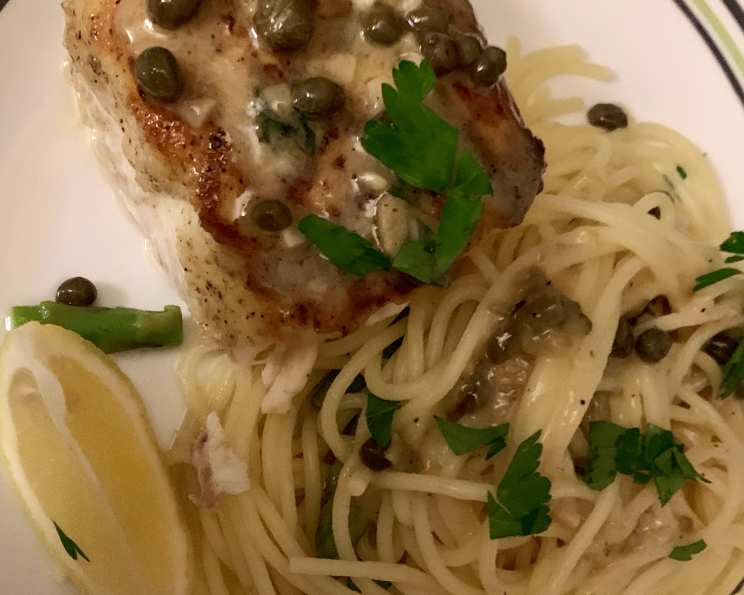
Halibut Piccata: A Taste of the Pacific Northwest
The first time I tasted Halibut Piccata, I was standing on a weathered dock in Astoria, the salty air whipping through my hair. The tang of lemon, the briny capers, the delicate flakes of the halibut itself – it was a symphony of flavors that spoke directly of the Pacific Northwest. From that moment, I knew I had to learn the secrets of this iconic dish, to bring that taste of the coast into my own kitchen. It’s a dish that’s both elegant and approachable, perfect for a weeknight dinner or a special occasion.
Recipe Overview
- Prep Time: 10 minutes
- Cook Time: 15 minutes
- Total Time: 25 minutes
- Servings: 2
- Dietary Type: Pescatarian
Ingredients
- 1⁄4 cup all-purpose flour
- 1⁄2 teaspoon salt
- 1⁄2 teaspoon black pepper
- 1 tablespoon olive oil
- 12 ounces halibut fillets, about 1 inch thick
- 3 tablespoons dry white wine (such as chardonnay or pinot gris)
- 2 lemons, juice of (about 1/3 to 1/2 cup)
- 3 garlic cloves, thinly sliced
- 1 tablespoon drained capers
- 3 tablespoons unsalted butter
- Salt and pepper, to taste
- Chopped fresh parsley, for garnish
Equipment Needed
- Wide, shallow bowl
- Nonstick sauté pan
- Baking sheet
- Whisk
Instructions
-
Preheat your oven to 350°F (175°C). Ensuring the oven is fully preheated is crucial for even cooking of the halibut.
-
In a wide, shallow bowl, thoroughly whisk together the flour, salt, and pepper. This seasoned flour will create a light crust on the halibut, adding texture and flavor.
-
Preheat a nonstick sauté pan over medium-high heat until hot. Add the olive oil. You want the pan hot enough to sear the halibut without burning it. The oil should shimmer slightly when it’s ready.
-
Lightly coat the halibut fillets in the seasoned flour mixture. Ensure each fillet is evenly coated, but don’t overdo it. Too much flour will result in a gummy texture. I sometimes use a gluten-free mix, such as a rice flour blend, for a lighter coating.
-
Carefully place the floured halibut fillets in the hot pan. Sear until golden brown, about 1 minute per side. This step is all about developing flavor and creating a beautiful crust. Don’t overcrowd the pan; work in batches if necessary.
-
Flip the fillets to sear the underside, then immediately transfer them to a baking sheet. Place the baking sheet in the preheated oven to finish cooking, about 5 minutes more. The timing may vary slightly depending on the thickness of your fillets, so keep an eye on them.
-
The halibut should be just cooked through. It’s ready when it flakes easily with a fork. Avoid overcooking, as halibut can become dry and tough. Internal temperature should reach 145°F.
-
While the halibut is in the oven, return the sauté pan to the stovetop. Add the white wine and lemon juice to the pan, stirring to scrape up any browned bits from the bottom. These browned bits, also known as fond, are packed with flavor and will enhance the sauce.
-
Add the garlic and capers to the pan. Cook the liquid over medium-high heat until reduced by two-thirds. This reduction process concentrates the flavors and creates a richer sauce.
-
Remove the pan from the heat and whisk in the butter one tablespoon at a time to create a creamy, piquant sauce. The butter should be cold for best emulsification. Whisk vigorously to incorporate the butter fully, creating a smooth and velvety texture.
-
Taste the piccata sauce and season with salt and pepper to taste. Don’t be afraid to adjust the seasoning to your liking. A little extra lemon juice can brighten the flavors, while a pinch of salt enhances the overall taste. Whisk in more butter if desired for added richness.
-
Place the cooked halibut fillets on two plates and drizzle each with the piccata sauce.
-
Garnish with a sprinkle of chopped fresh parsley. The parsley adds a pop of color and a fresh, herbaceous note to complement the richness of the sauce.
Expert Tips & Tricks
- Pound the Halibut: If your halibut fillets are uneven in thickness, gently pound them to a uniform thickness for even cooking. Place the fillets between two sheets of plastic wrap and use a meat mallet or rolling pin to gently flatten them.
- Brown the Butter: For a nuttier, more complex flavor, brown the butter slightly before whisking it into the sauce. Be careful not to burn it.
- Use Fresh Lemon Juice: Bottled lemon juice simply doesn’t compare to the bright, vibrant flavor of fresh lemon juice. Always use freshly squeezed for the best results.
- Make-Ahead Tip: The piccata sauce can be made ahead of time and reheated gently before serving. However, it’s best to cook the halibut fresh to maintain its texture and flavor.
- Spice it up: Add a pinch of red pepper flakes to the sauce for a touch of heat.
Serving & Storage Suggestions
Serve the Halibut Piccata immediately after cooking for the best flavor and texture. It pairs wonderfully with a simple side of steamed asparagus, roasted vegetables, or a light salad. You can also serve it over pasta or risotto to soak up the delicious sauce.
Leftovers can be stored in an airtight container in the refrigerator for up to 2 days. Reheat gently in a pan over low heat or in the microwave. Be careful not to overcook the halibut when reheating, as it can become dry. The sauce may separate slightly upon reheating; whisk it vigorously to recombine. Freezing is not recommended as it can significantly alter the texture of the fish.
Nutritional Information
| Nutrient | Amount per Serving | % Daily Value |
|---|---|---|
| Calories | 548 kcal | N/A |
| Calories from Fat | 263 kcal | N/A |
| Total Fat | 29.3 g | 45% |
| Saturated Fat | 12.6 g | 63% |
| Cholesterol | 116.1 mg | 38% |
| Sodium | 832.4 mg | 34% |
| Total Carbohydrate | 18.6 g | 6% |
| Dietary Fiber | 1 g | 3% |
| Sugars | 1.5 g | 5% |
| Protein | 48.2 g | 96% |
Note: Nutritional information is an estimate and may vary depending on specific ingredients and portion sizes.
Variations & Substitutions
- Gluten-Free: Use a gluten-free flour blend instead of all-purpose flour. Rice flour or tapioca starch also work well.
- Dairy-Free: Substitute olive oil or a dairy-free butter alternative for the butter in the sauce.
- Chicken Piccata: If you don’t have halibut, boneless, skinless chicken breasts can be substituted. Pound the chicken to an even thickness and follow the same cooking instructions.
- Herb Variations: Experiment with different herbs in the sauce, such as fresh thyme, oregano, or chives.
- Vegetable Additions: Add some sliced mushrooms or artichoke hearts to the sauce for added flavor and texture.
FAQs (Frequently Asked Questions)
Q: Can I use frozen halibut for this recipe?
A: Yes, but make sure to thaw it completely before cooking. Pat it dry with paper towels to remove any excess moisture.
Q: How do I know when the halibut is cooked through?
A: The halibut is cooked when it flakes easily with a fork. You can also check the internal temperature with a meat thermometer; it should reach 145°F (63°C).
Q: Can I make this recipe ahead of time?
A: The sauce can be made ahead of time and reheated, but the halibut is best cooked fresh.
Q: What kind of wine should I use?
A: A dry white wine like Chardonnay or Pinot Grigio works well. Avoid sweet wines.
Q: Can I add more vegetables to this dish?
A: Absolutely! Sautéed spinach, asparagus, or mushrooms would be delicious additions.
Final Thoughts
Halibut Piccata is a dish that truly embodies the flavors of the Pacific Northwest. The delicate, flaky fish, the tangy lemon sauce, the briny capers – it’s a combination that’s both comforting and sophisticated. I encourage you to try this recipe and experience the taste of the coast for yourself. Feel free to experiment with variations and substitutions to create your own signature version. And most importantly, don’t be afraid to have fun in the kitchen! Share your creations and let me know what you think. This dish is best enjoyed with a crisp white wine and good company. Bon appétit!