
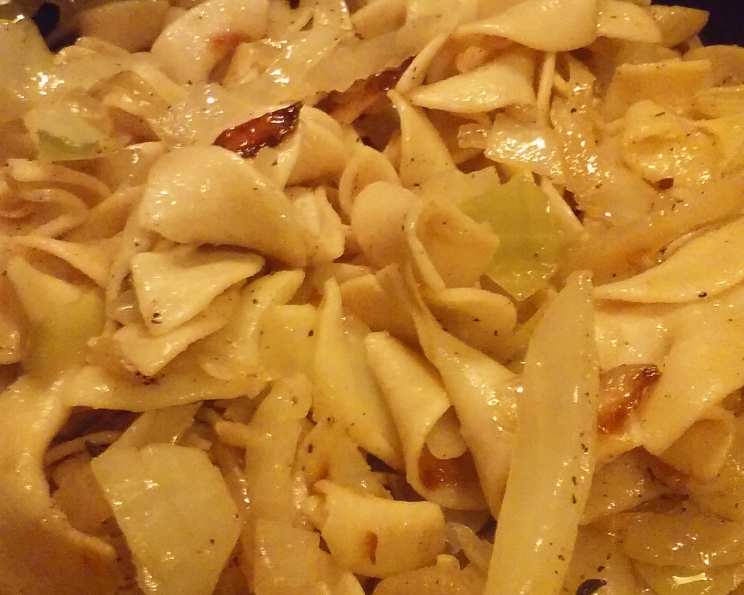
Haluski: A Taste of Home
The scent of caramelized onions, sweet cabbage softening in butter, and the comforting presence of egg noodles—that’s the smell of my childhood kitchen. I can still picture my grandmother standing at the stove, her hands moving with practiced ease as she transformed simple ingredients into something magical: Haluski. It wasn’t just a meal; it was a warm hug on a plate, a taste of tradition, and a reminder of the simple joys in life. Now, I’m sharing that tradition with you.
Recipe Overview
- Prep Time: 15 minutes
- Cook Time: 20 minutes
- Total Time: 35 minutes
- Servings: 4
- Dietary Type: Vegetarian
Ingredients
- 4 cups wide egg noodles
- 1/2 cup butter
- 2 cups sliced sweet onions, about 1/8 inch thick
- 2 teaspoons brown sugar
- 6 cups cabbage, sliced thin
- 1 teaspoon caraway seed (optional)
- 1/2 teaspoon salt
- Pepper to taste
Equipment Needed
- Large pot
- Large, deep skillet or Dutch oven
Instructions
- Begin by cooking the egg noodles according to the package directions. Once cooked, drain the noodles well and drizzle with a bit of oil to prevent them from sticking together. Set aside. This step is crucial – slightly undercooking the noodles is better than overcooking, as they will continue to cook in the skillet.
- While the noodles are cooking, melt the butter in a large, deep skillet or Dutch oven over medium-low heat. Using a large pan is important as the cabbage will take up a fair amount of volume.
- Add the sliced onions to the melted butter. Sprinkle with brown sugar and sauté, stirring occasionally, for about 5 to 10 minutes, or until the onions are softened and just beginning to turn golden brown. The brown sugar helps to caramelize the onions, adding a depth of flavor to the dish. Keep the heat relatively low to avoid burning them.
- Add the thinly sliced cabbage to the skillet, stirring well to incorporate it with the softened onions. Sauté for about 5 minutes, stirring occasionally, until the cabbage begins to wilt slightly.
- Stir in the caraway seeds, if using. Caraway seeds add a distinct, aromatic flavor that complements the cabbage beautifully. If you’re not a fan, feel free to omit them.
- Cover the skillet, reduce the heat to low, and let the mixture simmer for another 5 to 10 minutes, or until the cabbage is tender but still has a slight bite. Covering the skillet helps to steam the cabbage and ensures even cooking.
- Turn the heat back up to medium. Add the cooked noodles, salt, and pepper to the skillet. Stir well to combine all the ingredients, ensuring the noodles are evenly coated with the buttery cabbage and onion mixture.
- Continue to cook, stirring occasionally, until the noodles are heated through and the flavors have melded together. This should take about 3-5 minutes.
- Taste and adjust the seasoning as necessary. Add more salt and pepper to your liking. Serve hot.
Expert Tips & Tricks
- Caramelize those onions: Don’t rush the onion-cooking process! Allowing the onions to slowly caramelize is key to developing a deep, sweet flavor that elevates the entire dish.
- Cabbage prep: Thinly sliced cabbage is ideal for Haluski. If you have a mandoline, this is the perfect opportunity to use it. Otherwise, a sharp knife and some patience will do the trick.
- Noodle Selection: While wide egg noodles are traditional, you can experiment with other pasta shapes like spaetzle or bow-tie pasta.
- Browning the Cabbage: For a richer, nuttier flavor, let the cabbage brown slightly in the skillet before adding the noodles. Keep a close eye on it to prevent burning.
- Make-Ahead Magic: The cabbage and onion mixture can be prepared ahead of time and stored in the refrigerator for up to 2 days. Simply add the cooked noodles when you’re ready to serve.
Serving & Storage Suggestions
Haluski is best served hot, straight from the skillet. It can be enjoyed as a hearty main course or as a comforting side dish alongside grilled sausages, roasted chicken, or pork chops.
To store leftovers, allow the Haluski to cool completely before transferring it to an airtight container. It can be stored in the refrigerator for up to 3 days. To reheat, simply microwave it or warm it in a skillet over medium heat until heated through. Add a little butter or oil to prevent sticking.
Freezing is not highly recommended as the noodles can become mushy upon thawing, however, if you have leftovers you need to freeze, make sure it is in an airtight container. When ready to reheat, thaw completely in the refrigerator. Add fresh butter while reheating to bring some moisture back into the dish.
Nutritional Information
| Nutrient | Amount per Serving | % Daily Value |
|---|---|---|
| Calories | 416.4 kcal | N/A |
| Calories from Fat | 224g | 54% |
| Total Fat | 24.9 g | 38% |
| Saturated Fat | 15.1 g | 75% |
| Cholesterol | 92.9 mg | 30% |
| Sodium | 524 mg | 21% |
| Total Carbohydrate | 42.9 g | 14% |
| Dietary Fiber | 5.2 g | 20% |
| Sugars | 9.7 g | N/A |
| Protein | 7.8 g | 15% |
Note: Nutritional information is an estimate and may vary based on specific ingredients and portion sizes.
Variations & Substitutions
- Gluten-Free Haluski: Use gluten-free noodles in place of the egg noodles.
- Vegan Haluski: Substitute the butter with olive oil or vegan butter.
- Add Some Protein: Stir in cooked kielbasa, bacon, or sausage for a heartier meal.
- Spice It Up: Add a pinch of red pepper flakes for a touch of heat.
- Seasonal Twist: Incorporate other seasonal vegetables like shredded carrots, parsnips, or Brussels sprouts.
- Herbal Infusion: Add fresh herbs like thyme, parsley, or chives for a brighter flavor.
FAQs (Frequently Asked Questions)
Q: Can I use green cabbage instead of white cabbage?
A: Yes, you can definitely use green cabbage. The flavor will be slightly different, but still delicious. Savoy cabbage is also a good option.
Q: How can I prevent the noodles from sticking together after cooking?
A: Drizzling the cooked noodles with a bit of oil helps to prevent them from sticking. You can also toss them with a small amount of butter or reserve some of the pasta water to keep them moist.
Q: Can I add garlic to this dish?
A: Absolutely! Adding minced garlic to the skillet along with the onions will add a lovely aromatic flavor. About 2 cloves of garlic would be a good starting point.
Q: How do I know when the cabbage is cooked enough?
A: The cabbage should be tender but still have a slight bite. You don’t want it to be mushy. Taste it periodically during cooking to check for doneness.
Q: Can I make this dish ahead of time and reheat it later?
A: Yes, Haluski can be made ahead of time. However, keep in mind that the noodles may absorb some of the moisture as it sits. You may need to add a little extra butter or oil when reheating to prevent it from drying out.
Final Thoughts
Haluski is more than just a recipe; it’s a connection to the past, a celebration of simple ingredients, and a testament to the power of comfort food. It’s a dish that invites you to slow down, savor each bite, and share the warmth with loved ones. So, gather your ingredients, embrace the aroma of caramelized onions and sweet cabbage, and create your own Haluski memories. I encourage you to experiment with different variations and make it your own. And if you do, please share your feedback! I’m excited to hear how this classic dish becomes a staple in your kitchen.