
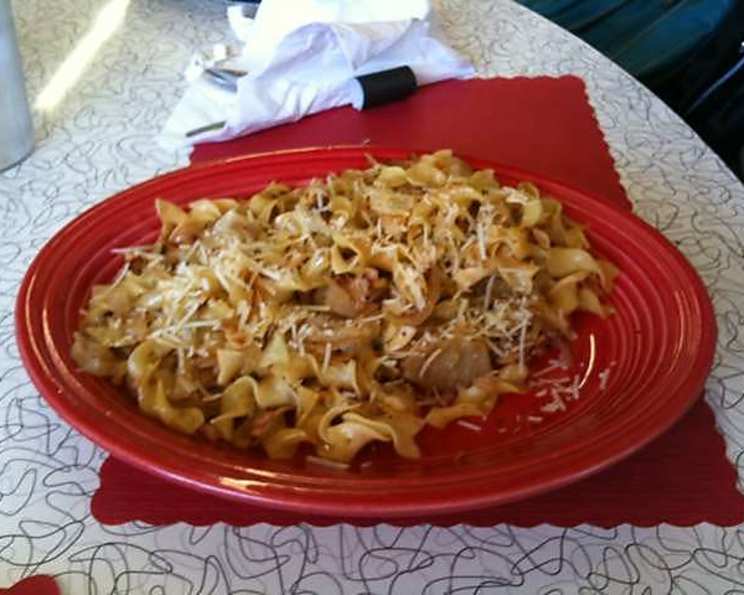
Haluski: A Taste of Pittsburgh Comfort
The scent of caramelized onions and bacon always takes me back to my grandmother’s kitchen. She wasn’t fancy, but she had a knack for making simple ingredients sing. Her haluski, a humble dish of cabbage, noodles, and smoky goodness, was a staple, a warm hug on a cold day. It was more than just food; it was a taste of home, a symbol of family, and a reminder that the best things in life are often the simplest.
Recipe Overview
- Prep Time: 20 minutes
- Cook Time: 20 minutes
- Total Time: 40 minutes
- Servings: 10
- Yield: Large Skillet
- Dietary Type: Varies based on bacon (can be adapted to vegetarian/vegan)
Ingredients
- 1 green cabbage, core removed and leaves separated
- 4 ounces unsalted butter
- 2 Spanish onions, julienned
- 1 tablespoon garlic salt, divided
- 1 lb bacon, sliced, cooked, drained, and crumbled
- 5 cups wide egg noodles, cooked al dente and rinsed in cold water
- 1 teaspoon freshly ground black pepper
- 1/2 cup grated Romano cheese
Equipment Needed
- Large pot
- Large skillet
- Colander
- Cutting board
- Knife
Instructions
- Bring a large pot of water to a boil.
- Add the cabbage leaves and cook until crisp-tender, about 5 minutes. This step is crucial for achieving the right texture – you want the cabbage to have some bite. Overcooking will result in a mushy dish.
- Drain the cabbage and julienne it. Aim for uniform strips, about 1/4 inch thick, for even cooking.
- Melt the butter in a large skillet over medium heat. Using a large skillet is essential to prevent overcrowding, which can steam the vegetables instead of caramelizing them.
- Add the julienned onions, sprinkle on half of the garlic salt, and let the onions sweat for about 10 minutes, stirring often. Sweating the onions low and slow is key to developing their sweetness. Watch them closely to prevent burning, adjusting the heat as needed.
- Stir in the julienned cabbage and cook, stirring constantly, until the onions and cabbage start to caramelize, about 10 minutes. This is where the magic happens! The sugars in the onions and cabbage will break down and create a rich, complex flavor. Don’t rush this step – the deeper the caramelization, the better the haluski will taste.
- Stir in the crumbled bacon, cooked egg noodles, the remaining garlic salt, and the black pepper, and let the haluski cook for about 5 more minutes. This allows all the flavors to meld together beautifully. Be gentle when stirring to avoid breaking the noodles.
- Plate the haluski and top it off with grated Romano cheese. Serve immediately and enjoy!
Expert Tips & Tricks
- Bacon Boost: For an extra layer of smoky flavor, render the bacon in the same skillet you’ll use for the vegetables, reserving some of the rendered bacon fat. Use this fat in place of some of the butter for cooking the onions and cabbage.
- Noodle Know-How: Cook your egg noodles al dente, meaning “to the tooth.” Overcooked noodles will become mushy and detract from the overall texture of the dish. Rinsing them in cold water stops the cooking process and prevents them from sticking together.
- Caramelization Champion: The key to truly exceptional haluski is patience. Don’t crank up the heat to speed up the caramelization process. Low and slow is the way to go. Consistent stirring will also prevent scorching and ensure even browning.
- Vegetarian Variation: To make this vegetarian, simply omit the bacon. Consider adding other flavorful vegetables, such as mushrooms or bell peppers, to compensate for the loss of the smoky flavor. Smoked paprika can also add a touch of smokiness.
Serving & Storage Suggestions
Haluski is best served hot, right after it’s made. The warm, comforting flavors are perfect for a chilly evening. It makes a great side dish or a hearty main course.
To store leftovers, let the haluski cool completely before transferring it to an airtight container. It will keep in the refrigerator for up to 3 days. To reheat, simply microwave or sauté in a skillet until heated through. You may want to add a splash of water or broth to prevent it from drying out.
Haluski doesn’t freeze particularly well, as the noodles can become mushy upon thawing. However, if you must freeze it, be sure to use a freezer-safe container and consume it within 2-3 months. Thaw it overnight in the refrigerator before reheating.
Nutritional Information
| Nutrient | Amount per Serving | % Daily Value |
|---|---|---|
| Calories | 412.8 kcal | N/A |
| Calories from Fat | 287 kcal | N/A |
| Total Fat | 32 g | 49% |
| Saturated Fat | 13.8 g | 68% |
| Cholesterol | 74.8 mg | 24% |
| Sodium | 1232.3 mg | 51% |
| Total Carbohydrate | 21.8 g | 7% |
| Dietary Fiber | 3.3 g | 13% |
| Sugars | 4.2 g | N/A |
| Protein | 10.6 g | 21% |
Variations & Substitutions
- Gluten-Free Haluski: Use your favorite gluten-free noodles instead of traditional egg noodles. Be sure to choose a brand that holds its shape well during cooking.
- Spicy Haluski: Add a pinch of red pepper flakes or a dash of hot sauce to the skillet along with the black pepper for a kick of heat.
- Kielbasa Haluski: Substitute the bacon with sliced kielbasa sausage for a heartier, more savory dish.
- Cabbage Variety: Experiment with different types of cabbage, such as Savoy or Napa cabbage, for a slightly different flavor and texture.
FAQs (Frequently Asked Questions)
Q: Can I make this ahead of time?
A: While haluski is best served fresh, you can prep the ingredients ahead of time. Chop the cabbage and onions, cook the bacon, and cook the noodles. Store them separately in the refrigerator until you’re ready to cook.
Q: How do I prevent the cabbage from becoming soggy?
A: The key is to cook the cabbage until it’s crisp-tender, not overcooked. Also, be sure to drain it well after boiling.
Q: Can I use a different type of cheese?
A: Absolutely! Parmesan, Asiago, or even a sharp cheddar would all be delicious additions to haluski.
Q: Is there a vegan version of this recipe?
A: Yes, you can easily make this vegan by omitting the bacon and substituting the butter with olive oil or vegan butter. You can also use vegan noodles and nutritional yeast in place of the Romano cheese.
Q: How do I keep the noodles from sticking together?
A: Rinsing the cooked noodles in cold water helps to remove excess starch and prevent them from clumping. You can also toss them with a little oil before adding them to the skillet.
Final Thoughts
Haluski is more than just a recipe; it’s a culinary tradition passed down through generations. Its simple yet satisfying flavors are sure to please even the pickiest eaters. So, gather your ingredients, roll up your sleeves, and get ready to experience a taste of Pittsburgh comfort. Don’t be afraid to experiment with variations and substitutions to make it your own. And most importantly, share it with loved ones and enjoy the warmth and camaraderie that this humble dish brings.