
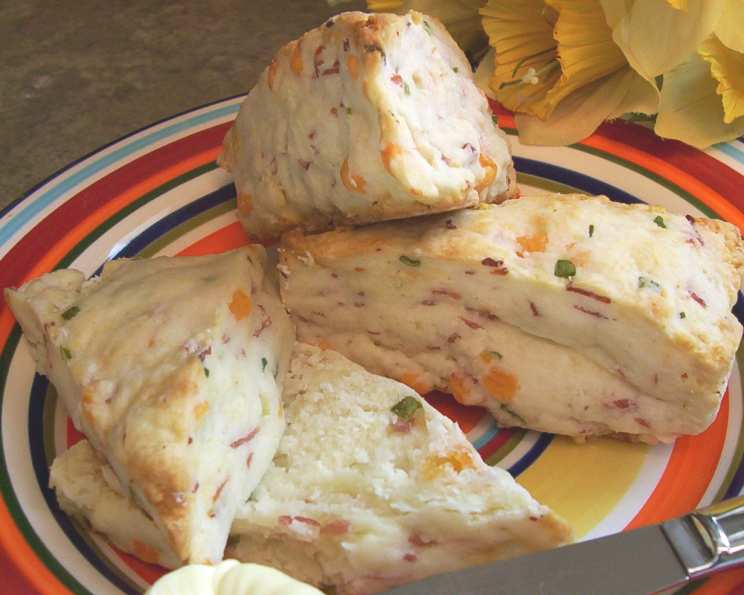
Ham and Cheddar Cream Scones: A Savory Slice of Heaven
The aroma of freshly baked scones always transports me back to my grandmother’s cozy kitchen. She wasn’t a formally trained chef, but her scones were legendary – each bite a warm, comforting hug. While she usually made sweet versions with berries and clotted cream, I remember one Christmas morning, she surprised us all with savory scones studded with smoky ham and sharp cheddar. The unexpected flavor combination was a revelation, and these Ham and Cheddar Cream Scones are my attempt to recreate that joyful memory. They are a delightful twist on a classic and perfect for breakfast, brunch, or a light lunch.
Recipe Overview
- Prep Time: 15 minutes
- Cook Time: 30-40 minutes
- Total Time: 12 hours, 50 minutes (includes freezing time)
- Servings: 10
- Yield: 10 scones
- Dietary Type: Not specified
Ingredients
- 3 cups bread flour
- ½ cup sugar
- 2 tablespoons baking powder
- ½ teaspoon salt
- 2 cups heavy cream
- 1 cup medium-diced ham
- ½ cup medium-diced cheddar cheese
- ½ cup sliced scallions
Equipment Needed
- Two 10-inch circles of parchment or waxed paper
- 10-inch round cake pan
- Mixing bowl
- Baking sheet
- Cooking spray or parchment paper
- Cutting board
- Cooling racks
Instructions
- Begin by preparing your workspace. Cut two 10-inch circles from either parchment paper or waxed paper. Use one of these circles to line the bottom of a 10-inch round cake pan. Reserve the second circle for later.
- In a large mixing bowl, sift together the bread flour, sugar, baking powder, and salt. Sifting ensures a lighter, more even texture in the final scone.
- Create a well in the center of the dry ingredients. This will serve as a reservoir for the wet ingredients.
- Add the medium-diced ham, medium-diced cheddar cheese, and sliced scallions to the dry ingredients. Toss gently to distribute them evenly. It’s important to incorporate these savory elements before adding the cream to prevent overmixing later.
- Pour the heavy cream into the well of dry ingredients. Using your hands or a wooden spoon, stir the mixture by hand just until the batter is evenly moistened. Be careful not to overmix – a few streaks of flour are perfectly fine. Overmixing develops the gluten in the flour, resulting in tough, chewy scones.
- Carefully transfer the dough into the cake pan that you lined earlier. Gently press the dough into an even layer, ensuring it fills the pan.
- Cover the dough with the second parchment paper or waxed paper circle. This will protect the dough during freezing.
- Freeze the dough in the cake pan until it is very firm, at least 12 hours. This step is crucial for achieving a light, flaky texture. The freezing process helps to solidify the butter (or in this case the fat in the cream), which then creates pockets of air as it melts during baking, resulting in a tender crumb.
- When you are ready to bake, preheat your oven to 350°F (175°C). While the oven preheats, prepare a baking sheet by lightly spraying it with cooking spray or lining it with parchment paper.
- Thaw the frozen dough for approximately 5 minutes at room temperature. This will soften the dough enough to make it easier to cut, but not so much that it becomes sticky.
- Remove the dough from the cake pan and place it onto a cutting board. Using a sharp knife, cut the dough into 10 equal wedges.
- Place the wedges onto the prepared baking sheet, spacing them about 2 inches apart. This allows for proper air circulation and even baking.
- Bake the scones in the preheated oven until they are golden brown, which should take approximately 30-40 minutes. The exact baking time may vary depending on your oven, so keep a close eye on them.
- Once the scones are golden brown, remove them from the oven and let them cool on the baking sheet for a few minutes before transferring them to cooling racks. This prevents them from sticking to the baking sheet.
- Serve the scones warm or at room temperature. These scones are best enjoyed fresh, on the same day they are made.
Expert Tips & Tricks
- For a richer flavor, try using a smoked ham.
- If you don’t have scallions, chives make a great substitute.
- If you want a more golden-brown top, brush the scones with a little melted butter or egg wash before baking.
- Don’t have heavy cream? Whole milk can be substituted, but the scones will be slightly less rich.
- The colder the ingredients, the better the scones! Especially the cream.
- For easier cutting, use a large, sharp knife and make clean, decisive cuts.
- If you find the dough is too sticky to handle, dust your hands and the cutting board with a little flour.
Serving & Storage Suggestions
These Ham and Cheddar Cream Scones are delicious served warm with a pat of butter or a dollop of cream cheese. They are also a wonderful accompaniment to a bowl of soup or a simple salad. For a more elaborate presentation, arrange them on a platter with assorted cheeses, cured meats, and fruit.
Baked scones are best enjoyed the same day they are made, as they tend to dry out over time. However, you can store them in an airtight container at room temperature for up to 2 days. To refresh them, warm them in a low oven (around 300°F or 150°C) for a few minutes.
For longer storage, you can freeze baked scones for up to 4 weeks. Wrap them individually in plastic wrap and then place them in a freezer bag. To reheat, thaw them overnight in the refrigerator or warm them directly from frozen in a low oven.
Nutritional Information
| Nutrient | Amount per Serving | % Daily Value |
|---|---|---|
| Calories | 385.8 kcal | N/A |
| Calories from Fat | 185 g | 48% |
| Total Fat | 20.7 g | 31% |
| Saturated Fat | 12.5 g | 62% |
| Cholesterol | 78.4 mg | 26% |
| Sodium | 601.1 mg | 25% |
| Total Carbohydrate | 41 g | 13% |
| Dietary Fiber | 1.1 g | 4% |
| Sugars | 10.3 g | N/A |
| Protein | 9.5 g | 18% |
Note: Nutritional information is an estimate and may vary based on specific ingredients and portion sizes.
Variations & Substitutions
- Spicy Scones: Add a pinch of red pepper flakes or a dash of hot sauce to the dough for a little kick.
- Different Cheeses: Experiment with other types of cheese, such as Gruyere, Swiss, or Monterey Jack.
- Herbaceous Scones: Incorporate fresh herbs like thyme, rosemary, or sage for added flavor.
- Vegetarian Option: Omit the ham and add roasted vegetables like bell peppers, zucchini, or eggplant.
- Gluten-Free Scones: Substitute the bread flour with a gluten-free all-purpose flour blend. You may need to add a little extra liquid to achieve the desired consistency.
FAQs (Frequently Asked Questions)
Q: Why is it important to freeze the scone dough?
A: Freezing the dough solidifies the fat, which creates pockets of air as it melts during baking, resulting in a lighter, flakier texture.
Q: Can I use milk instead of heavy cream?
A: Yes, you can use milk, but the scones will be slightly less rich and tender.
Q: How do I prevent my scones from being dry?
A: Avoid overbaking the scones. Bake them until they are golden brown but still slightly soft in the center.
Q: Can I make the dough ahead of time and bake the scones later?
A: Yes, you can freeze the dough for up to 4 weeks and bake the scones as needed.
Q: What’s the best way to reheat leftover scones?
A: Warm them in a low oven (around 300°F or 150°C) for a few minutes, or microwave them for a short burst.
Final Thoughts
These Ham and Cheddar Cream Scones are a delightful departure from the typical sweet scone. The combination of savory ham, sharp cheddar, and fragrant scallions creates a flavor explosion that is sure to please. So, gather your ingredients, preheat your oven, and embark on a culinary adventure. Don’t be afraid to experiment with different variations and substitutions to create your own signature scone. And most importantly, enjoy the process! I hope these scones bring as much joy to your table as they do to mine. Happy baking!