
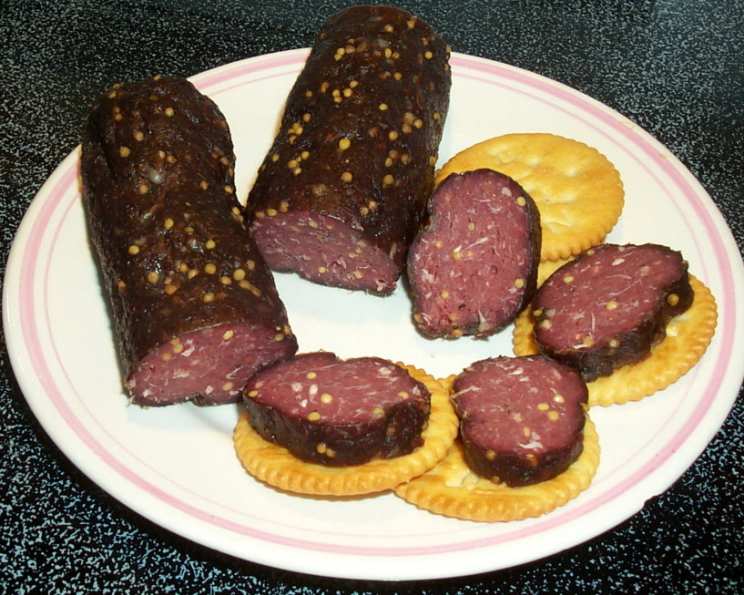
Hamburger Sausage: A Culinary Adventure in Curing
The scent of curing meat always transports me back to my grandfather’s smokehouse. As a child, I was mesmerized by the transformation of ordinary ground meat into flavorful, intensely aromatic sausage. He used simple ingredients and a whole lot of patience, and the result was something truly special. This hamburger sausage recipe is a loving tribute to those days, a way to capture that rustic, smoky essence in your own kitchen.
Recipe Overview
- Prep Time: 20 minutes
- Cook Time: 8 hours
- Total Time: 8 hours 20 minutes
- Servings: Varies based on log size
- Yield: Varies based on log size
- Dietary Type: Not specified (can be adjusted based on meat choices)
Ingredients
- 5 lbs ground beef (or a 5 lbs ground meat combination, see notes below)
- 4-5 teaspoons curing salt, rounded
- 5 tablespoons mustard seeds
- 2 teaspoons fresh coarse ground black pepper
- 1 1/2 teaspoons garlic powder or 2 1/2 teaspoons garlic salt
- 1 tablespoon hickory smoke salt or 1 tablespoon liquid smoke
Ingredient Notes:
- Meat Combination: Feel free to experiment with different ground meat combinations, such as ground deer and ground beef, or ground moose and beef. If using a leaner game meat, incorporate a non-lean ground meat like beef or pork to prevent the sausage from becoming too dry.
- Curing Salt: This is crucial for preserving the meat and developing that characteristic sausage flavor. Do not substitute with regular table salt.
- Smoke Flavor: Choose either hickory smoke salt or liquid smoke, depending on your preference and what you have on hand.
Equipment Needed
- Large mixing bowl
- Oven
Instructions
- Day 1: The Initial Mix: In a large bowl, thoroughly combine all the ingredients. Ensure the spices and curing salt are evenly distributed throughout the ground meat.
- Day 1: Refrigerate: Cover the bowl tightly with plastic wrap and refrigerate the mixture.
- Day 2: Second Mix: Remove the bowl from the refrigerator and mix the meat mixture again. This helps the flavors meld together even further. At this point, you can proceed to cooking the sausage if you wish, though allowing it to sit longer develops flavor.
- Day 3: Another Mix: Remove the bowl from the refrigerator and mix the meat mixture again.
- Day 4: Shaping and Baking: On the fourth day, preheat your oven to a low temperature of 140-150°F (60-66°C). Form the sausage mixture into logs of your desired size. Place the logs directly on the oven rack.
- Day 4: Baking Time: Bake the sausage logs for a total of 8 hours, flipping them halfway through, so 4 hours per side. This slow baking process allows the sausage to dry and cure properly.
Expert Tips & Tricks
- Meat Selection: Using a fattier cut of ground beef (around 80/20) will result in a more flavorful and moist sausage. If you’re using leaner meats, consider adding some ground pork fat to the mixture.
- Spice Adjustment: Don’t be afraid to adjust the spice levels to your liking. If you prefer a spicier sausage, add a pinch of cayenne pepper or some red pepper flakes.
- Temperature Control: Maintaining a consistent oven temperature is key to the success of this recipe. Use an oven thermometer to ensure your oven is running at the correct temperature.
- Even Cooking: Ensure the sausage logs are not touching each other in the oven to promote even air circulation and cooking.
- Flavor Development: The longer the sausage sits in the refrigerator after the initial mix, the more developed the flavor will be.
Serving & Storage Suggestions
Serve the hamburger sausage sliced as part of a charcuterie board, as a flavorful addition to breakfast sandwiches, or as a protein-packed snack.
- Room Temperature: It is not recommended to store this type of sausage at room temperature due to the curing process.
- Refrigerator: Store the cooked sausage in an airtight container in the refrigerator for up to 1 week.
- Freezer: For longer storage, wrap the sausage logs tightly in plastic wrap and then place them in a freezer bag. They can be frozen for up to 2-3 months. Thaw completely in the refrigerator before serving.
- Reheating: Sliced sausage can be reheated in a skillet over medium heat or in the microwave.
Nutritional Information
Please note that the following is an estimate, and actual values may vary based on specific ingredients used.
| Nutrient | Amount per Serving | % Daily Value |
|---|---|---|
| Calories | 450 kcal | 23% |
| Total Fat | 30g | 46% |
| Saturated Fat | 12g | 60% |
| Cholesterol | 150mg | 50% |
| Sodium | 800mg | 35% |
| Total Carbohydrate | 2g | 1% |
| Dietary Fiber | 1g | 4% |
| Sugars | 1g | 2% |
| Protein | 40g | 80% |
Variations & Substitutions
- Spicy Sausage: Add cayenne pepper, red pepper flakes, or a pinch of chili powder to the mixture for a spicy kick.
- Sweet Sausage: Include a touch of brown sugar or maple syrup to the mixture for a sweeter flavor profile.
- Italian Sausage: Add fennel seeds, anise seeds, and Italian seasoning for an Italian-inspired sausage.
- Smoked Sausage: If you have a smoker, you can smoke the sausage logs after baking them in the oven for an even smokier flavor.
- Venison/Deer Sausage: This recipe lends itself well to the use of venison or deer. Be sure to add a fat source such as ground pork to keep it moist.
- Garlic Lovers: Increase the amount of garlic powder or garlic salt for a more intense garlic flavor.
FAQs (Frequently Asked Questions)
Q: Why is curing salt necessary for this recipe?
A: Curing salt, specifically sodium nitrite, is essential for preserving the meat, preventing the growth of harmful bacteria (like botulism), and developing the characteristic flavor and color of cured sausage.
Q: Can I skip the refrigeration steps and cook the sausage right away?
A: While you can cook it after the first day’s mix, allowing the sausage to sit in the refrigerator for 2-3 days allows the flavors to meld and develop more fully, resulting in a more delicious final product.
Q: How do I know when the sausage is done?
A: The sausage is done when it has firmed up and the internal temperature reaches 160°F (71°C). Use a meat thermometer to check the internal temperature in several spots.
Q: Can I use a higher oven temperature to cook the sausage faster?
A: It is not recommended to use a higher oven temperature. The slow, low-temperature cooking process is crucial for proper curing and drying of the sausage. Higher temperatures can cause the sausage to dry out too quickly or cook unevenly.
Q: What if my sausage logs start to crack during baking?
A: Cracking can occur if the sausage is drying out too quickly. Reduce the oven temperature slightly and/or place a pan of water in the bottom of the oven to increase humidity.
Final Thoughts
Creating this hamburger sausage is more than just following a recipe; it’s a journey into the heart of flavor and preservation. Don’t be intimidated by the time commitment – the hands-on work is minimal, and the reward is a truly exceptional sausage you can proudly share with friends and family. Gather your ingredients, embrace the process, and get ready to experience a taste of culinary tradition right in your own kitchen. Enjoy!