
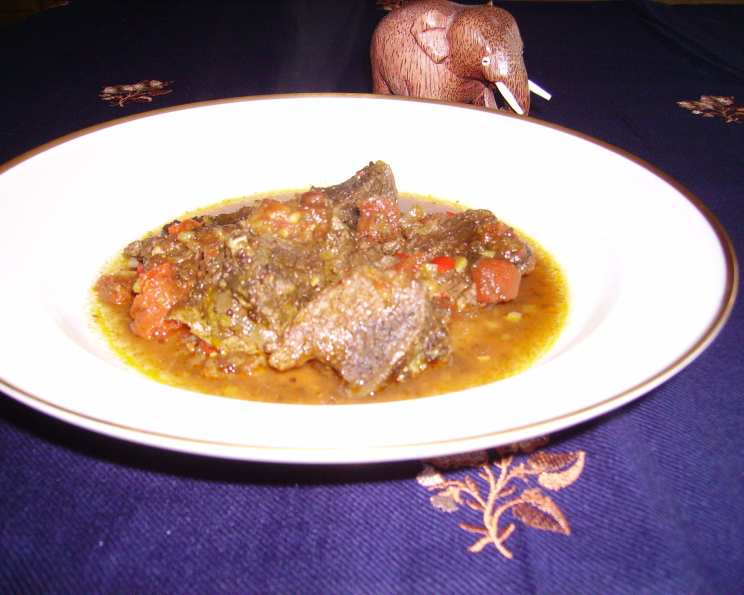
Harak Mas Curry: A Fiery Sri Lankan Beef Stew
The scent of curry powder always transports me back to my grandmother’s kitchen. She wasn’t Sri Lankan, but she collected cookbooks from all over the world, and her well-worn copy of Charmaine Solomon’s “The Complete Asian Cookbook” was a treasure. Flipping through its pages, stained with turmeric and chili oil, I remember being captivated by the vibrant spices and exotic ingredients. This Harak Mas Curry, a fiery Sri Lankan beef stew, was one of her favorites, and the bold, comforting flavors still evoke warm memories of her bustling kitchen and the stories she’d share while the curry simmered on the stove.
Recipe Overview
- Prep Time: 20 minutes
- Cook Time: 2 hours
- Total Time: 2 hours 20 minutes
- Servings: 8-10
- Dietary Type: None Specified (See Variations for Adaptations)
Ingredients
- 3 lbs stewing beef, cut into 2-inch squares
- 3 tablespoons ghee or 3 tablespoons oil
- 2 large onions, finely chopped
- 1 tablespoon finely chopped fresh ginger
- 3-4 garlic cloves, finely chopped
- 4 tablespoons Ceylon curry powder
- 1 teaspoon ground turmeric
- 2 teaspoons black mustard seeds
- 2 teaspoons salt
- 1 tablespoon vinegar
- 2 fresh chilies, seeded and chopped
- 3 ripe tomatoes, peeled and chopped
Equipment Needed
- Large saucepan or Dutch oven
- Sharp knife
- Cutting board
- Measuring spoons and cups
Instructions
-
Begin by preparing the beef. Cut the stewing beef into roughly 2-inch squares. This size allows for optimal browning and ensures the meat will become wonderfully tender during the long simmer.
-
In a large saucepan or Dutch oven, heat the ghee (or oil) over medium heat. Once the ghee is melted and shimmering, or the oil is hot, gently fry the onions, ginger, and garlic until they are just beginning to turn golden. This process, known as “blooming” the aromatics, releases their essential oils and creates a flavorful foundation for the curry. Be careful not to burn the garlic, as it will impart a bitter taste.
-
Reduce the heat to low. Add the Ceylon curry powder, turmeric, and black mustard seeds. Fry these spices over a low heat for about 2-3 minutes, stirring constantly. This step is crucial for developing the curry’s complex flavor profile. The heat toasts the spices, intensifying their aroma and releasing their depth. Be mindful to keep the heat low to prevent the spices from burning.
-
Add the salt and vinegar and stir well to combine. The vinegar adds a touch of acidity that balances the richness of the beef and helps to tenderize the meat.
-
Add the beef to the saucepan and fry, stirring continuously to coat the meat well with the spice mixture. Ensure that each piece of beef is thoroughly coated, as this will contribute to the overall flavor and color of the curry.
-
Add the chilies and tomatoes. Cover the pan and simmer on a very low heat for about 2 hours, or until the beef is very tender. The long, slow simmering process allows the beef to break down, becoming incredibly succulent and absorbing the flavors of the spices and tomatoes. Check the curry periodically, adding a splash of water if necessary to prevent it from drying out.
-
Once the beef is tender, check the consistency of the gravy. If the gravy is too thin, cook over a high heat, uncovered, until it is reduced to your desired consistency. This step intensifies the flavors and creates a richer, more concentrated sauce. Be sure to stir frequently to prevent the curry from sticking to the bottom of the pan.
-
Serve hot with rice.
Expert Tips & Tricks
- Spice Level Control: Adjust the number of chilies to control the heat level of the curry. For a milder flavor, remove the seeds and membranes from the chilies before chopping. For a spicier curry, leave the seeds intact or add a pinch of chili powder.
- Beef Selection: While stewing beef is recommended, you can also use other cuts like chuck roast or brisket. Ensure the meat is well-marbled for maximum flavor and tenderness.
- Make-Ahead Tip: This curry tastes even better the next day! The flavors meld and deepen overnight. Prepare the curry a day in advance and store it in the refrigerator. Reheat gently before serving.
- Browning the Beef (Optional): For an even richer flavor, you can brown the beef in batches before adding it to the spice mixture. This step adds a layer of caramelized flavor to the curry.
- Balance the Flavors: If the curry is too spicy or too acidic, add a touch of sugar or honey to balance the flavors. If it’s too rich, add a squeeze of lime juice or a splash of vinegar.
Serving & Storage Suggestions
Serve this Harak Mas Curry hot with steamed rice. The rice soaks up the flavorful gravy beautifully. It also pairs well with roti or naan bread for dipping. Garnish with fresh cilantro or a dollop of yogurt for a cooling contrast to the spicy curry.
Leftover curry can be stored in an airtight container in the refrigerator for up to 3 days. For longer storage, freeze the curry in portion-sized containers for up to 3 months. To reheat, thaw the curry in the refrigerator overnight and gently heat it on the stovetop or in the microwave.
Nutritional Information
(Note: Nutritional information is an estimate and can vary based on ingredient brands and specific preparation methods.)
| Nutrient | Amount per Serving | % Daily Value |
|---|---|---|
| Calories | 515 kcal | N/A |
| Calories from Fat | 345 g | 67% |
| Total Fat | 38.4 g | 59% |
| Saturated Fat | 16.4 g | 81% |
| Cholesterol | 126.3 mg | 42% |
| Sodium | 683 mg | 28% |
| Total Carbohydrate | 9.5 g | 3% |
| Dietary Fiber | 2.5 g | 10% |
| Sugars | 3.6 g | 14% |
| Protein | 32.7 g | 65% |
Variations & Substitutions
- Vegetarian Option: Substitute the beef with firm tofu or chickpeas. Increase the amount of vegetables, such as potatoes, carrots, and cauliflower.
- Coconut Milk: Add a can of coconut milk for a creamier and richer curry. Reduce the amount of water added during simmering.
- Gluten-Free: This recipe is naturally gluten-free. Ensure that your curry powder is also gluten-free.
- Spicier Version: Add more chilies or a pinch of cayenne pepper for a spicier kick.
- Regional Variations: Experiment with different types of curry powder, such as Madras curry powder or Vindaloo curry powder, to create unique flavor profiles.
FAQs (Frequently Asked Questions)
Q: Can I use a different cut of beef?
A: Yes, you can. Chuck roast or brisket are good substitutes for stewing beef. Ensure the meat has good marbling for optimal flavor and tenderness.
Q: How can I make this curry less spicy?
A: Remove the seeds and membranes from the chilies before chopping, or use a milder chili variety. You can also add a dollop of yogurt or sour cream when serving to cool down the flavors.
Q: Can I make this curry in a slow cooker?
A: Absolutely! Brown the beef and sauté the onions and spices in a skillet, then transfer everything to a slow cooker. Cook on low for 6-8 hours, or until the beef is very tender.
Q: Can I freeze this curry?
A: Yes, this curry freezes well. Allow it to cool completely before transferring it to freezer-safe containers. It can be stored in the freezer for up to 3 months.
Q: What kind of rice is best to serve with this curry?
A: Basmati rice or jasmine rice are excellent choices. Their light and fluffy texture complements the rich and flavorful curry.
Final Thoughts
This Harak Mas Curry is more than just a recipe; it’s a journey through flavors, a connection to my past, and an invitation to explore the vibrant cuisine of Sri Lanka. I encourage you to try this recipe, to experiment with the spices, and to create your own memories around this delicious and comforting dish. Don’t be afraid to adjust the recipe to your liking and to share your creations with friends and family. Perhaps serve it alongside some crispy papadums and a refreshing mango chutney for a complete Sri Lankan feast. Happy cooking!