
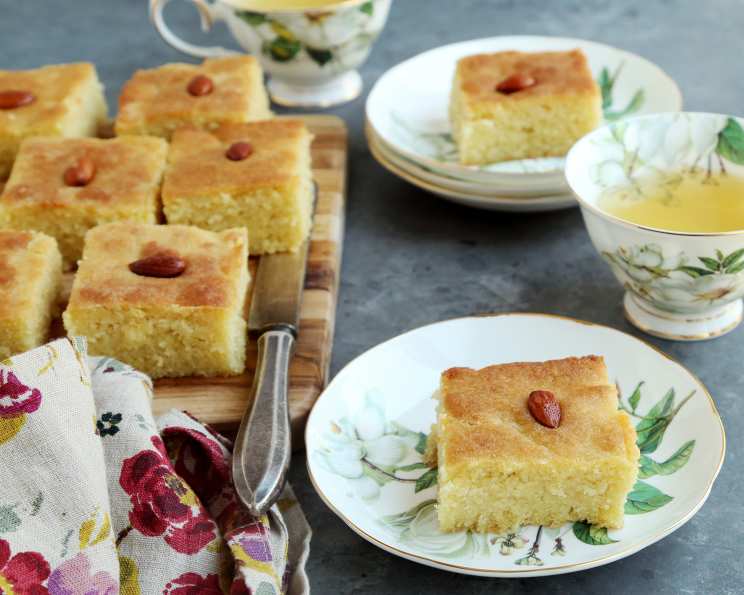
Harissa, Harisa, Haresa: A Taste of Palestinian Sweetness
The aroma alone transports me back to my grandmother’s kitchen in Jerusalem. It’s Ramadan, and the air hangs thick with the scent of dates, cardamom, and something wonderfully sweet and nutty baking in the oven. That something is Harissa, or Haresa as my family calls it, the semolina cake that signifies celebration. It’s a simple cake, humble even, but soaked in fragrant syrup and topped with almonds, it’s a taste of pure joy – a reminder of family, tradition, and the sweetness of home. It wouldn’t be a holiday without it.
Recipe Overview
- Prep Time: 20 minutes
- Cook Time: 45 minutes
- Total Time: 1 hour 5 minutes
- Servings: 12
- Yield: 1 large cake
- Dietary Type: Vegetarian
Ingredients
For the Cake:
- 3 cups semolina
- ¾ cup unsweetened butter, melted
- ¾ cup sugar
- 1 ½ teaspoons baking soda
- 1 cup plain yogurt
- ½ cup whole blanched almonds (to garnish) or ½ cup ground pistachio nuts (to garnish)
For the Syrup:
- 4 cups sugar
- 3 cups water
- ½ small lemon, juice of (or equivalent citric acid)
Equipment Needed
- Large mixing bowl
- Small mixing bowl
- Jellyroll pan or 9×13 inch Pyrex baking dish
- Butter knife
- Saucepan
- Metal spoon
Instructions
- In a large mixing bowl, combine the semolina, sugar, and melted butter. Use your hands to thoroughly incorporate the butter into the dry ingredients until the mixture resembles coarse sand. This step is crucial for achieving the right texture.
- In a separate small bowl, mix the yogurt and baking soda. Observe as the mixture begins to foam and expand; this is the baking soda reacting with the acidity of the yogurt, creating the leavening power for the cake.
- Allow the yogurt mixture to sit for a few minutes until it has doubled, or almost doubled, in size. This activation process is important.
- Once the yogurt mixture has sufficiently expanded, pour it over the semolina mixture in the large bowl.
- Use your hands again to mix the wet and dry ingredients until just combined. Be careful not to overmix, as this can result in a tough cake.
- Press the mixture evenly into a small jellyroll pan or a 9×13 inch Pyrex baking dish. The cake batter should not be more than 1 inch thick. If it is thicker, use a larger pan or divide the batter and bake the excess in a separate pan.
- Using a butter knife, carefully cut a diamond or square pattern into the surface of the cake. This allows the syrup to penetrate evenly.
- If using almonds, place one almond in the center of each piece, pressing it lightly into the dough.
- Bake in a preheated oven at 400 degrees Fahrenheit (200 degrees Celsius) for 30 to 45 minutes, or until the cake is a deep, golden bronze brown color. Keep a close watch during the last 15 minutes to prevent burning. The edges should be nicely browned, and a toothpick inserted into the center should come out clean.
- While the cake is baking, prepare the syrup. In a saucepan, combine the sugar, water, and lemon juice (or citric acid).
- Bring the syrup mixture to a boil over high heat, stirring until the sugar is completely dissolved.
- Once boiling, reduce the heat to medium and simmer for 45 minutes to 1 hour, or until the syrup thickens enough to coat the back of a metal spoon. If using citric acid, use only a very small amount – just the tip of a teaspoon. Overdoing it will make the syrup too tart.
- Once the cake is out of the oven and still hot, immediately pour the cold syrup evenly over the entire surface. The hot cake will readily absorb the cold syrup. Listen for the delightful sizzle as the syrup seeps in!
- If using ground pistachios, sprinkle a small amount on top of each square after the syrup has been absorbed.
- Allow the cake to cool completely before serving. This allows the syrup to fully saturate the semolina.
Expert Tips & Tricks
- For a richer flavor, brown the butter before adding it to the semolina. Be careful not to burn it.
- If you don’t have blanched almonds, you can quickly blanch them yourself by boiling them for a minute and then slipping off the skins.
- The consistency of the yogurt can affect the final texture. If your yogurt is very thick, you may need to add a tablespoon or two of water to the mixture.
- The key to a moist Harissa is to soak it well with syrup. Don’t be afraid to use all of it!
- If the top of the cake is browning too quickly, you can tent it with foil during the last 15 minutes of baking.
- For a subtle floral note, add a teaspoon of orange blossom water or rose water to the syrup.
Serving & Storage Suggestions
Harissa is best served at room temperature. Cut into the pre-scored squares or diamonds and arrange on a platter. It’s traditionally served with strong Arabic coffee or sweet tea.
Store leftover Harissa in an airtight container at room temperature for up to 3 days. It can also be refrigerated for up to a week, but the texture may become slightly denser. To reheat, you can warm individual pieces in the microwave for a few seconds. Freezing is not recommended, as it can affect the texture of the semolina.
Nutritional Information
| Nutrient | Amount per Serving | % Daily Value |
|---|---|---|
| Calories | 606.9 kcal | N/A |
| Total Fat | 15.8 g | 24% |
| Saturated Fat | 8 g | 40% |
| Cholesterol | 33.2 mg | 11% |
| Sodium | 272.2 mg | 11% |
| Total Carbohydrate | 111.8 g | 37% |
| Dietary Fiber | 2.2 g | 8% |
| Sugars | 80.3 g | N/A |
| Protein | 7.4 g | 14% |
Note: Nutritional information is an estimate and may vary based on specific ingredients and portion sizes.
Variations & Substitutions
- Nut-Free: Omit the almonds or pistachios. You can sprinkle shredded coconut on top instead.
- Citrus Variations: Experiment with different citrus fruits in the syrup, such as orange or grapefruit, for a unique flavor profile.
- Spice Infusion: Add a pinch of ground cardamom, cinnamon, or cloves to the semolina mixture for a warm, aromatic twist.
- Yogurt Substitute: If you don’t have yogurt, you can use sour cream or buttermilk, though the flavor will be slightly different.
- Vegan Harissa: Replace the butter with a vegan butter alternative and the yogurt with a plant-based yogurt alternative like soy or almond yogurt. Make sure your baking soda is fresh for proper leavening.
FAQs (Frequently Asked Questions)
Q: Why is my Harissa dry?
A: This is usually due to not enough syrup. Make sure you use all of the syrup and pour it evenly over the hot cake immediately after baking. Also, avoid overbaking the cake.
Q: Can I use a different type of semolina?
A: Coarse semolina is traditionally used for Harissa, as it provides a nice, slightly gritty texture. However, you can use fine semolina if that’s what you have on hand, but the texture will be a bit softer.
Q: How can I tell if the syrup is thick enough?
A: The syrup is ready when it coats the back of a metal spoon. Dip a spoon into the syrup and then lift it out. If the syrup drips off in a steady stream and leaves a thin coating on the spoon, it’s ready.
Q: Can I make the syrup ahead of time?
A: Yes, you can make the syrup a day or two in advance and store it in the refrigerator. Just be sure to bring it to room temperature before pouring it over the hot cake.
Q: What if I don’t have citric acid?
A: Lemon juice is a perfect substitute for citric acid in the syrup. Use the juice of half a small lemon.
Final Thoughts
Harissa is more than just a cake; it’s a connection to my roots, a symbol of family gatherings, and a sweet reminder of the simple joys in life. I encourage you to try this recipe and experience the delicious flavors of Palestine. Don’t be afraid to experiment with variations and make it your own. And most importantly, share it with loved ones and create your own cherished memories around this delightful treat. I’d love to hear what you think – please share your feedback and any creative twists you add! Perhaps pair it with a refreshing mint tea for the perfect dessert experience.