
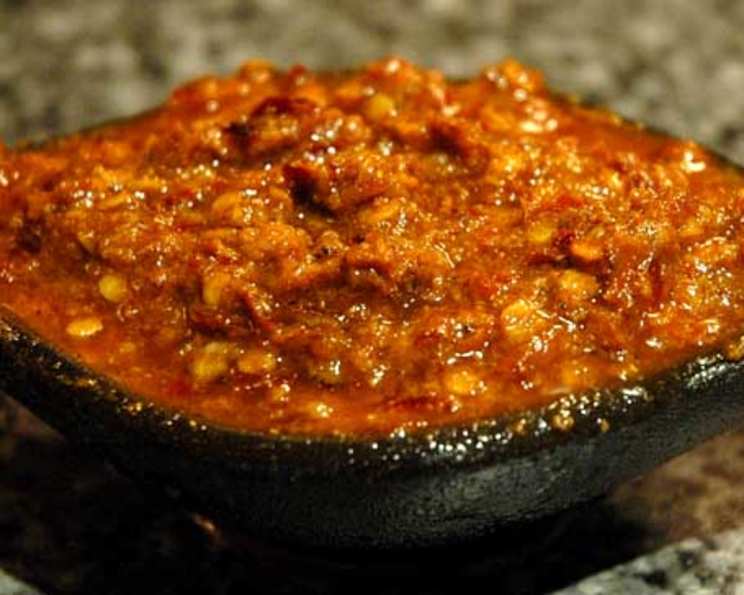
Harissa: A Fiery Kiss from North Africa
I still remember the first time I tasted harissa. It was at a bustling market in Marrakech, the air thick with the scent of spices and mint tea. A vendor, his face weathered by the Saharan sun, offered me a small dollop of the crimson paste on a piece of crusty bread. The initial sweetness gave way to a slow-burning heat that danced on my tongue, awakening my senses. It was more than just a condiment; it was an experience – a taste of the Maghreb itself. From that moment on, I was hooked, determined to unlock the secrets of this vibrant North African staple.
Recipe Overview
- Prep Time: 35 minutes
- Cook Time: 0 minutes
- Total Time: 35 minutes
- Servings: Variable
- Yield: Approximately 1 cup
- Dietary Type: Vegan, Gluten-Free
Ingredients
- 12 dried chili peppers
- 4 cloves garlic
- ½ cup extra virgin olive oil
- 1 teaspoon salt
- 2 teaspoons cumin
Equipment Needed
- Small bowl
- Blender or food processor
Instructions
- Begin by preparing the dried chili peppers. Remove the seeds and slice the peppers into smaller pieces. This will help them rehydrate more effectively.
- Place the sliced and seeded chili peppers in a small bowl.
- Cover the peppers with warm water and let them soak for approximately 30 minutes. This step is crucial for softening the peppers and releasing their vibrant flavors.
- After 30 minutes, drain the soaked peppers thoroughly.
- Using your hands, squeeze out any excess liquid from the peppers. Getting rid of the extra water concentrates the flavors and prevents a watery harissa.
- Place the drained chili peppers into a blender or food processor.
- Add the garlic cloves, extra virgin olive oil, salt, and cumin to the blender.
- Whirl all the ingredients in the blender or food processor until you achieve a smooth paste. You may need to stop and scrape down the sides occasionally to ensure even blending.
- Continue to blend until the harissa reaches your desired consistency. Some prefer a slightly chunkier texture, while others prefer a completely smooth paste.
- The harissa is now ready to serve.
Expert Tips & Tricks
- Spice Level Adjustment: The heat level of your harissa will depend on the type of chili peppers you use. For a milder harissa, opt for ancho or guajillo peppers. For a fiery kick, use bird’s eye chilies or dried habaneros. Remember to handle hot peppers with care and avoid touching your eyes! You can always add a pinch of cayenne pepper later if the heat isn’t intense enough.
- Toasting Spices: For a deeper, more complex flavor, lightly toast the cumin seeds in a dry skillet over medium heat for a few minutes before grinding. This enhances their aroma and nutty undertones. Let them cool completely before adding them to the blender.
- Garlic Intensity: If you prefer a milder garlic flavor, consider roasting the garlic cloves before adding them to the blender. Roasting mellows the garlic’s sharpness and adds a subtle sweetness.
- Consistency Control: Add more olive oil, a tablespoon at a time, to achieve a smoother, more spreadable consistency. Alternatively, for a thicker paste, you can lightly simmer the harissa in a saucepan over low heat for a few minutes, stirring constantly, to evaporate some of the moisture.
- Flavor Enhancers: Experiment with adding other spices like coriander, caraway, or smoked paprika for a unique twist on the traditional harissa flavor. A squeeze of lemon juice or a dash of vinegar can also brighten the flavors and add a touch of acidity.
- Rehydration Time: If your chilies are particularly dry or old, consider soaking them for a longer period, perhaps even up to an hour, to ensure they are properly rehydrated.
- Troubleshooting: If your harissa is too bitter, a pinch of sugar can help to balance the flavors. If it’s too spicy, add a little more olive oil or a small amount of tomato paste to temper the heat.
Serving & Storage Suggestions
Harissa is incredibly versatile and can be used in a multitude of ways. Serve it as a condiment alongside grilled meats, vegetables, or couscous. Stir it into soups, stews, or tagines for a burst of flavor. Use it as a marinade for chicken or fish, or spread it on sandwiches and wraps.
To store harissa, transfer it to an airtight container and refrigerate. It will keep well for up to 2 weeks. For longer storage, you can freeze harissa in ice cube trays and then transfer the frozen cubes to a freezer bag. This makes it easy to thaw only the amount you need. When properly stored, frozen harissa can last for several months.
Nutritional Information
| Nutrient | Amount per Serving | % Daily Value |
|---|---|---|
| Calories | 140 kcal | 7% |
| Total Fat | 14g | 18% |
| Saturated Fat | 2g | 10% |
| Cholesterol | 0mg | 0% |
| Sodium | 230mg | 10% |
| Total Carbohydrate | 5g | 2% |
| Dietary Fiber | 2g | 7% |
| Sugars | 2g | 0% |
| Protein | 1g | 2% |
Note: Nutritional information is an estimate and may vary based on specific ingredients and portion sizes.
Variations & Substitutions
- Smoked Harissa: Use smoked paprika in place of some of the regular cumin to add a smoky depth to your harissa.
- Rose Harissa: Infuse your harissa with the delicate floral aroma of rose petals. Add a tablespoon of dried rose petals to the blender along with the other ingredients.
- Harissa Paste with Roasted Red Peppers: For a sweeter and milder harissa, roast a red bell pepper and add it to the blender with the other ingredients.
- Spicier Harissa: Introduce a Scotch bonnet pepper or a ghost pepper for extreme heat, using only a small piece at a time to gauge the spice level.
- Moroccan Harissa: Incorporate preserved lemon rind for a distinct North African flavor. Use about a tablespoon of finely chopped preserved lemon rind.
FAQs (Frequently Asked Questions)
Q: Can I use fresh chili peppers instead of dried ones?
A: While dried chili peppers are traditionally used, you can substitute with fresh ones. Roast them first to concentrate their flavor and reduce their moisture content. You will need to adjust the quantities accordingly, as fresh peppers contain more water.
Q: How do I control the heat level of my harissa?
A: The type and quantity of chili peppers you use will determine the heat level. Start with milder peppers like ancho or guajillo, and gradually add hotter varieties until you achieve your desired spice level. Remove the seeds and membranes from the peppers to further reduce the heat.
Q: My harissa is too thick. How can I thin it out?
A: Add more extra virgin olive oil, a tablespoon at a time, until you reach your desired consistency. You can also add a splash of warm water, but be careful not to add too much, as it can dilute the flavor.
Q: How long does homemade harissa last?
A: Homemade harissa will last for up to 2 weeks in the refrigerator when stored in an airtight container. For longer storage, freeze it in ice cube trays and transfer the frozen cubes to a freezer bag.
Q: Can I use harissa as a dry rub for meat?
A: Yes, you can use harissa as a dry rub for meat. Simply mix it with a little olive oil and rub it onto the meat before grilling, roasting, or pan-frying. The harissa will add a spicy and flavorful crust to the meat.
Final Thoughts
Harissa is more than just a chili paste; it’s a culinary adventure waiting to happen. Its fiery complexity adds a unique dimension to countless dishes, transforming ordinary meals into extraordinary experiences. I encourage you to embark on your own harissa-making journey, experimenting with different chili peppers, spices, and flavor combinations to create a signature blend that reflects your personal taste. Don’t be afraid to experiment and most importantly, have fun! Share your creations with friends and family, and let the vibrant flavors of North Africa transport you to sun-drenched markets and bustling souks. Consider serving your harissa with traditional Moroccan tagines or couscous for an authentic culinary experience.