
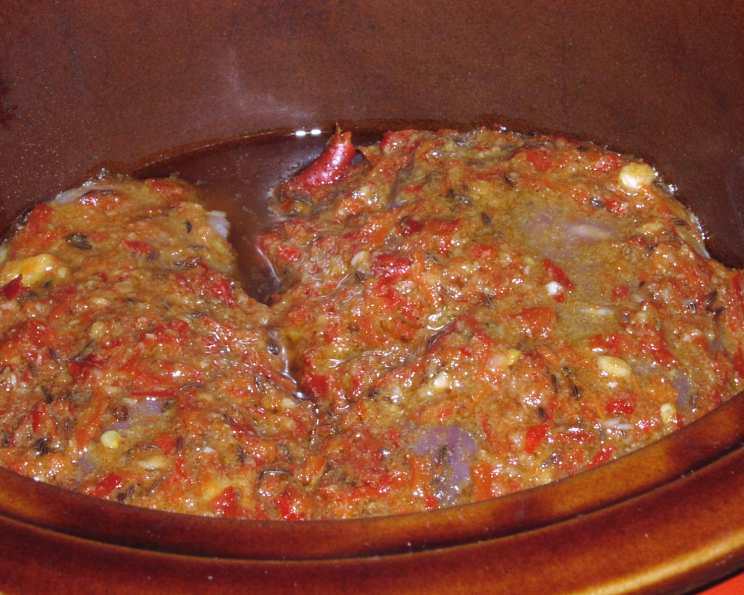
Harissa: A Fiery Taste of North Africa
The first time I tasted harissa, I was backpacking through Morocco. I stumbled upon a tiny, family-run restaurant in Marrakech, the air thick with the aroma of spices. A simple tagine, unassuming in its earthenware pot, was transformed by a dollop of this vibrant red paste. The heat danced on my tongue, a complex blend of smoky, earthy, and fiery that instantly transported me. It was more than just a condiment; it was an experience, a culinary awakening. From that moment on, I was determined to master the art of making authentic harissa.
Recipe Overview
- Prep Time: 30 minutes
- Cook Time: 1 minute
- Total Time: 31 minutes
- Yields: 1/2 cup
- Dietary Type: Vegan, Gluten-Free
Ingredients
- 12 dried hot red chili peppers
- 1 large garlic clove (or 2-3 small ones)
- 1 teaspoon ground cumin
- 1 teaspoon caraway seed
- 1 teaspoon coriander seed
- 1 teaspoon salt
- 1/3 cup olive oil
Equipment Needed
- Blender
- Small skillet or pan
Instructions
-
Begin by preparing the chili peppers. Remove the seeds from the dried hot red chili peppers. This step is crucial for controlling the heat level; removing more seeds will result in a milder harissa.
-
Next, rehydrate the chili peppers. Place the seeded peppers in a bowl and cover them with water. Let them soak for about 30 minutes to soften. This step is essential for achieving a smooth texture when blending.
-
While the peppers are soaking, prepare the spices. In a small skillet or pan, heat the cumin, caraway, and coriander seeds over low heat for about one minute. Toasting the spices briefly enhances their aroma and flavor profile. Be careful not to burn them.
-
Once the chili peppers are sufficiently rehydrated and the spices are toasted, it’s time to blend. Combine the rehydrated chili peppers, garlic clove, toasted cumin, caraway, and coriander seeds, and salt in a blender.
-
Add the olive oil to the blender.
-
Blend all the ingredients together until you achieve a smooth paste. You may need to stop the blender occasionally to scrape down the sides to ensure everything is evenly processed. Add more olive oil by the tablespoon if needed to reach the right consistency.
Expert Tips & Tricks
- Spice Level Adjustment: The heat of your harissa depends entirely on the type of dried chili peppers you use. For a milder version, choose less spicy varieties like Guajillo or Ancho. For an extra fiery kick, incorporate some Scotch Bonnet or Habanero peppers. Remember to handle hot peppers with care, using gloves if necessary to avoid skin irritation.
- Flavor Depth: Don’t skip the toasting step for the cumin, caraway, and coriander seeds. This seemingly small step unlocks a depth of flavor that you won’t achieve otherwise.
- Texture Perfection: If your harissa is too thick, add a little more olive oil, a tablespoon at a time, until you reach the desired consistency. Conversely, if it’s too thin, you can add a small amount of tomato paste to thicken it up.
- Garlic Infusion: For a more pronounced garlic flavor, consider roasting the garlic clove before adding it to the blender. Roasting mellows the sharpness of the garlic and imparts a subtle sweetness.
- Smoke it Up: Add a teaspoon of smoked paprika to introduce a delicious smoky dimension to your harissa.
Serving & Storage Suggestions
Harissa is incredibly versatile. It can be used as a condiment, a marinade, a grilling sauce, or an ingredient in various dishes.
- Serving Suggestions: A dollop of harissa elevates everything from grilled meats and roasted vegetables to couscous and tagines. It’s also fantastic stirred into soups or used as a spicy spread for sandwiches. Try mixing it with mayonnaise for a fiery aioli, or whisking it into salad dressings for an extra kick.
- Storage: Store your harissa in an airtight container in the refrigerator. Properly stored, it will keep for up to two weeks. For longer storage, you can freeze it in small portions using an ice cube tray. Once frozen, transfer the cubes to a freezer bag. This way, you can easily thaw only the amount you need. It’s best not to leave harissa at room temperature for more than two hours.
Nutritional Information
| Nutrient | Amount per Serving | % Daily Value |
|---|---|---|
| Calories | 1361.8 kcal | N/A |
| Calories from Fat | 1321 g | 97% |
| Total Fat | 146.8 g | 225% |
| Saturated Fat | 20.1 g | 100% |
| Cholesterol | 0 mg | 0% |
| Sodium | 4675 mg | 194% |
| Total Carbohydrate | 16.7 g | 5% |
| Dietary Fiber | 7.1 g | 28% |
| Sugars | 5.1 g | 20% |
| Protein | 3.8 g | 7% |
Note: Nutritional information is an estimate and may vary based on specific ingredients used.
Variations & Substitutions
- Rose Harissa: Add 1-2 tablespoons of rosewater to the finished harissa for a fragrant and floral twist.
- Smoked Pepper Harissa: Use smoked dried chili peppers for an intensely smoky flavor.
- Mint Harissa: Stir in a handful of fresh mint leaves after blending for a refreshing variation.
- Sweet Potato Harissa: Add a small amount of roasted sweet potato to the blender for a touch of sweetness and a vibrant orange color.
- Vegan Variation: This recipe is already vegan!
FAQs (Frequently Asked Questions)
Q: Can I use fresh chili peppers instead of dried?
A: While dried peppers are traditional and offer a deeper, more complex flavor, you can use fresh peppers. Roast them first to bring out their sweetness and reduce their moisture content before blending. Remember that fresh peppers will likely result in a less concentrated flavor.
Q: How can I make harissa less spicy?
A: Remove more seeds from the dried chili peppers before soaking. You can also add a touch of sweetness, such as a small amount of honey or maple syrup, to balance the heat.
Q: Can I use a food processor instead of a blender?
A: Yes, you can use a food processor, but the texture might be slightly coarser. Be sure to scrape down the sides frequently to ensure even processing.
Q: My harissa is too bitter. What can I do?
A: Bitterness can sometimes occur if the spices are burned during toasting or if the garlic is too strong. Try adding a touch of lemon juice or vinegar to balance the flavors. A small amount of sweetener can also help.
Q: How long does homemade harissa last?
A: Homemade harissa will last for up to two weeks in the refrigerator when stored in an airtight container. You can also freeze it for longer storage.
Final Thoughts
Now that you’re armed with this recipe and a few insider tips, I encourage you to embark on your own harissa-making adventure. Don’t be afraid to experiment with different types of peppers, spices, and additions to create a harissa that perfectly suits your palate. Share your creations with friends and family, and let the vibrant flavors of North Africa transport you to sun-drenched souks and bustling marketplaces. And remember, the best harissa is always the one you make yourself! Consider pairing your harissa with a flavorful couscous dish or using it to spice up a hearty lentil soup. Enjoy!