
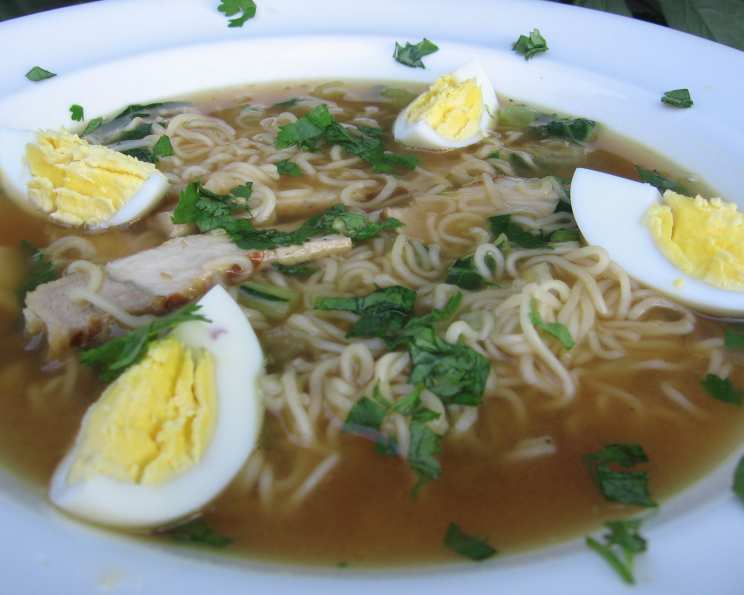
Hawaiian Saimin Soup: A Taste of Aloha in Every Bowl
The first time I had truly authentic Hawaiian Saimin was at a tiny, unassuming lunch counter on Oahu. The air was thick with the scent of ginger and the gentle hum of local chatter. As I slurped down that steaming bowl, the delicate dance of flavors – the savory broth, the tender noodles, and the playful pops of kamaboko – transported me. It wasn’t just a meal; it was a warm embrace, a taste of home, even for someone who wasn’t from there. From that moment on, I was hooked, forever chasing that perfect bowl of island comfort.
Recipe Overview
- Prep Time: 15 minutes
- Cook Time: 10 minutes
- Total Time: 25 minutes
- Servings: 3-4
- Dietary Type: Varies (Adaptable)
Ingredients
Basic Saimin:
- 16 cups water (4 quarts)
- 1 tablespoon salt
- 1 (8 ounce) package dried Japanese soba noodles
- 4 cups chicken broth
- 1 tablespoon fresh ginger, grated
- 2 tablespoons soy sauce
Suggested Toppings:
- Spam, sliced
- Baked ham slices
- Roast pork, slices (char siu is ideal!)
- Carrot, sliced
- Green cabbage, shredded
- Bok choy, chopped
- Mushroom, sliced
- Green peas
- Egg, scrambled or fried
- Green onions or scallion, sliced
- Cooked small shrimp, peeled and deveined
Equipment Needed
- Large pot
- Colander
- Soup bowls
- Chopsticks or spoons
Instructions
-
In a large pot over medium-high heat, add water and salt; bring to a boil. This is the foundation of your broth, so don’t skimp on the salt!
-
Add soba noodles and boil for 4 to 6 minutes until al dente. Keep a close eye; soba cooks quickly, and you want them to have a slight chew. Overcooked noodles will become mushy in the soup.
-
Remove from heat, drain, and rinse under warm, running water. Rinsing stops the cooking process and prevents the noodles from sticking together.
-
In a large pot over medium-high heat, add chicken broth and ginger; bring just to a boil. The ginger will infuse the broth with a lovely warmth.
-
Reduce heat to low. Add soy sauce and your favorite toppings; simmer for 5 minutes longer or until toppings are cooked. Adjust the simmer time based on the toppings you choose. Raw veggies will need a bit longer than pre-cooked meats.
-
Remove from heat. Place cooked soba noodles in a large soup bowl; spoon broth mixture (with toppings) over the top and serve immediately. Don’t be shy with the toppings – that’s what makes Saimin so customizable and fun!
Expert Tips & Tricks
-
Broth Boost: For an even richer broth, consider using homemade chicken stock or adding a touch of dashi powder for umami.
-
Noodle Nirvana: Don’t overcook the noodles! They should be al dente. If you’re using fresh noodles, reduce the cooking time accordingly.
-
Flavor Fusion: Experiment with different types of soy sauce. A light soy sauce will keep the broth clear, while a dark soy sauce will add more depth of flavor.
-
Prep Power: Prepare your toppings ahead of time for a speedy weeknight meal. Slicing the Spam, chopping the vegetables, and cooking the shrimp can all be done in advance.
-
Presentation Perfect: Garnish with a sprinkle of toasted sesame seeds or a swirl of chili oil for added visual appeal and flavor.
Serving & Storage Suggestions
Serve Hawaiian Saimin immediately for the best flavor and texture. The hot broth will continue to cook the noodles if left standing for too long.
Leftover Saimin can be stored in an airtight container in the refrigerator for up to 2 days. Be aware that the noodles will absorb some of the broth, so you may need to add a splash of water or broth when reheating.
To reheat, gently warm the soup in a pot over medium heat, or microwave in 1-minute intervals, stirring in between. It is not recommended to freeze Saimin as the noodles tend to become mushy upon thawing.
Nutritional Information
(Note: Nutritional information is an estimate and will vary based on specific ingredients and serving size.)
| Nutrient | Amount per Serving | % Daily Value |
|---|---|---|
| Calories | 450 kcal | 23% |
| Total Fat | 18g | 28% |
| Saturated Fat | 5g | 25% |
| Cholesterol | 75mg | 25% |
| Sodium | 2500mg | 104% |
| Total Carbs | 55g | 18% |
| Dietary Fiber | 3g | 12% |
| Sugars | 5g | N/A |
| Protein | 20g | 40% |
Variations & Substitutions
-
Vegetarian Saimin: Substitute vegetable broth for chicken broth and tofu or tempeh for the meat toppings.
-
Gluten-Free Saimin: Use gluten-free rice noodles or kelp noodles instead of soba noodles. Be sure to check the soy sauce label to ensure it is gluten-free (tamari is a good option).
-
Spicy Saimin: Add a dash of chili oil or a pinch of red pepper flakes to the broth for a spicy kick.
-
Seafood Saimin: Load up on shrimp, scallops, and fish cakes for a seafood-centric version.
-
Local Twist: Incorporate ingredients like kalua pig or Portuguese sausage for a truly authentic Hawaiian experience.
FAQs (Frequently Asked Questions)
Q: Can I use fresh noodles instead of dried soba noodles?
A: Absolutely! Fresh noodles will cook even faster than dried noodles, so keep a close watch and adjust the cooking time accordingly.
Q: What is kamaboko?
A: Kamaboko is a Japanese fish cake, often pink and white, that adds a unique flavor and texture to Saimin. It can be found in most Asian grocery stores.
Q: Can I make Saimin ahead of time?
A: While the broth and toppings can be prepared in advance, it’s best to cook the noodles just before serving to prevent them from becoming soggy.
Q: What is the best way to reheat leftover Saimin?
A: Gently warm the soup in a pot over medium heat or microwave in 1-minute intervals, stirring in between. Add a splash of water or broth if needed.
Q: Can I add an egg to my Saimin?
A: Definitely! A soft-boiled egg or a fried egg adds richness and protein to the soup.
Final Thoughts
Hawaiian Saimin is more than just a soup; it’s a celebration of flavors and a comforting reminder of island life. Don’t be afraid to experiment with different toppings and make it your own. Whether you’re a seasoned chef or a beginner cook, this recipe is a delicious and rewarding way to bring a taste of Aloha into your kitchen. So gather your ingredients, put on some Hawaiian music, and get ready to slurp your way to paradise! I encourage you to try this recipe and share your feedback. Pair it with a refreshing glass of pineapple juice for the complete Hawaiian experience.