
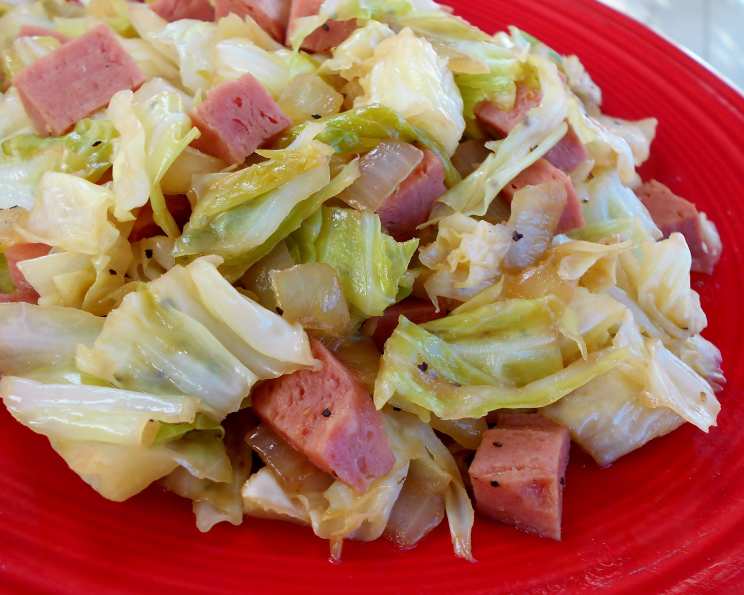
Hawaiian Spam and Cabbage: A Taste of Island Comfort
The first time I tasted Spam and Cabbage, I was a homesick culinary student, miles away from my beloved Hawai’i. My roommate, bless her heart, sensed my despair and whipped up a batch. That simple dish, with its savory-sweet aroma and surprisingly satisfying flavors, transported me back to family luaus, beachside picnics, and the familiar comfort of home. It wasn’t just a meal; it was a hug from the islands.
Recipe Overview
- Prep Time: 10 minutes
- Cook Time: 25 minutes
- Total Time: 35 minutes
- Servings: 4
- Yield: About 6 cups
- Dietary Type: Not Gluten-Free
Ingredients
- 12 ounces Spam (1 can)
- ½ onion
- 1 medium cabbage
- 1 garlic clove
- ¼ cup shoyu (soy sauce)
- Sesame oil
Equipment Needed
- Large pot or wok
- Cutting board
- Knife
Instructions
- Begin by preparing your ingredients. Cut the Spam into strips or dice. The size is up to you, but I find that smaller cubes cook more evenly.
- Next, slice half a round onion thinly. You want them to be uniformly cut, so they cook at the same rate.
- Then, slice one medium cabbage thinly. Remove any tough outer leaves first.
- Chop one garlic clove finely. This will infuse the dish with its aromatic essence.
- Heat a generous amount of sesame oil in a large pot or wok over medium-high heat. Don’t skimp on the sesame oil; it provides a crucial layer of flavor. About 2 tablespoons should do the trick.
- Add the Spam to the pot and cook until it begins to brown and crisp slightly. This usually takes about 5-7 minutes. This step is key to building flavor.
- Add the onion and garlic to the pot and cook until the onion is translucent, about 3-5 minutes. Stir frequently to prevent burning.
- Add the cabbage and shoyu (soy sauce) to the pot.
- Cook until the cabbage is tender-crisp, stirring occasionally. This should take approximately 10-15 minutes. The cabbage should wilt and soften, but still retain a bit of bite.
- Serve hot over rice.
Expert Tips & Tricks
- Crispy Spam is King: Don’t be afraid to let the Spam get a little crispy in the pot. The browning adds a depth of flavor that elevates the entire dish.
- Cabbage Consistency: For a softer cabbage, cover the pot for the last 5 minutes of cooking. For a crispier cabbage, leave the pot uncovered.
- Shoyu Savvy: Use a good quality shoyu for the best flavor. Low-sodium shoyu can be used to control the salt level.
- Spice it up: A pinch of red pepper flakes adds a welcome kick.
- Aromatics: Add a small piece of ginger along with the garlic for a more complex flavor profile.
- Make-Ahead Magic: This dish can be made a day ahead and reheated. The flavors actually meld together even more beautifully overnight.
- Prevent Sticking: Ensure there’s enough sesame oil in the pot to prevent the Spam and vegetables from sticking.
- Adjust the Salt: Spam is inherently salty, so taste and adjust the amount of shoyu accordingly. You may not need the full ¼ cup, especially if you’re using regular (not low-sodium) shoyu.
- Garlic Burn Prevention: Add the garlic at the end of the cooking process to avoid burning the garlic, which can impart a bitter taste.
Serving & Storage Suggestions
Serve your Hawaiian Spam and Cabbage hot over a bed of fluffy white rice. A sprinkle of toasted sesame seeds adds a nice visual appeal and nutty flavor.
Leftovers can be stored in an airtight container in the refrigerator for up to 3-4 days. To reheat, simply microwave until heated through, or sauté in a pan with a little sesame oil. Reheating in a pan helps to retain some of the original crispness. Avoid leaving it at room temperature for longer than 2 hours.
Nutritional Information
| Nutrient | Amount per Serving | % Daily Value |
|---|---|---|
| Calories | 332 kcal | 17% |
| Total Fat | 23 g | 35% |
| Saturated Fat | 8 g | 40% |
| Cholesterol | 59 mg | 19% |
| Sodium | 2090 mg | 87% |
| Total Carbohydrate | 19 g | 6% |
| Dietary Fiber | 6 g | 24% |
| Sugars | 8 g | 16% |
| Protein | 15 g | 30% |
Nutritional information is an estimate and may vary based on specific ingredients and cooking methods.
Variations & Substitutions
- Meat Matters: While Spam is traditional, you can substitute it with other luncheon meats like corned beef or even smoked sausage.
- Veggie Variety: Feel free to add other vegetables like carrots, bell peppers, or green onions for added flavor and nutrition.
- Gluten-Free Version: Substitute the regular shoyu with a gluten-free tamari.
- Sweet & Spicy: Add a tablespoon of brown sugar and a pinch of red pepper flakes for a sweet and spicy twist.
- Island Style: Drizzle with a little oyster sauce for a richer, umami flavor.
- Cabbage Type: While green cabbage is most common, try using Napa cabbage or savoy cabbage for a slightly different texture and flavor.
- Protein Boost: Top with a fried egg for extra protein and richness.
FAQs (Frequently Asked Questions)
Q: Can I use low-sodium Spam?
A: Yes, you can use low-sodium Spam to reduce the overall sodium content of the dish. You may need to adjust the amount of shoyu accordingly.
Q: Can I make this dish vegetarian?
A: While Spam is the key ingredient, you could try using a vegetarian luncheon meat alternative. However, the flavor will be significantly different.
Q: How do I prevent the cabbage from getting too soggy?
A: Don’t overcook the cabbage. Cook it until it’s tender-crisp. You can also add it towards the end of the cooking process to prevent it from becoming too soft.
Q: What kind of rice is best to serve with Spam and Cabbage?
A: Short-grain white rice is the most traditional choice, but any type of rice works well. Brown rice is a healthier option.
Q: Can I add other sauces or seasonings?
A: Absolutely! Feel free to experiment with different sauces and seasonings to customize the flavor to your liking. Oyster sauce, sriracha, or a touch of ginger are all great additions.
Final Thoughts
Hawaiian Spam and Cabbage is more than just a recipe; it’s a taste of home, a reminder of simpler times, and a testament to the deliciousness of comfort food. I encourage you to try this recipe and experience the unique flavors of the islands. Don’t be afraid to experiment with variations and make it your own. And most importantly, share it with loved ones and enjoy the warmth and aloha it brings. Mahalo!