
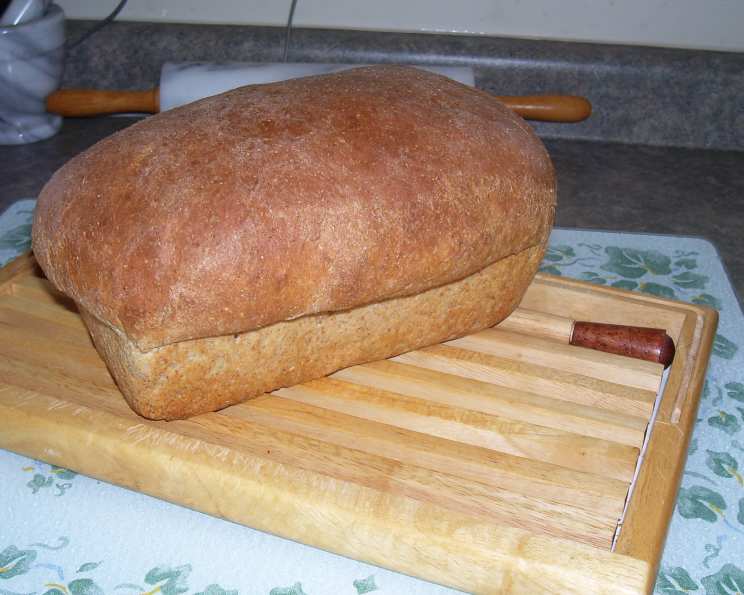
Heavenly Whole Wheat Bread
I still remember the smell. It was a late autumn afternoon, the kind where the air is crisp and the leaves are a kaleidoscope of colors. My grandmother’s kitchen was always a haven, but on this particular day, the aroma of freshly baked bread filled the air, promising warmth and comfort. It was her whole wheat bread, a recipe she guarded closely. She’d let me knead the dough (mostly making a mess), but the secret ingredients and baking times remained her domain. That first bite, slathered with butter and homemade jam, transported me to a place of pure happiness. To this day, the scent of whole wheat bread baking still evokes those cherished memories and a longing for the simple goodness of home.
Recipe Overview
- Prep Time: 4 hours 5 minutes
- Cook Time: Varies (see instructions)
- Total Time: 4 hours 5 minutes
- Yield: 1 (1 1/2 pound) loaf
- Servings: 10
- Dietary Type: Vegetarian
Ingredients
- 1 1/8 cups warm water
- 2 cups whole wheat flour
- 1 cup all-purpose flour (or bread flour)
- 1 1/2 teaspoons salt
- 4 tablespoons margarine (or butter)
- 2 tablespoons granulated sugar
- 1 tablespoon gluten powder
- 1/4 cup instant potato flakes
- 2 teaspoons active dry yeast
Equipment Needed
- Bread machine
Instructions
- Add all ingredients to your bread machine in the order recommended by your machine’s instructions. This is crucial, as the order can affect how well the bread rises and bakes. Typically, liquids go in first, followed by dry ingredients, with the yeast added last.
- Select the “basic” bread cycle and the “light crust” setting on your bread machine.
- Press the start button to begin the kneading and baking process.
- Carefully observe the dough as it’s being kneaded. The consistency is key to a good loaf.
- The dough should form a round, soft, and slightly sticky ball. Flour is sensitive to humidity and other factors, so adjustments might be needed.
- If the dough appears too dry, add a small amount of water, a teaspoon at a time, until the correct consistency is achieved.
- Conversely, if the dough is too wet and sticky, add a small amount of flour, a tablespoon at a time, until it firms up.
- Allow the bread machine to complete its cycle.
- Once the bread is baked, carefully remove the loaf from the machine. Use oven mitts or pot holders, as the pan and bread will be very hot.
- Place the loaf on a cooling rack to cool completely before slicing. This prevents the bread from becoming soggy.
Expert Tips & Tricks
- Water Temperature Matters: Ensure the water is warm (around 105-115°F or 40-46°C), not hot. Hot water can kill the yeast, preventing the bread from rising.
- Gluten Powder is Your Friend: Don’t skip the gluten powder, especially when using whole wheat flour. Whole wheat flour contains bran, which can interfere with gluten development, resulting in a denser loaf. The added gluten powder helps to create a lighter, more airy texture.
- Potato Flakes for Softness: The instant potato flakes contribute to a softer crumb and help retain moisture, extending the bread’s shelf life.
- Adapting to Your Bread Machine: Every bread machine is different. Refer to your machine’s manual for specific instructions and recommended settings. Some machines may require different ingredient orders or cycle times.
- Listen to Your Dough: The feel of the dough during kneading is a crucial indicator of success. Don’t be afraid to make small adjustments to the water or flour content to achieve the desired consistency.
- Troubleshooting Rise: If your bread doesn’t rise properly, it could be due to expired yeast, incorrect water temperature, or too much salt. Check the yeast’s expiration date and ensure the water temperature is within the recommended range. Also, make sure you’ve measured the salt accurately, as too much salt can inhibit yeast activity.
- Troubleshooting Density: A dense loaf can be caused by too much whole wheat flour, not enough gluten, or under-proofing (insufficient rising time). Adding gluten powder, as mentioned above, and ensuring the dough rises adequately can help prevent a dense loaf.
Serving & Storage Suggestions
Serve this heavenly whole wheat bread warm, sliced, and topped with butter, jam, honey, or your favorite spread. It’s also excellent for making sandwiches, toast, or croutons. It pairs well with soups, salads, and hearty stews.
To store, allow the bread to cool completely before wrapping it tightly in plastic wrap or placing it in an airtight bag. This will help prevent it from drying out.
- Room Temperature: Stored at room temperature, this bread will stay fresh for about 2-3 days.
- Refrigerator: For longer storage, keep it in the refrigerator for up to 1 week. However, refrigerating bread can make it slightly drier.
- Freezer: For extended storage, slice the bread and freeze it in a freezer-safe bag for up to 2-3 months. To thaw, remove the desired number of slices and let them sit at room temperature for about 30 minutes, or toast them directly from frozen.
To reheat, wrap a slice or two in foil and warm in a 350°F (175°C) oven for about 5-10 minutes. Alternatively, you can toast it or microwave it briefly.
Nutritional Information
(Estimated per serving, based on 10 servings per loaf)
| Nutrient | Amount per Serving | % Daily Value |
|---|---|---|
| Calories | 185 kcal | N/A |
| Calories from Fat | 47 kcal | N/A |
| Total Fat | 5.3 g | 8% |
| Saturated Fat | 1.1 g | 5% |
| Cholesterol | 0 mg | 0% |
| Sodium | 405.5 mg | 16% |
| Total Carbohydrate | 30.9 g | 10% |
| Dietary Fiber | 3.2 g | 12% |
| Sugars | 2.7 g | N/A |
| Protein | 5 g | 9% |
Note: Nutritional information is an estimate and may vary based on specific ingredients and serving sizes.
Variations & Substitutions
- Honey Whole Wheat Bread: Substitute the granulated sugar with honey for a slightly sweeter flavor and added moisture.
- Nutty Whole Wheat Bread: Add 1/2 cup of chopped nuts (walnuts, pecans, or almonds) to the dough for added texture and flavor.
- Seeded Whole Wheat Bread: Sprinkle sesame seeds, poppy seeds, or sunflower seeds on top of the dough before baking for a decorative and nutritious touch.
- Spiced Whole Wheat Bread: Add 1 teaspoon of cinnamon or pumpkin pie spice to the dough for a warm, comforting flavor.
- Herb Infused Whole Wheat Bread: Add 1-2 tablespoons of dried herbs (rosemary, thyme, or oregano) to the dough for a savory twist.
- Dairy-Free Version: Use dairy-free margarine or oil instead of butter.
- Different Flours: Experiment with adding other flours like rye or spelt for a different flavour profile. Keep the ratio of wholewheat to other flours similar.
FAQs (Frequently Asked Questions)
Q: Can I make this bread without a bread machine?
A: While this recipe is specifically designed for a bread machine, you could adapt it for hand-kneading and oven baking. You’ll need to adjust the kneading and rising times accordingly. Expect to knead for 8-10 minutes and allow the dough to rise twice, once before shaping and once after. Bake at 375F (190C) for approximately 30-35 minutes, or until golden brown and the internal temperature reaches 200F (93C).
Q: Why is my whole wheat bread so dense?
A: Density in whole wheat bread is often due to the bran in the flour inhibiting gluten development. Ensure you’re using gluten powder, not over-measuring the flour, and allowing sufficient rising time.
Q: My bread is browning too quickly. What should I do?
A: If the top of the bread is browning too quickly, you can carefully cover it with a piece of aluminum foil during the last part of the baking cycle. This will help to prevent it from burning.
Q: Can I use a different type of yeast?
A: This recipe calls for active dry yeast. If you use instant or rapid-rise yeast, you may need to adjust the rising time slightly. Check the yeast package for specific instructions.
Q: How do I know when the bread is done?
A: The bread is done when it sounds hollow when tapped on the bottom. The crust should be golden brown. An internal thermometer inserted into the center of the loaf should read around 200-210°F (93-99°C).
Final Thoughts
Baking bread is more than just following a recipe; it’s an act of creation, a connection to tradition, and a way to nourish both body and soul. I urge you to try this recipe for Heavenly Whole Wheat Bread. Experiment with variations, make it your own, and most importantly, share it with those you love. The aroma of baking bread is a universal language of comfort and hospitality, and a freshly baked loaf is a gift that will always be appreciated. So, dust off your bread machine, gather your ingredients, and embark on a baking adventure that will fill your home with warmth and the irresistible scent of homemade goodness. Enjoy!