
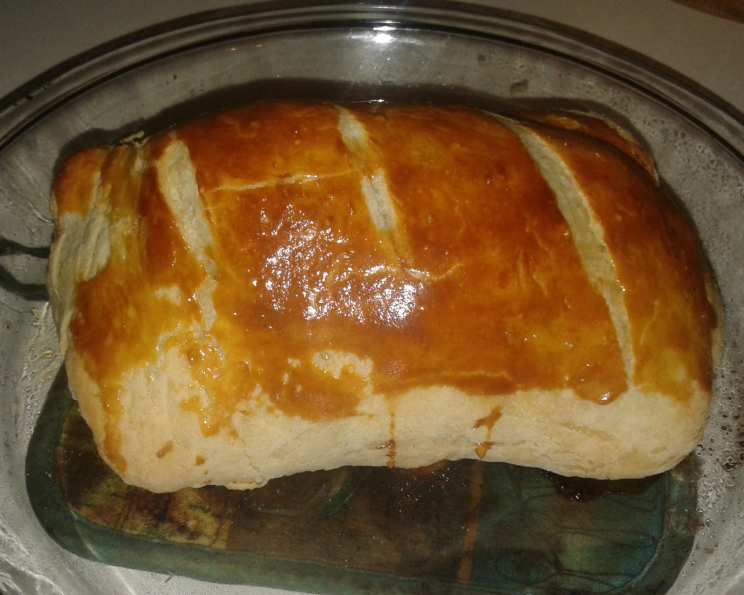
Mastering Hell’s Kitchen: A Step-by-Step Guide to Beef Wellington
I remember the first time I saw Beef Wellington on TV. It wasn’t just the dish itself, a golden parcel promising untold riches within; it was the sheer drama of it all. Chef Ramsay, a whirlwind of controlled fury, demanding perfection. I was a wide-eyed culinary student then, intimidated but utterly captivated. That night, I dreamt of perfectly seared fillets and crisp, flaky pastry. It took years, and a few kitchen disasters along the way, but I finally conquered this classic, and I’m here to guide you through every step.
Recipe Overview
- Prep Time: 45 minutes
- Cook Time: 30 minutes
- Total Time: 1 hour 15 minutes
- Servings: 4-6
- Yield: 1 Wellington
- Dietary Type: Not Gluten-Free, Not Dairy-Free
Ingredients
- 1 lb filet mignon, center cut
- 1 lb mushrooms (cremini or mixed)
- 6-8 slices prosciutto ham
- 1 large shallot
- 2 garlic cloves
- 2 tablespoons olive oil
- 2 tablespoons Grey Poupon Dijon mustard
- 1 (10 ounce) package puff pastry, all-butter is recommended
- Flour, for dusting
- 2 egg yolks, beaten
- 1 tablespoon garlic powder
- 2 teaspoons dried basil
- 2 teaspoons dried thyme
- Sea salt, to taste
- Pepper, to taste
Equipment Needed
- Large frying pan or skillet
- Food processor
- Cling wrap
- Baking sheet
- Pastry brush
Instructions
-
Begin by heating the olive oil in a large frying pan over medium-high heat. Ensure the pan is hot before adding the filet mignon.
-
Season the filet mignon generously on all sides with garlic powder, dried basil, sea salt, and pepper. Don’t be shy with the seasoning; this is your foundation for flavor.
-
Sear the seasoned filet mignon on all sides for approximately 25 seconds per side. The goal here is to achieve a beautiful, even color and a slight crust, not to cook the meat through. You want a deep sear, locking in the juices, but keeping the inside raw.
-
Remove the seared filet mignon from the pan and set it aside to cool completely. It’s crucial that the meat is cool before proceeding; otherwise, it will melt the prosciutto and mushroom mixture.
-
Prepare the duxelles (the mushroom mixture): In a food processor, combine the mushrooms, shallot, and garlic cloves with dried thyme, sea salt, and pepper. Pulse the mixture until it forms a rough paste. Avoid over-processing; you want some texture.
-
Scrape the mushroom mixture into the same pan used to sear the filet mignon. Cook over high heat for 10-15 minutes, tossing frequently. The key is to cook out all the moisture from the mushrooms. This step is vital to prevent a soggy Wellington. Spread the cooked duxelles out on a plate or baking sheet to cool completely.
-
Once the filet mignon is cool, brush it liberally on all sides with Grey Poupon Dijon mustard. The mustard adds a tangy bite and helps the duxelles adhere to the meat.
-
Preheat your oven to 400°F (200°C). Make sure your oven is properly preheated for even cooking.
-
Lay a large sheet of cling wrap on a clean work surface. Arrange the prosciutto slices on the cling wrap, slightly overlapping, to create a rectangle large enough to completely encase the filet mignon.
-
Spread the cooled mushroom paste evenly over the layer of prosciutto.
-
Place the mustard-coated seared filet mignon in the center of the prosciutto and mushroom mixture. Spread any remaining mushroom paste on top of the filet mignon.
-
Using the cling wrap, carefully and tightly roll the prosciutto and mushroom mixture around the filet mignon, ensuring it is completely sealed. Twist the ends of the cling wrap tightly to secure the roll. This step helps the Wellington maintain its shape during chilling. Chill the wrapped filet mignon in the refrigerator for at least 15 minutes to allow it to set.
-
On a lightly floured surface, roll out the puff pastry to a thickness of about 1/8 inch (the thickness of a penny). Brush the entire surface of the rolled-out pastry with beaten egg yolk.
-
Remove the chilled filet mignon roll from the refrigerator and carefully unwrap it from the cling wrap.
-
Place the unwrapped filet mignon in the center of the egg yolk-brushed puff pastry.
-
Fold the ends of the puff pastry over the filet mignon, then wrap the entire filet mignon in the pastry, carefully sealing the edges with egg yolk. Trim off any excess puff pastry. Turn the Wellington over so that the seam is on the bottom.
-
Place the wrapped Wellington on a baking sheet. Brush the entire surface of the puff pastry with beaten egg yolk. Chill the Wellington in the refrigerator for another 15 minutes to allow the pastry to rest. This helps prevent the pastry from shrinking during baking.
-
Lightly score the top of the pastry in three places to allow steam to escape. Glaze the pastry again with beaten egg yolk.
-
Bake in the preheated oven at 400°F (200°C) for 20 minutes. Then, lower the oven temperature to 350°F (175°C) and continue baking for another 10 minutes, or until the pastry is golden brown and cooked through.
-
Remove the Beef Wellington from the oven and let it rest for 10 minutes before slicing and serving. This allows the juices to redistribute, resulting in a more tender and flavorful dish. The beef should still be slightly pink in the center for medium-rare. Use a meat thermometer to ensure the internal temperature is 130-135°F for medium-rare.
Expert Tips & Tricks
- Dry Brining: Season the filet mignon with salt and pepper 24 hours in advance. This draws out moisture and intensifies the flavor.
- Duxelles Depth: For a richer duxelles, consider adding a splash of dry sherry or Madeira wine while cooking the mushrooms.
- Pastry Perfection: For an even more golden and glossy finish, brush the puff pastry with egg yolk mixed with a teaspoon of heavy cream before baking.
- Preventing a Soggy Bottom: Place the Wellington on a wire rack on top of the baking sheet. This will allow air to circulate underneath and prevent the bottom crust from becoming soggy.
- Doneness Check: The internal temperature of the beef is key. Use a meat thermometer to ensure it reaches your desired level of doneness. Remember, it will continue to cook slightly as it rests.
Serving & Storage Suggestions
Serve the Beef Wellington immediately after resting, slicing it into thick, generous portions. It pairs beautifully with red wine reduction, roasted root vegetables, or a simple green salad.
Leftover Beef Wellington can be stored in an airtight container in the refrigerator for up to 3 days. To reheat, wrap the slices in foil and warm them in a 350°F (175°C) oven until heated through. Microwaving is not recommended, as it can make the pastry soggy. While technically safe to eat after this time, quality degrades and is best consumed sooner.
Nutritional Information
| Nutrient | Amount per Serving | % Daily Value |
|---|---|---|
| Calories | 750 kcal | 38% |
| Total Fat | 45g | 69% |
| Saturated Fat | 20g | 100% |
| Cholesterol | 200mg | 67% |
| Sodium | 500mg | 21% |
| Total Carbohydrate | 30g | 10% |
| Dietary Fiber | 4g | 16% |
| Sugars | 5g | – |
| Protein | 50g | 100% |
Nutritional information is an estimate and may vary based on specific ingredients and portion sizes.
Variations & Substitutions
- Gluten-Free: Substitute the puff pastry with a gluten-free puff pastry option. Be sure to check the ingredients list carefully.
- Vegetarian Wellington: Replace the filet mignon with a large portobello mushroom cap or a roasted butternut squash for a vegetarian version. Adjust cooking times accordingly.
- Spice it Up: Add a pinch of cayenne pepper to the duxelles for a subtle kick.
- Herby Twist: Use a mix of fresh herbs, such as rosemary, thyme, and parsley, in the duxelles for a more aromatic flavor.
FAQs (Frequently Asked Questions)
Q: Can I make the Beef Wellington ahead of time?
A: Yes, you can assemble the Wellington up to the point of baking, then wrap it tightly in plastic wrap and refrigerate it for up to 24 hours. Add a few minutes to the baking time if baking from cold.
Q: How do I prevent the puff pastry from getting soggy?
A: Ensure that the duxelles is cooked until all the moisture has evaporated, and allow it to cool completely before assembling the Wellington. Also, chill the assembled Wellington before baking and use a wire rack on the baking sheet.
Q: What is the best way to check the doneness of the beef?
A: Use a meat thermometer to check the internal temperature of the beef. For medium-rare, aim for 130-135°F (54-57°C).
Q: Can I freeze Beef Wellington?
A: It is not recommended to freeze assembled Beef Wellington, as the pastry can become soggy upon thawing. It’s best to assemble and bake fresh.
Q: What sauce goes well with Beef Wellington?
A: A classic red wine reduction sauce or a rich Madeira sauce are excellent choices. A simple horseradish cream sauce also complements the flavors well.
Final Thoughts
Beef Wellington is a dish that demands attention and rewards patience. It’s a showstopper, perfect for special occasions or when you simply want to impress. Don’t be intimidated by the steps; take your time, follow the instructions carefully, and enjoy the process. This dish is not just about the food; it’s about the experience of creating something truly special. So, go ahead, embrace the challenge, and savor every delicious bite! And don’t forget to let me know how yours turns out!