
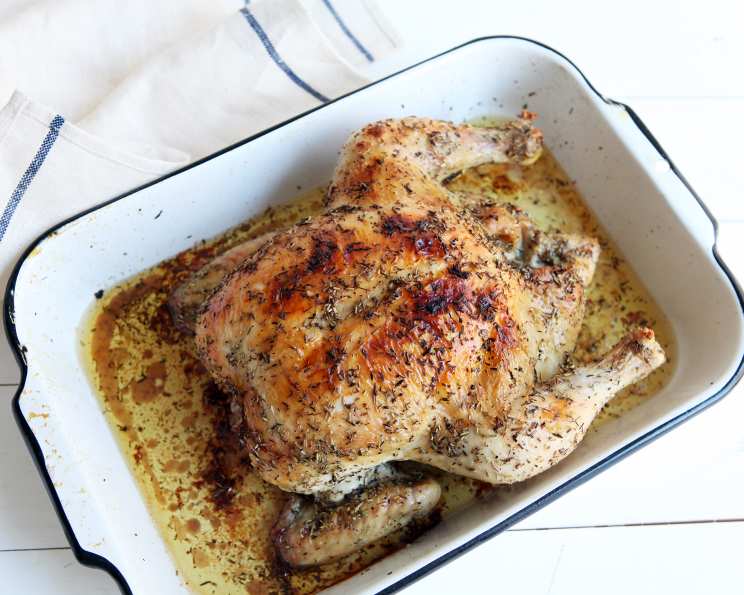
Herb Roasted Whole Chicken: A Kitchen Classic
The aroma of roasting chicken is a powerful time machine. Just a whiff and I’m instantly transported back to my grandmother’s kitchen, a place perpetually filled with warmth and the comforting scent of herbs mingling with roasting poultry. She always had a chicken in the oven on Sundays, its golden skin crackling just so, a promise of a family feast to come. This Herb Roasted Whole Chicken recipe is my humble attempt to recreate that magic, to share that same simple, satisfying feeling with you.
Recipe Overview
- Prep Time: 10 minutes
- Cook Time: 60 minutes
- Total Time: 1 hour 10 minutes
- Servings: 4
- Yield: 1 Whole roasted chicken
- Dietary Type: Omnivore
Ingredients
- 1 large whole chicken
- ½ cup cooking oil (any kind)
- ¼ cup water
- ½ teaspoon dried thyme
- ½ teaspoon dried oregano
- 1 dash salt
- 1 dash pepper
Equipment Needed
- Roasting pan
- Aluminum foil
Instructions
- Preheat your oven to 350°F (175°C). Ensure your oven rack is positioned in the center.
- In a small bowl, combine the ½ cup cooking oil, ¼ cup water, ½ teaspoon dried thyme, ½ teaspoon dried oregano, 1 dash salt, and 1 dash pepper.
- Stir the mixture well. Don’t worry if the oil and water don’t fully combine; this is perfectly normal.
- Place the 1 large whole chicken in the roasting pan.
- Pour or brush the oil, water, and herb mixture generously over the entire surface of the chicken, ensuring it is evenly coated.
- Cover the roasting pan tightly with aluminum foil. This will help to trap moisture and prevent the chicken from drying out during the initial cooking phase.
- Bake in the preheated oven for approximately 1 hour.
- After 1 hour, carefully remove the foil from the roasting pan.
- Continue baking the chicken, uncovered, for an additional period, until the skin is golden brown and crispy. This can take anywhere from 10-30 minutes, depending on your oven and the size of the chicken.
- To ensure the chicken is fully cooked, insert a meat thermometer into the thickest part of the thigh, avoiding the bone. The internal temperature should reach 165°F (74°C). If it has not reached this internal temperature then you must continue to cook it for longer.
- Once cooked to an internal temperature of 165°F (74°C) remove from oven and let the chicken rest for at least 10-15 minutes before carving. This allows the juices to redistribute, resulting in a more tender and flavorful bird.
Expert Tips & Tricks
- Brining is Best: For an extra juicy chicken, consider brining it for a few hours before roasting. A simple brine of water, salt, and sugar can make a world of difference.
- Herb Power: Don’t be afraid to experiment with different herbs! Rosemary, sage, and parsley are all excellent additions or substitutions. Fresh herbs, if available, will provide a more intense flavor.
- Elevate Your Roasting: Placing the chicken on a bed of chopped vegetables (onions, carrots, celery) not only adds flavor to the pan drippings but also elevates the chicken, allowing for better air circulation and more even cooking.
- Crispy Skin Secret: Pat the chicken skin dry with paper towels before applying the oil mixture. This helps to remove excess moisture and promotes browning.
- Pan Drippings Magic: Don’t discard the pan drippings! They are the foundation for a delicious gravy. Simply strain the drippings, remove any excess fat, and whisk in a slurry of flour and water or cornstarch to thicken.
Serving & Storage Suggestions
Serve your Herb Roasted Whole Chicken hot, ideally with a side of roasted vegetables, mashed potatoes, or a simple salad. The crispy skin and fragrant herbs will make this a centerpiece dish that is sure to impress.
Leftover chicken can be stored in an airtight container in the refrigerator for up to 3-4 days. For longer storage, shred the chicken and freeze it in freezer-safe bags or containers. Thawed chicken is excellent for soups, salads, sandwiches, or casseroles.
To reheat, bake the chicken in a preheated oven at 350°F (175°C) until warmed through. You can also reheat it in the microwave, but be careful not to overcook it, as this can dry it out.
Nutritional Information
Note: Nutritional information is an estimate and may vary based on specific ingredients and portion sizes.
| Nutrient | Amount per Serving | % Daily Value |
|---|---|---|
| Calories | 963.2 kcal | N/A |
| Calories from Fat | 721 g | 75% |
| Total Fat | 80.2 g | 123% |
| Saturated Fat | 18.7 g | 93% |
| Cholesterol | 243.8 mg | 81% |
| Sodium | 266.4 mg | 11% |
| Total Carbohydrate | 0.2 g | 0% |
| Dietary Fiber | 0.1 g | 0% |
| Sugars | 0 g | 0% |
| Protein | 57.3 g | 114% |
Variations & Substitutions
- Lemon Herb Chicken: Add lemon zest and juice to the herb mixture for a bright, citrusy flavor.
- Spicy Herb Chicken: Incorporate a pinch of red pepper flakes or a dash of hot sauce for a little heat.
- Mediterranean Herb Chicken: Use a blend of Mediterranean herbs such as rosemary, oregano, and basil. Add some sun-dried tomatoes or olives to the roasting pan for extra flavor.
- Garlic Herb Chicken: Add a few cloves of minced garlic to the herb mixture for a pungent, savory twist.
- Beer Basted Chicken: Instead of the water, try basting the chicken with beer during the last 30 minutes of baking for added flavor.
FAQs (Frequently Asked Questions)
Q: How do I know when the chicken is done?
A: The most reliable way to check for doneness is to use a meat thermometer. Insert it into the thickest part of the thigh, avoiding the bone. The internal temperature should reach 165°F (74°C). Also, the juices should run clear when you pierce the thigh with a fork.
Q: Can I use fresh herbs instead of dried herbs?
A: Yes, absolutely! Fresh herbs will provide a more intense flavor. Use about 1 tablespoon of chopped fresh herbs for every ½ teaspoon of dried herbs.
Q: What if my chicken skin isn’t crispy enough?
A: Increase the oven temperature to 400°F (200°C) for the last 10-15 minutes of cooking. Keep a close eye on the chicken to prevent it from burning. Also, make sure the chicken skin is dry before roasting.
Q: Can I make this recipe ahead of time?
A: While it’s best served fresh, you can roast the chicken a day ahead of time and reheat it before serving. Store the cooked chicken in an airtight container in the refrigerator.
Q: What do I do with the leftover chicken carcass?
A: Don’t throw it away! Use it to make a delicious and nutritious chicken broth. Simply simmer the carcass with vegetables (onions, carrots, celery), herbs, and water for a few hours.
Final Thoughts
This Herb Roasted Whole Chicken is more than just a recipe; it’s an invitation to create your own kitchen memories. The simple combination of herbs and oil transforms a humble chicken into a flavorful and comforting centerpiece. So, gather your ingredients, preheat your oven, and let the aroma of roasting chicken fill your home with warmth and happiness. I encourage you to try it out and share your experience and any modifications with family and friends! It’s a dish that is sure to bring everyone together.