
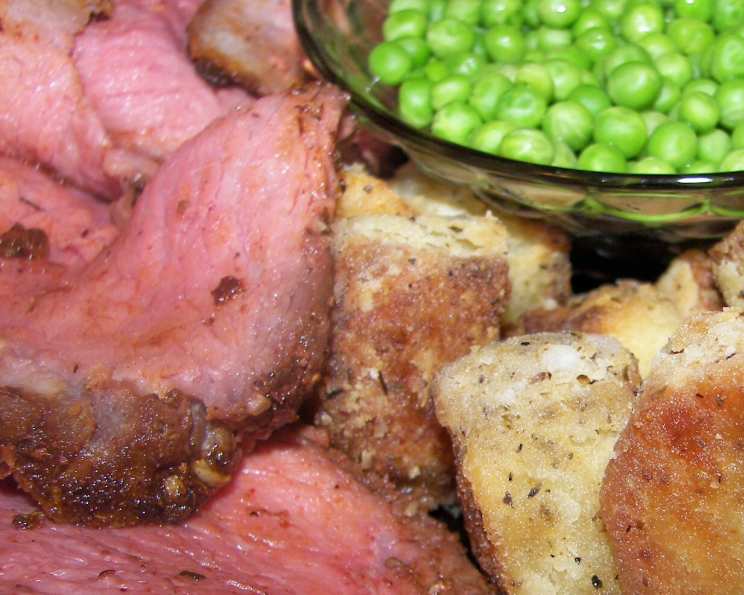
Herb-Rubbed Bison Sirloin Tip Roast: A Taste of the Wild West
The first time I tasted bison, it was a revelation. It wasn’t in some fancy restaurant, but at a summer barbecue in Montana, under a vast, open sky. The host, a weathered rancher with eyes that held the wisdom of the plains, slow-cooked a bison roast over an open fire. The aroma alone was enough to transport me to another world – a world of cowboys, wide-open spaces, and a primal connection to the land. That first bite, tender and flavorful, cemented my love for this magnificent meat. This Herb-Rubbed Bison Sirloin Tip Roast brings back all those memories, and I’m excited to share the recipe with you.
Recipe Overview
- Prep Time: 15 minutes
- Cook Time: 1 hour 15 minutes – 1 hour 20 minutes
- Total Time: 1 hour 30 minutes – 1 hour 35 minutes
- Servings: 8
- Dietary Type: High-Protein
Ingredients
- 1 tablespoon paprika
- 2 teaspoons sea salt (or 1 teaspoon regular salt)
- 1 teaspoon garlic powder
- ½ teaspoon dried oregano, crushed
- ½ teaspoon dried thyme, crushed
- ½ teaspoon ground black pepper
- ½ teaspoon onion powder
- ½ teaspoon cayenne pepper
- 2 tablespoons olive oil
- 1 (3 ¼ lb) boneless sirloin tip roast, bison, 3 – 3 ½ pounds
Equipment Needed
- Small bowl
- Shallow roasting pan
- Rack (to fit inside the roasting pan)
- Meat thermometer
- Aluminum foil
- Wire rack
Instructions
-
Begin by preparing the flavorful herb rub. In a small bowl, meticulously combine 1 tablespoon of paprika, 2 teaspoons of sea salt (or 1 teaspoon of regular salt), 1 teaspoon of garlic powder, ½ teaspoon of crushed dried oregano, ½ teaspoon of crushed dried thyme, ½ teaspoon of ground black pepper, ½ teaspoon of onion powder, and ½ teaspoon of cayenne pepper. The cayenne adds a subtle kick; adjust the amount to your preference.
-
Next, stir in 2 tablespoons of olive oil until all the dry spices are thoroughly combined, forming a thick, fragrant paste. This oil helps the rub adhere to the bison and creates a beautiful crust during roasting. Set this mixture aside.
-
Prepare the bison roast by trimming any excess fat. Unlike beef, bison is remarkably lean, so avoid removing too much fat, as a little fat contributes to the overall flavor and moisture.
-
Now, generously spread the olive oil and spice mixture over the entire surface of the bison roast. Ensure every part is covered, massaging the rub into the meat to allow the flavors to penetrate deeply.
-
Place the seasoned bison roast on a rack in a shallow roasting pan. The rack elevates the roast, allowing hot air to circulate evenly around it, promoting even cooking and browning.
-
Roast in a preheated 375 degrees F (190 degrees C) oven for 15 minutes. This initial burst of high heat helps to sear the outside of the roast, locking in the juices.
-
After 15 minutes, reduce the oven temperature to 300 degrees F (150 degrees C). Continue roasting for 60 to 65 minutes more, or until a meat thermometer inserted into the thickest part of the roast registers 140 degrees F (60 degrees C). Remember that bison cooks more quickly than beef due to its leanness, so it’s essential to monitor the internal temperature closely.
-
Remove the bison roast from the oven once it reaches the desired internal temperature.
-
Immediately cover the roast tightly with aluminum foil and let it stand in the pan on a wire rack for 15 minutes. This resting period is crucial. During this time, the internal temperature of the meat will continue to rise by a few degrees, and the juices will redistribute throughout the roast, resulting in a more tender and flavorful final product. The final temperature after resting should be around 145 degrees F (63 degrees C), which is medium-rare.
-
Thinly slice the bison roast across the grain to serve. Slicing against the grain shortens the muscle fibers, making the meat even more tender and easier to chew.
-
Serve immediately. Roasted vegetables, such as potatoes, carrots, and onions, make an excellent accompaniment to this delicious and healthy roast.
Expert Tips & Tricks
- Don’t overcook it: Bison is best served medium-rare to medium. Overcooking will result in a dry, tough roast. Use a reliable meat thermometer to ensure accuracy.
- Room Temperature Start: For more even cooking, let the bison roast sit at room temperature for about 30 minutes before applying the rub and placing it in the oven.
- Resting is Key: Don’t skip the resting period! This allows the juices to redistribute, resulting in a more tender and flavorful roast. Tent it loosely with foil to keep it warm.
- Spice It Up: Feel free to experiment with different herbs and spices in the rub. Rosemary, sage, and smoked paprika are all excellent additions.
- Sear First (Optional): For an even more pronounced crust, you can sear the roast in a hot skillet with oil on all sides before roasting. This step adds extra flavor and texture.
Serving & Storage Suggestions
Serve the Herb-Rubbed Bison Sirloin Tip Roast hot, sliced thinly, and accompanied by your favorite side dishes. Consider serving it with roasted root vegetables, creamy mashed potatoes, or a fresh green salad. A robust red wine, like a Cabernet Sauvignon or Merlot, pairs beautifully with the rich flavor of the bison.
Leftovers can be stored in an airtight container in the refrigerator for up to 3-4 days. To reheat, gently warm the sliced bison in a skillet over low heat or in a microwave, being careful not to overcook it. You can also use leftover bison in sandwiches, salads, or stir-fries. Freezing is also an option, store in an airtight freezer bag for up to 2-3 months. Thaw overnight in the refrigerator before reheating.
Nutritional Information
| Nutrient | Amount per Serving | % Daily Value |
|---|---|---|
| Calories | 339.5 kcal | N/A |
| Calories from Fat | 173 g | 51% |
| Total Fat | 19.3 g | 29% |
| Saturated Fat | 6.3 g | 31% |
| Cholesterol | 121.7 mg | 40% |
| Sodium | 533 mg | 22% |
| Total Carbohydrate | 1.1 g | 0% |
| Dietary Fiber | 0.5 g | 1% |
| Sugars | 0.1 g | 0% |
| Protein | 38.3 g | 76% |
Variations & Substitutions
- Herb Variations: Experiment with different herbs to create unique flavor profiles. Try using a blend of rosemary, thyme, and sage for a more earthy flavor.
- Spice Level: Adjust the amount of cayenne pepper to control the heat level. Omit it entirely for a milder flavor.
- Oil Options: If you don’t have olive oil, you can use another neutral-flavored oil, such as canola or grapeseed oil.
- Beef Alternative: While this recipe is specifically for bison, you can use a beef sirloin tip roast as a substitute. Keep in mind that beef may require a longer cooking time.
- Marinade: For a more intense flavor, marinate the bison roast in the herb rub for several hours or overnight before roasting.
FAQs (Frequently Asked Questions)
Q: Why is bison leaner than beef?
A: Bison are naturally leaner than cattle due to their genetics, diet (primarily grasses), and slower growth rate.
Q: How do I know when the bison roast is done?
A: The most accurate way to determine doneness is to use a meat thermometer. Insert it into the thickest part of the roast, avoiding bone. For medium-rare, aim for 140 degrees F (60 degrees C).
Q: Can I cook this roast in a slow cooker?
A: While possible, it’s not recommended. The high heat of the oven helps to create a flavorful crust, which is difficult to achieve in a slow cooker.
Q: What if I don’t have a roasting rack?
A: You can elevate the roast by placing it on top of chopped vegetables, such as carrots, celery, and onions. This will also add flavor to the vegetables.
Q: Can I use dried herbs instead of fresh?
A: Yes, you can substitute dried herbs for fresh. Use about one-third the amount of dried herbs as you would fresh herbs.
Final Thoughts
This Herb-Rubbed Bison Sirloin Tip Roast is more than just a recipe; it’s an invitation to experience the rich flavors of the American West. With its tender texture, savory herb crust, and impressive nutritional profile, this dish is perfect for special occasions or a weeknight dinner. Don’t be intimidated by cooking bison – it’s surprisingly easy, and the results are truly exceptional. So go ahead, give it a try, and let the taste of the wild transport you to a place of open skies and unforgettable flavors. I’d love to hear your feedback and see your creations – share your experience and any personal touches you’ve added! Consider pairing this roast with a hearty wild rice pilaf and a crisp green salad for a complete and satisfying meal.