
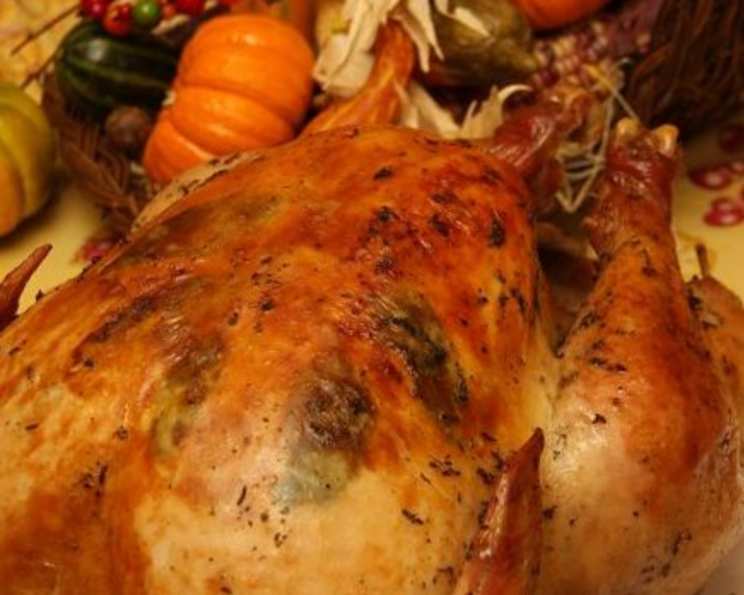
Herb-Seasoned Turkey: A Thanksgiving Tradition Reimagined
The scent of roasting turkey always transports me back to my grandmother’s kitchen. I can almost feel the warmth of the oven on my face as I peeked inside, mesmerized by the golden-brown bird taking shape. The aroma of sage, rosemary, and thyme filled the air, a symphony of herbaceous notes that promised a feast. It wasn’t just about the food; it was about family, togetherness, and the comforting ritual of Thanksgiving. It was a masterclass in comfort and love, all baked into one glorious bird.
Recipe Overview
- Prep Time: 30 minutes
- Cook Time: 2 to 3 hours
- Total Time: 2 hours 30 minutes to 3 hours 30 minutes
- Servings: 16
- Yield: 1 (16-18 pound) turkey
- Dietary Type: Gluten-Free, Dairy-Free
Ingredients
- 1 bunch fresh rosemary leaf (about 1 ounce)
- 1 bunch Italian parsley (about 4 ounce)
- 1 bunch fresh thyme leaves (about 1 ounce)
- 2 tablespoons olive oil
- 2 tablespoons butter, melted
- ½ teaspoon salt
- ½ teaspoon fresh ground black pepper
- 16-18 lbs turkey
- 3 whole bay leaves
- 3 whole sage leaves (optional)
Equipment Needed
- Large knife for chopping herbs
- V-shaped roasting rack
- 12- by 17-inch roasting pan
- Aluminum foil
- Meat thermometer
- Heavy-duty zip-top bag
Instructions
- Begin by preparing the herb mixture. Mince the rosemary leaves, parsley, and thyme until you have 1 tablespoon of each, reserving the remaining sprigs for later use. The more finely minced the herbs, the better they will infuse into the oil and butter.
- In a small bowl, combine the olive oil, melted butter, minced herbs, salt, and pepper. This aromatic blend will be the key to a flavorful and moist turkey. Set the herb-oil mixture aside.
- Prepare the turkey. Remove and discard any leg truss that may be present. Pull off and discard any lumps of excess fat from the turkey. Remove the giblets and neck from the cavity; discard them or save for making gravy later. Rinse the turkey thoroughly inside and out under cold running water. Pat the bird completely dry with paper towels. Removing excess moisture will help the skin crisp up nicely during roasting.
- Infuse the turkey with even more flavor. Tuck the remaining fresh herb sprigs (rosemary, parsley, and thyme) and bay leaves inside the body cavity of the turkey. This internal seasoning will impart a subtle, yet distinct herbaceous note to the meat as it cooks. The optional sage leaves can also be tucked inside.
- Position the turkey, breast up, on a V-shaped rack in a 12- by 17-inch roasting pan. Retruss the turkey legs, if desired, using kitchen twine. This will help the turkey cook more evenly and maintain its shape.
- Brush the entire turkey generously with the prepared oil-herb mixture. Ensure that every inch of the skin is coated, as this will contribute to a beautifully browned and flavorful exterior.
- Pour 1 cup of water into the bottom of the roasting pan, or enough to cover the bottom of the pan. This water serves two important purposes: the steam rising from it will help to keep the turkey moist throughout the roasting process, and it will also prevent the drippings from sticking to the bottom of the pan, making gravy-making much easier later on.
- Cover the roasting pan tightly with aluminum foil. This will trap the steam and ensure that the turkey cooks evenly and remains moist.
- Insert a meat thermometer through the thickest part of the turkey breast to the bone. To do this without compromising the foil seal too much, tear a small hole in the foil and poke the thermometer through it. The thermometer is your most reliable tool for ensuring that the turkey is cooked to a safe and delicious internal temperature.
- Roast the turkey in a preheated 325°F oven for 2 to 3 hours, depending on the size of your turkey. A general guideline is to cook the turkey until the thickest part of the breast reaches 160°F, removing the foil for the last 45 minutes of cooking time to allow the skin to brown and crisp up.
- If the wing and leg tips start to get too dark before the turkey is fully cooked, cover them with small pieces of foil to prevent them from burning.
- Once the turkey has reached an internal temperature of 160°F, carefully transfer it to a platter.
- Let the roasted turkey rest for 15 to 30 minutes before carving. This resting period allows the juices to redistribute throughout the meat, resulting in a more tender and flavorful bird.
- Carve the turkey and serve immediately.
Expert Tips & Tricks
- For even more intense herb flavor, consider making the herb-oil mixture a day ahead of time and allowing it to infuse overnight in the refrigerator.
- If you want to achieve an extra-crispy skin, you can dry-brine the turkey by generously salting it 24 hours before roasting. This will help to draw out moisture from the skin, resulting in a beautifully browned and crispy exterior.
- Don’t discard the pan drippings! They are the key to a delicious and flavorful gravy. Strain the drippings to remove any solids, then use them as the base for your gravy.
Serving & Storage Suggestions
Serve the Herb-Seasoned Turkey hot, accompanied by your favorite Thanksgiving sides, such as mashed potatoes, stuffing, cranberry sauce, and green bean casserole.
Leftover turkey should be stored in an airtight container in the refrigerator within two hours of cooking. Properly stored, cooked turkey can last for 3-4 days in the refrigerator. To freeze cooked turkey, wrap it tightly in plastic wrap and then place it in a freezer-safe bag or container. Frozen turkey can last for 2-3 months in the freezer.
To reheat leftover turkey, you can either microwave it, bake it in the oven at 325°F, or pan-fry it with a little butter or oil. Add a splash of broth to maintain moisture.
Nutritional Information
| Nutrient | Amount per Serving | % Daily Value |
|---|---|---|
| Calories | 754.3 kcal | N/A |
| Calories from Fat | 355 g | 47% |
| Total Fat | 39.5 g | 60% |
| Saturated Fat | 11.4 g | 57% |
| Cholesterol | 312.5 mg | 104% |
| Sodium | 380.5 mg | 15% |
| Total Carbohydrate | 0.1 g | 0% |
| Dietary Fiber | 0 g | 0% |
| Sugars | 0 g | 0% |
| Protein | 92.7 g | 185% |
Variations & Substitutions
- Different Herb Combinations: Feel free to experiment with different herb combinations based on your personal preferences. Other delicious options include rosemary and garlic, thyme and lemon, or sage and brown butter.
- Citrus Infusion: Add a few slices of lemon or orange to the body cavity of the turkey along with the herbs for a bright, citrusy flavor.
- Spicy Kick: For a spicy kick, add a pinch of red pepper flakes to the herb-oil mixture.
- Wine Addition: Baste the turkey with white wine for extra aroma.
- Maple Glaze: Brush the turkey with a maple-mustard glaze during the last 30 minutes of roasting for a sweet and tangy finish.
FAQs (Frequently Asked Questions)
Q: How do I prevent the turkey from drying out during roasting?
A: The key to a moist turkey is to maintain a humid environment in the oven. Covering the turkey with foil for most of the roasting time and adding water to the bottom of the pan will help to create steam, which will keep the turkey moist.
Q: How do I know when the turkey is fully cooked?
A: The most reliable way to determine if the turkey is fully cooked is to use a meat thermometer. The thickest part of the turkey breast should reach an internal temperature of 160°F.
Q: Can I prepare the turkey ahead of time?
A: You can prepare the herb-oil mixture ahead of time and store it in the refrigerator for up to 3 days. You can also rinse and pat the turkey dry a day ahead of time and store it in the refrigerator, covered, to allow the skin to dry out slightly, which will help it crisp up during roasting.
Q: What do I do if the turkey is browning too quickly?
A: If the turkey is browning too quickly, you can tent it with foil to slow down the browning process. You can also lower the oven temperature by 25 degrees.
Q: Can I use dried herbs instead of fresh herbs?
A: While fresh herbs are ideal for their vibrant flavor and aroma, you can use dried herbs as a substitute. Use about one-third the amount of dried herbs as you would fresh herbs.
Final Thoughts
This Herb-Seasoned Turkey recipe is a surefire way to impress your guests and create a memorable Thanksgiving feast. The combination of aromatic herbs, succulent meat, and crispy skin is simply irresistible. Don’t be afraid to experiment with different herb combinations to create your own signature flavor. I encourage you to try this recipe and share your feedback with me. Happy cooking!