
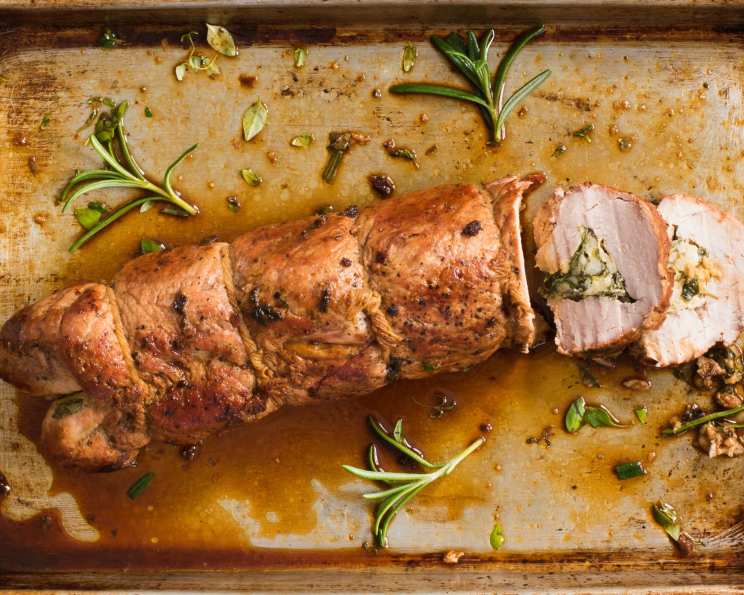
Herb-Stuffed Pork Tenderloin: A Taste of the Tuscan Countryside
I remember the first time I tasted a truly remarkable stuffed pork tenderloin. It was at a small trattoria nestled in the rolling hills of Tuscany. The air was thick with the scent of rosemary and woodsmoke, and the chef, a stout woman named Nonna Emilia, emerged from the kitchen with a proud grin, presenting a perfectly browned, aromatic roll of pork. One bite, and I was transported. The juicy, tender pork, infused with fragrant herbs, was a symphony of flavor that I knew I had to recreate back home. This recipe is my homage to that unforgettable meal.
Recipe Overview:
- Prep Time: 30 minutes
- Cook Time: 50-60 minutes
- Total Time: 1 hour 20-30 minutes
- Servings: 6
- Dietary Type: Gluten-Free (if using gluten-free breadcrumbs)
Ingredients:
- 2 tablespoons Dijon-style mustard
- 18 ounces pork tenderloin
- 1 1/2 cups shredded spinach leaves
- 1/2 cup assorted snipped fresh herbs (such as sage, thyme, rosemary, and/or basil)
- 3 tablespoons Italian breadcrumbs (use gluten-free for a gluten-free option)
- 1 egg white, slightly beaten
- 2 teaspoons olive oil or 2 teaspoons cooking oil
- Fresh coarse ground black pepper
- Snipped fresh chives (optional)
- Mustard Sauce:
- 1/3 cup sour cream
- 2 tablespoons mayonnaise
- 2 teaspoons Dijon-style mustard
- 1 teaspoon honey
Equipment Needed:
- Sharp knife
- Plastic wrap
- Meat mallet
- Medium bowl
- Shallow roasting pan
- Rack
- Kitchen string
- Small saucepan
Instructions:
-
Start by preparing the pork tenderloin. Trim any excess fat from the meat. A sharp knife is essential for this step to ensure clean cuts.
-
Now, the crucial step: creating the pocket for the stuffing. Using your sharp knife, make a lengthwise cut down the center of the roast. Be careful to cut almost, but not completely, through to the other side. The goal is to create a butterfly effect, allowing you to open the tenderloin like a book.
-
Carefully spread the meat flat.
-
Place the tenderloin between two sheets of plastic wrap. This will prevent any tearing and ensure even pounding.
-
Using the flat side of a meat mallet, gently pound the meat lightly to about a 13×8-inch rectangle. Pounding helps to tenderize the meat and create a uniform thickness for even cooking.
-
(Important for achieving 18 ounces): If necessary, use a portion of a second tenderloin to reach the desired 18 ounces. Overlap and pound the pieces together to form a single, continuous rectangle. Fold in the narrow ends as needed to create an even rectangle. Think of it as patchwork, but with meat!
-
Evenly spread the Dijon-style mustard over the surface of the flattened tenderloin. The mustard acts as a flavorful glue, helping the herb mixture adhere to the pork and adding a pleasant tang.
-
In a medium bowl, stir together the spinach, assorted fresh herbs, Italian breadcrumbs, and slightly beaten egg white. Ensure all ingredients are well combined. The egg white acts as a binder, holding the stuffing together during cooking.
-
Evenly spoon the spinach and herb mixture over the mustard-coated pork. Spread it to cover the entire surface, leaving a small border around the edges to prevent spillage during rolling.
-
Beginning at one of the narrow ends, carefully roll the tenderloin up jelly-roll style. Aim for a tight, even roll.
-
Secure the rolled tenderloin with kitchen string. Tie the string first at the center of the roast, then at approximately 1-inch intervals along the entire length. This will maintain its shape during cooking and prevent the stuffing from escaping.
-
Place the tied meat on a rack in a shallow roasting pan. The rack allows for air circulation, promoting even browning.
-
Brush the oil (either olive oil or your preferred cooking oil) generously over the surface of the meat. The oil helps to create a beautiful, golden-brown crust.
-
Sprinkle the meat liberally with fresh coarse ground black pepper. Adjust the amount to your personal preference.
-
Roast the tenderloin, uncovered, in a preheated 375 degree F (190 degrees C) oven for 50 to 60 minutes. The cooking time will vary depending on the thickness of the tenderloin.
-
To ensure the pork is cooked to a safe and desirable internal temperature, use a meat thermometer. The meat is done when it is tender and slightly pink (160 degrees F or 71 degrees C) and the juices run clear when pierced with a fork. Remember that the internal temperature will continue to rise slightly after removing the tenderloin from the oven (carryover cooking).
-
Once cooked, transfer the tenderloin to a warm platter. Allow it to rest for at least 10 minutes before slicing. This allows the juices to redistribute, resulting in a more tender and flavorful final product.
-
Remove the strings from the tenderloin carefully.
-
Keep the tenderloin warm while you prepare the Mustard Sauce.
-
To serve, cut the tenderloin into 12 slices.
-
Generously spoon the Mustard Sauce over each serving.
-
Sprinkle with snipped fresh chives (if desired) for an extra burst of fresh flavor and visual appeal.
-
To make the Mustard Sauce: In a small saucepan, combine the sour cream, mayonnaise, Dijon-style mustard, and honey.
-
Cook over low heat for 2 to 3 minutes, or just until heated through. Be careful not to boil the sauce, as this can cause it to separate.
-
Serve the Mustard Sauce immediately with the pork slices.
Expert Tips & Tricks:
- Herb Selection: Don’t be afraid to experiment with different herb combinations. Try adding some finely chopped sun-dried tomatoes or roasted garlic to the stuffing for a more intense flavor.
- Pounding Technique: Use even strokes when pounding the tenderloin to ensure a uniform thickness. Avoid pounding too hard, as this can tear the meat.
- Internal Temperature: Always use a meat thermometer to ensure the pork is cooked to a safe internal temperature. Overcooking will result in a dry, tough tenderloin.
- Make-Ahead Prep: You can prepare the stuffing and roll the tenderloin a day in advance. Store it tightly wrapped in the refrigerator until ready to cook.
- Gluten-Free Option: Easily make this recipe gluten-free by using gluten-free Italian breadcrumbs.
Serving & Storage Suggestions:
Serve this Herb-Stuffed Pork Tenderloin with roasted vegetables, mashed potatoes, or a simple salad. The Mustard Sauce complements the pork beautifully, but you can also serve it with a pan gravy or a balsamic reduction.
Leftovers can be stored in an airtight container in the refrigerator for up to 3 days. To reheat, gently warm the slices in a skillet over low heat or in a microwave. Avoid overheating, as this can dry out the pork.
The cooked pork tenderloin can also be frozen for up to 2 months. Wrap it tightly in plastic wrap and then in aluminum foil before freezing. Thaw in the refrigerator overnight before reheating.
Nutritional Information:
| Nutrient | Amount per Serving | % Daily Value |
|---|---|---|
| Calories | 250 kcal | 13% |
| Total Fat | 12g | 18% |
| Saturated Fat | 5g | 25% |
| Cholesterol | 80mg | 27% |
| Sodium | 200mg | 9% |
| Total Carbohydrate | 8g | 3% |
| Dietary Fiber | 1g | 4% |
| Sugars | 3g | – |
| Protein | 25g | 50% |
Note: Nutritional information is an estimate and may vary based on specific ingredients and portion sizes.
Variations & Substitutions:
- Cheese Filling: Add crumbled goat cheese or feta cheese to the spinach and herb mixture for a richer flavor.
- Sun-Dried Tomato Pesto: Replace the Dijon mustard with sun-dried tomato pesto for a Mediterranean twist.
- Spicy Kick: Add a pinch of red pepper flakes to the stuffing for a touch of heat.
- Vegetarian Option: Substitute the pork tenderloin with a large portobello mushroom cap for a vegetarian alternative.
FAQs (Frequently Asked Questions):
Q: Can I use dried herbs instead of fresh herbs?
A: While fresh herbs provide the best flavor, you can substitute dried herbs. Use about 1 teaspoon of dried herbs for every tablespoon of fresh herbs.
Q: How do I prevent the stuffing from falling out while slicing?
A: Ensure you tie the tenderloin tightly with kitchen string at regular intervals. Also, allow the tenderloin to rest for at least 10 minutes before slicing to help the stuffing set.
Q: Can I make this recipe ahead of time?
A: Yes, you can prepare the stuffing and roll the tenderloin a day in advance. Store it tightly wrapped in the refrigerator until ready to cook.
Q: What temperature should the pork be cooked to?
A: The pork should be cooked to an internal temperature of 160 degrees F (71 degrees C). Use a meat thermometer to ensure accurate results.
Q: Can I grill this recipe instead of roasting it?
A: Yes, you can grill the tenderloin over medium heat for about 20-25 minutes, turning occasionally, until cooked through.
Final Thoughts:
This Herb-Stuffed Pork Tenderloin is more than just a recipe; it’s an experience. The combination of tender pork, fragrant herbs, and tangy Mustard Sauce creates a symphony of flavors that will tantalize your taste buds. So, gather your ingredients, preheat your oven, and embark on a culinary adventure. I encourage you to try this recipe, experiment with different herb combinations, and share your creations with loved ones. And if you happen to find yourself in Tuscany one day, be sure to seek out Nonna Emilia’s trattoria – you won’t be disappointed!