
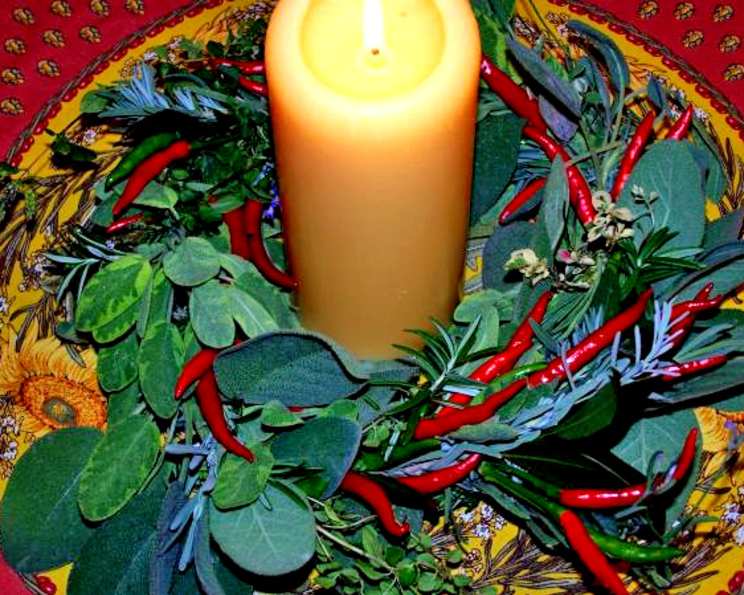
Crafting a Culinary Herb Wreath: Aromatic Beauty for Your Kitchen
The scent of rosemary takes me back to my grandmother’s garden. As a child, I would trail behind her, tiny shears in hand, as she clipped sprigs of fragrant herbs. The air, thick with the sun-baked aroma of thyme and sage, always felt like a secret promise of delicious things to come. This herb wreath embodies that memory, a fragrant tapestry woven from nature’s bounty, ready to infuse any dish with fresh, vibrant flavor. More than just decoration, it’s a living pantry, bringing the garden indoors.
Recipe Overview
- Prep Time: 60 minutes
- Cook Time: 0 minutes
- Total Time: 60 minutes
- Yield: 1 wreath
- Dietary Type: Vegan, Gluten-Free, Dairy-Free
Ingredients
For the Base:
- 4 stalks fresh rosemary, twelve-inch branches
Filler:
- 3-6 bunches sage
- 3-6 bunches lavender
- 3-6 bunches thyme
- 6-12 bay leaves
For Color:
- 20 red chili peppers
Equipment Needed
- 24-gauge wire
- Shears or scissors
Instructions
- Gather your herbs. Choose the freshest, healthiest herbs available. Ensure they are physically strong enough to withstand being bound together; basil, for example, may be too soft. Remove any spent blossoms or withered leaves. Leaving stems about 3 inches long, this will give you ample room to wire the herbs together.
- Prepare the rosemary base. Take the rosemary stalks and, using the 24-gauge wire, secure them to each other to form a circle. The sprigs should all be facing the same direction. This forms the foundation of your wreath, providing structure and a lovely woody scent.
- Attach the herbs. Take your bundles of sage, lavender, and thyme, using three stems per bundle (or more, depending on the fullness you desire). Attach the herbs to the rosemary base, wrapping the wire around the bottom of the herb stems. Place the next bundle so that it covers the stems of the first.
- Arrange the herbs. Arrange each variety of herb in its own quadrant, or mix and match to fill any empty spots. It’s important to secure the herbs tightly, as they will loosen as they dry. You should make the wreath as full as possible for the best visual and aromatic impact.
- Incorporate the bay leaves. Tuck the bay leaves amongst the other herbs. Their rigid texture will add structure and visual interest.
- Add color with chili peppers. The peppers or flowers can be pushed into where they need to go to fill and add color! Nestle them carefully among the herbs, using the wire to secure them if needed.
- Hang to dry. Hang the finished, fragrant product in your kitchen, away from direct sunlight, so you can use it when needed or give it as a gift.
Expert Tips & Tricks
- Herb Selection is Key: Choose herbs with strong stems that will hold their shape as they dry. Rosemary, thyme, and sage are excellent choices. Softer herbs like basil might wilt too much.
- Wire Management: Use pliers to twist the wire tightly and neatly, hiding the ends to prevent scratches.
- Drying Time: Allow the wreath to dry completely before hanging it in a humid environment. This will prevent mold and prolong its lifespan.
- Fragrance Boost: Gently crushing some of the leaves before adding them to the wreath will release their oils, intensifying the aroma.
- Preserving Color: Drying herbs in a dark, well-ventilated space helps retain their color. Sunlight can fade the vibrant greens and purples.
- Pest Control: Inspect herbs carefully for insects before creating the wreath. A gentle wash with diluted vinegar can help remove any unwanted guests.
- Edible Flower Power: Include edible flowers such as pansies, calendula, or nasturtiums for a pop of color and a subtle flavor note. Ensure they are pesticide-free.
Serving & Storage Suggestions
The primary purpose of the herb wreath is to be a readily available source of fresh herbs for your cooking. Simply snip off the sprigs you need as you cook. The wreath also makes a beautiful and fragrant decoration.
- Serving: Hang the wreath in a cool, dry place in your kitchen, away from direct sunlight and heat. This will help preserve its color and aroma.
- Storage: The herbs will dry naturally on the wreath. Dried herbs will last for several months. To extend their shelf life, you can remove the dried herbs from the wreath and store them in airtight containers.
- Rehydration (Optional): If you prefer to use the herbs while they are still somewhat fresh, mist the wreath lightly with water every few days. This will help keep the herbs hydrated for a short period.
Nutritional Information
Since the herbs are used sparingly as seasoning, the nutritional impact of the wreath itself is minimal. The following is an approximate nutritional breakdown for a small serving (1 teaspoon) of mixed dried herbs from the wreath:
| Nutrient | Amount per Serving | % Daily Value |
|---|---|---|
| Calories | 2 kcal | 0% |
| Total Fat | 0g | 0% |
| Saturated Fat | 0g | 0% |
| Cholesterol | 0mg | 0% |
| Sodium | 0mg | 0% |
| Total Carbohydrate | 0.5g | 0% |
| Dietary Fiber | 0.1g | 0% |
| Sugars | 0g | 0% |
| Protein | 0.1g | 0% |
Variations & Substitutions
- Mediterranean Flair: Add sprigs of oregano and marjoram for a classic Mediterranean aroma. Sun-dried tomatoes can be used instead of chili peppers for color.
- Winter Spice: Incorporate cinnamon sticks, star anise, and dried orange slices for a festive winter wreath.
- Regional Adaptations: Use herbs that are native to your area. For example, in the southwestern United States, you could include epazote and cilantro.
- Swag Variation: Instead of a wreath, create a swag by binding the herbs together in a long, cascading bundle. This is perfect for hanging above a doorway or window.
- Floral Focus: Emphasize the floral aspect by using more edible flowers and less foliage.
FAQs (Frequently Asked Questions)
Q: How long will the herb wreath last?
A: The wreath will last for several months, depending on the humidity and temperature. The herbs will gradually dry out, but they will still retain their flavor and aroma.
Q: Can I use herbs from my garden that have been treated with pesticides?
A: No, it is important to use herbs that have not been treated with pesticides, especially if you plan to use them for cooking.
Q: What if my herbs start to mold?
A: If you notice any mold, remove the affected herbs immediately. Ensure the wreath is hanging in a well-ventilated area.
Q: Can I use dried herbs to make the wreath?
A: While you can use dried herbs, the wreath will not be as fragrant or visually appealing as one made with fresh herbs.
Q: How do I clean the wreath if it gets dusty?
A: Gently dust the wreath with a soft brush or use a can of compressed air to remove any dust.
Final Thoughts
Creating an herb wreath is a delightful way to bring the beauty and fragrance of the garden into your kitchen. Whether you use it as a decorative element or a source of fresh herbs for your cooking, this handmade creation is sure to add a touch of charm and flavor to your home. So gather your herbs, grab some wire, and let your creativity blossom. Share your creations and tag us in your posts – we love to see your unique herb wreath designs!