
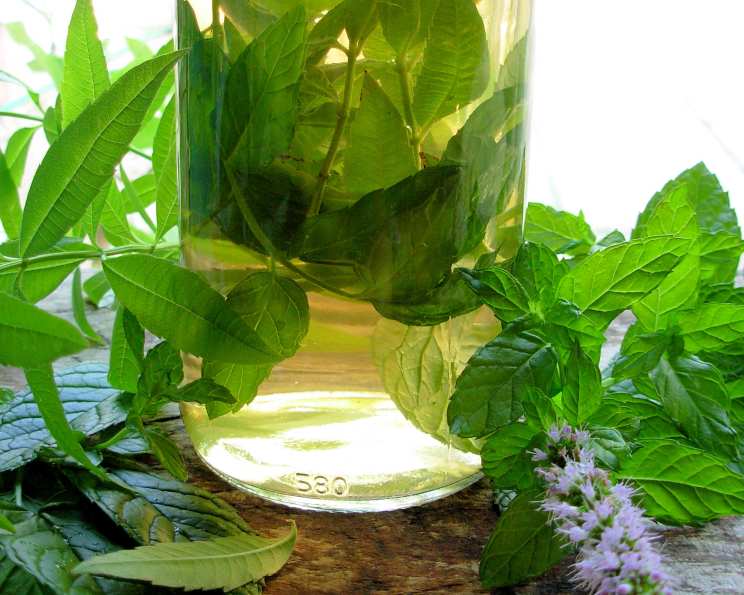
Herbal Vinegar Infusion: Lemon Verbena & Mint
The scent of lemon verbena always takes me back to my grandmother’s garden. Tucked away in a sun-drenched corner, that herb bush radiated a citrusy aroma, mingling perfectly with the cool, crisp scent of mint growing nearby. We would often snip a few sprigs, crushing them between our fingers and inhaling deeply. This herbal vinegar recipe is a liquid embodiment of those memories, a way to capture the fleeting fragrances of summer and bring a touch of my grandmother’s garden into my kitchen, all year round.
Recipe Overview
- Prep Time: 20 minutes
- Cook Time: 5 minutes
- Total Time: 2 weeks, 25 minutes (includes infusion time)
- Yields: 4 cups
- Dietary Type: Vegan, Gluten-Free, Dairy-Free
Ingredients
- 1 quart white wine vinegar
- 1/2 cup lemon verbena leaf, chopped
- 2 cups fresh mint leaves, chopped
Equipment Needed
- Glass or stainless steel saucepan
- Clean glass jars with acid-proof lids
- Cheesecloth (optional)
Instructions
- Begin by pouring the white wine vinegar into a glass or stainless steel saucepan.
- Place the saucepan on the stove over medium-low heat. Gently warm the vinegar until it is just warm to the touch, but not boiling. It’s crucial to avoid boiling, as this can degrade the flavor and aroma of the vinegar.
- While the vinegar is warming, prepare the herbs. Gently bruise the chopped lemon verbena and mint leaves. Bruising releases the essential oils, intensifying the flavor of the final vinegar.
- Loosely fill the clean glass jars with the bruised lemon verbena and mint leaves. Pack the herbs generously, but avoid compressing them too tightly.
- Once the vinegar is warmed, carefully pour it into each glass jar, completely covering the herbs. Leave about half an inch of headspace at the top of the jar.
- Secure the jars with acid-proof lids. This is essential, as regular metal lids can react with the vinegar and corrode.
- Store the jars in a cool, dark place for two weeks, shaking them gently each day. This daily shaking ensures that the herbs infuse evenly and prevents any mold from forming on the surface.
- After two weeks, it’s time to taste the vinegar. Remove a small amount and assess the flavor. If you desire a stronger herbal infusion, strain the vinegar through a fine-mesh sieve or cheesecloth to remove the spent herbs. Then, repeat the infusion process using fresh lemon verbena and mint leaves. This second infusion will create a more concentrated and aromatic vinegar.
- Once you’re satisfied with the flavor, you can store the vinegar as it is, with the herbs still in the jar, or strain it through cheesecloth for a clearer final product.
- Rebottle the strained vinegar into clean glass jars.
- For identification and visual appeal, consider adding a few fresh sprigs of lemon verbena and mint to each bottle. This allows you to easily distinguish the flavor and also adds a touch of elegance to the presentation.
Expert Tips & Tricks
- For the most vibrant flavor, use freshly harvested herbs. The essential oils are at their peak when the herbs are newly picked.
- If you don’t have fresh herbs available, you can use dried herbs, but be sure to use about half the amount specified in the recipe, as dried herbs are more concentrated.
- When warming the vinegar, use a thermometer to ensure it doesn’t exceed 120°F (49°C). Overheating can damage the flavor compounds and result in a less desirable end product.
- To prevent any unwanted bacteria growth, ensure all equipment – jars, lids, and utensils – are thoroughly clean and sterilized before use.
- If you’re concerned about cloudiness in your vinegar, you can clarify it further by using a coffee filter in addition to cheesecloth when straining.
- Consider adding a small piece of fresh lemon peel to the infusion for an extra layer of citrusy flavor. Be sure to remove the white pith, as it can impart a bitter taste.
- For a beautiful presentation, use decorative glass bottles with airtight closures. These can be found at most craft stores or online retailers.
Serving & Storage Suggestions
This lemon verbena and mint herbal vinegar is incredibly versatile and can be used in a variety of culinary applications. Drizzle it over salads for a refreshing vinaigrette, use it as a marinade for grilled chicken or fish, or add a splash to sauces and soups for a bright, herbal note. It’s particularly delicious when paired with seafood, vegetables, and creamy cheeses.
To store, keep the herbal vinegar in a cool, dark place, away from direct sunlight and heat. Properly prepared, it will retain good quality for two to three months in cool room storage and for six to eight months in refrigerated storage. While the vinegar itself won’t spoil, the flavor intensity may diminish over time. It is best to use it within the recommended timeframe for optimal taste. If stored in the refrigerator, some clouding may occur; this is normal and does not affect the quality of the vinegar.
Nutritional Information
| Nutrient | Amount per Serving | % Daily Value |
|---|---|---|
| Calories | 9 kcal | 0% |
| Total Fat | 0.1 g | 0% |
| Saturated Fat | 0 g | 0% |
| Cholesterol | 0 mg | 0% |
| Sodium | 4 mg | 0% |
| Total Carbohydrate | 1.9 g | 0% |
| Dietary Fiber | 1 g | 4% |
| Sugars | 0 g | 0% |
| Protein | 0.5 g | 0% |
Variations & Substitutions
- Basil & Rosemary: For a more savory option, substitute the lemon verbena and mint with fresh basil and rosemary.
- Tarragon & Chives: This combination provides a delicate, anise-like flavor that pairs well with eggs and poultry.
- Raspberry & Thyme: Infuse the vinegar with fresh raspberries and thyme for a sweet and herbaceous twist.
- Spicy Chili & Cilantro: For a vibrant and flavorful vinegar, add fresh chilies and cilantro. Use caution when handling chilies and remember to wash your hands thoroughly afterwards.
- Apple Cider Vinegar: Substitute white wine vinegar with apple cider vinegar for a slightly sweeter and more robust flavor.
FAQs (Frequently Asked Questions)
Q: Can I use dried herbs instead of fresh herbs?
A: Yes, you can, but use about half the amount specified in the recipe, as dried herbs are more concentrated. The flavor will be slightly different, but still delicious.
Q: Do I have to shake the jars every day during the infusion process?
A: Shaking the jars daily helps to ensure that the herbs infuse evenly and prevents mold from forming on the surface. It’s a good practice to maintain optimal flavor.
Q: How do I know when the vinegar is infused enough?
A: The best way to determine if the vinegar is infused enough is to taste it after two weeks. If you want a stronger flavor, you can continue the infusion process for a longer period or repeat the infusion with fresh herbs.
Q: Why is it important to use acid-proof lids?
A: Regular metal lids can react with the vinegar and corrode, potentially contaminating the vinegar. Acid-proof lids, such as plastic or glass lids, are essential for safe storage.
Q: Can I use this herbal vinegar to pickle vegetables?
A: Yes, this herbal vinegar can be used to pickle vegetables. However, you may need to adjust the recipe to ensure the proper acidity level for safe pickling. Consult a reliable pickling recipe for specific instructions.
Final Thoughts
I hope you’re inspired to create your own batch of lemon verbena and mint infused vinegar! It’s a simple yet rewarding process that allows you to capture the essence of your garden and elevate your culinary creations. Don’t be afraid to experiment with different herb combinations and create your own signature flavors. I encourage you to share your experiences and any variations you discover with others. Perhaps you’ll find it pairs beautifully with a simple grilled salmon, or as a refreshing addition to a summer gazpacho. Happy infusing!