
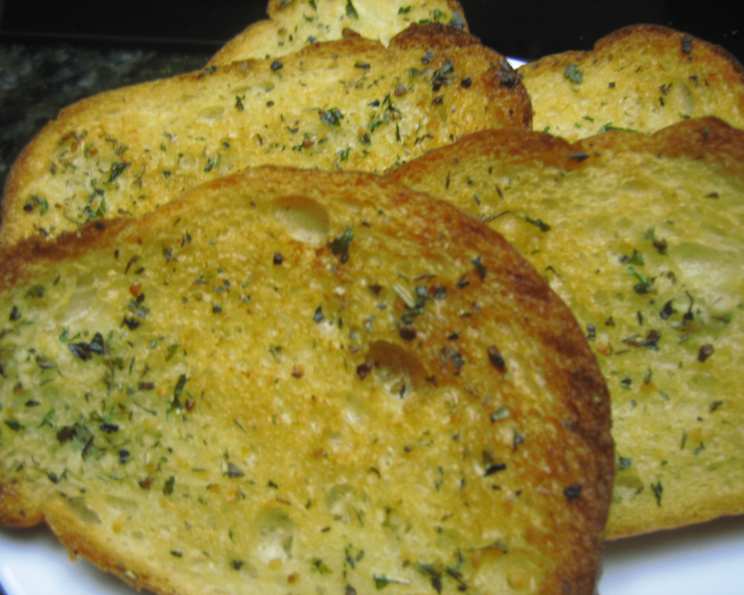
Herbed Garlic Bread: A Symphony of Flavors
The aroma of freshly baked bread slathered in garlic butter, infused with fragrant herbs, is a culinary memory etched in my mind. Growing up, my Italian grandmother, Nonna Emilia, always had a warm loaf of garlic bread ready to accompany her legendary Sunday pasta dinners. The crusty exterior gave way to a soft, pillowy interior, each bite bursting with savory goodness. This simple yet exquisite creation wasn’t just food; it was love baked into every slice, a taste of home that I cherish to this day.
Recipe Overview
- Prep Time: 10 minutes
- Cook Time: 8-10 minutes
- Total Time: 20 minutes
- Servings: 6-8
- Yield: 1 loaf
- Dietary Type: Vegetarian
Ingredients
- ½ cup butter, softened
- ½ teaspoon thyme, dried
- ½ teaspoon rosemary, dried
- ½ teaspoon oregano, dried
- ½ teaspoon basil, dried
- 1 loaf French bread
- 4 cloves garlic, minced
- Parmesan cheese, grated, to taste
- Parsley, minced, to taste
Equipment Needed
- Small saucepan
- Baking sheet
- Bread knife
Instructions
-
Begin by preparing the herb-infused butter. In a small saucepan over low heat, combine the softened butter, dried thyme, dried rosemary, dried oregano, and dried basil. Gently heat the mixture until the butter is completely melted. Be careful not to boil the butter, as this can alter its flavor. Stir occasionally to ensure the herbs are evenly distributed and infuse the butter with their aromatic essence.
-
While the butter is melting, prepare the French bread. Using a bread knife, slice the loaf lengthwise. You can either slice it completely in half or make partial cuts, creating individual slices that remain attached at the bottom. The latter method makes for easier serving and portion control.
-
Once the butter is melted and the herbs have bloomed, remove the saucepan from the heat. Now, generously brush the melted herb butter all over the cut surfaces of the French bread. Make sure to get into every nook and cranny, allowing the bread to soak up the flavorful butter.
-
Next, sprinkle the minced garlic evenly over the buttered bread. Distribute it carefully so that each bite is infused with that pungent garlic flavor.
-
Now it’s time for the cheese! Sprinkle grated Parmesan cheese over the bread to your liking. A generous layer of Parmesan will create a beautiful golden crust and add a salty, savory note.
-
Finally, garnish with minced parsley. The fresh parsley not only adds a pop of color but also a touch of brightness that complements the richness of the butter and cheese.
-
Bake the prepared garlic bread in a preheated oven at 425 degrees Fahrenheit (220 degrees Celsius) for approximately 8 to 10 minutes, or until the bread is lightly browned and the cheese is melted and bubbly. Keep a close eye on it to prevent burning, as oven temperatures can vary. Alternatively, you can broil the garlic bread for a minute or two, watching it very carefully to achieve the same golden-brown perfection. The broiler can quickly burn the bread, so vigilance is key.
-
Once the garlic bread is golden brown and bubbly, remove it from the oven and let it cool slightly before serving. This allows the flavors to meld together and prevents burning your mouth.
Expert Tips & Tricks
- For an even more intense garlic flavor, consider roasting the garlic cloves before mincing them. Roasting mellows the garlic and brings out its sweetness. Simply wrap the garlic cloves in foil with a drizzle of olive oil and roast at 400°F (200°C) for about 30-40 minutes, or until softened.
- To prevent the garlic from burning during baking or broiling, you can add it halfway through the cooking process.
- If you want to prepare the garlic bread ahead of time, you can assemble it up to the point of baking. Wrap the prepared loaf tightly in plastic wrap and store it in the refrigerator for up to 24 hours. When ready to bake, simply unwrap and bake as directed, adding a few extra minutes to the baking time if needed.
- Experiment with different herbs! Italian seasoning, a blend of various dried herbs, can be used in place of the individual herbs. You can also add a pinch of red pepper flakes for a touch of heat.
- If you don’t have Parmesan cheese on hand, you can substitute it with Romano cheese or Asiago cheese.
- For a dairy-free version, use a vegan butter substitute and nutritional yeast in place of Parmesan cheese.
Serving & Storage Suggestions
Serve the herbed garlic bread warm as an appetizer, a side dish to pasta, soups, or salads, or as a satisfying snack on its own. It pairs particularly well with Italian dishes such as lasagna, spaghetti Bolognese, or chicken Parmesan.
Leftover garlic bread can be stored in an airtight container at room temperature for up to 2 days or in the refrigerator for up to 5 days. To reheat, wrap the bread in foil and bake in a preheated oven at 350°F (175°C) for about 10-15 minutes, or until warmed through. You can also reheat it in a toaster oven or microwave, but be careful not to overcook it, as it can become tough. For longer storage, you can freeze the garlic bread for up to 2 months. Wrap it tightly in plastic wrap and then in foil to prevent freezer burn. Thaw it in the refrigerator overnight before reheating.
Nutritional Information
| Nutrient | Amount per Serving | % Daily Value |
|---|---|---|
| Calories | 346 kcal | – |
| Calories from Fat | 158 g | 46% |
| Total Fat | 17.6 g | 27% |
| Saturated Fat | 10.2 g | 51% |
| Cholesterol | 40.7 mg | 13% |
| Sodium | 569.7 mg | 23% |
| Total Carbohydrate | 40 g | 13% |
| Dietary Fiber | 2.3 g | 9% |
| Sugars | 0.2 g | 0% |
| Protein | 7 g | 13% |
Variations & Substitutions
- Spicy Garlic Bread: Add a pinch of red pepper flakes or a dash of cayenne pepper to the butter mixture for a touch of heat.
- Cheesy Garlic Bread: Use a blend of different cheeses, such as mozzarella, provolone, and Parmesan, for an extra cheesy experience.
- Garlic Knots: Instead of slicing the bread lengthwise, cut it into strips and tie them into knots before baking.
- Whole Wheat Garlic Bread: Use a whole wheat French bread for a healthier option.
- Pesto Garlic Bread: Spread pesto instead of the herb butter for a vibrant and flavorful twist.
FAQs (Frequently Asked Questions)
Q: Can I use fresh herbs instead of dried herbs?
A: Yes, you can definitely use fresh herbs! Use about 1 tablespoon of each fresh herb for every ½ teaspoon of dried herb. Keep in mind that fresh herbs may have a slightly more delicate flavor than dried herbs.
Q: How do I prevent the garlic from burning?
A: To prevent the garlic from burning, you can add it halfway through the baking process or use roasted garlic instead of raw garlic. Roasting the garlic mellows its flavor and prevents it from becoming bitter.
Q: Can I freeze the garlic bread?
A: Yes, you can freeze the garlic bread for up to 2 months. Wrap it tightly in plastic wrap and then in foil to prevent freezer burn. Thaw it in the refrigerator overnight before reheating.
Q: What kind of bread works best for garlic bread?
A: A French bread or Italian bread works best for garlic bread because it has a crusty exterior and a soft, pillowy interior. You can also use a baguette or a sourdough loaf.
Q: Can I make this recipe vegan?
A: Yes, you can easily make this recipe vegan by using a vegan butter substitute and nutritional yeast in place of Parmesan cheese.
Final Thoughts
This herbed garlic bread is more than just a side dish; it’s an experience, a comforting embrace of flavors and aromas that evokes warmth and nostalgia. Whether you’re serving it alongside a hearty Italian meal or simply enjoying it as a snack, this recipe is sure to become a family favorite. I encourage you to try it out and experiment with different herbs and cheeses to create your own signature garlic bread. Don’t be afraid to get creative and have fun in the kitchen! And please, share your feedback – I’d love to hear how your garlic bread turns out! Perhaps pair it with a classic Caesar salad or a glass of Chianti for the ultimate Italian experience. Buon appetito!