
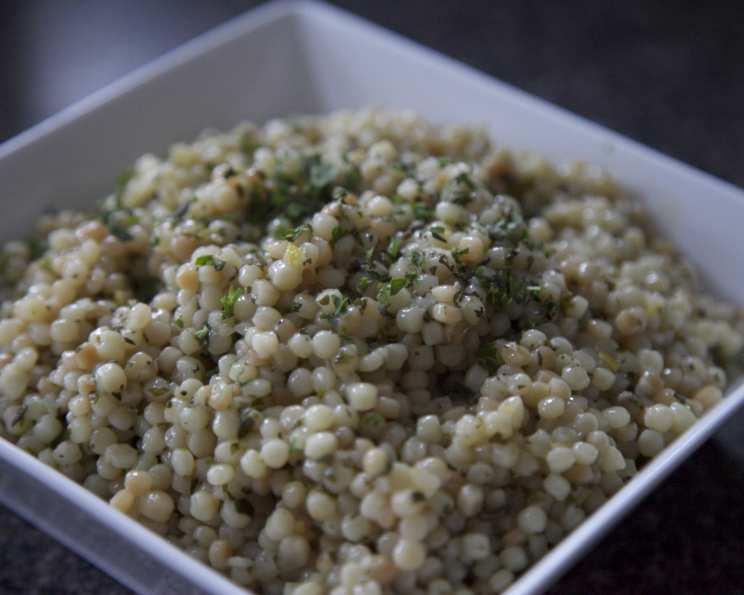
Herbed Israeli Couscous: A Taste of Sunshine
The first time I tasted Israeli couscous, it was a revelation. I was at a small, bustling cafe in Tel Aviv, the air thick with the scent of spices and roasting vegetables. A simple salad arrived, studded with these perfectly round, pearl-like grains, each one bursting with a nutty flavor. It was so much more satisfying than the fine couscous I was used to. Ever since then, I’ve been hooked, always seeking new ways to showcase its unique texture and mild flavor. This herbed version is a particular favorite, bringing a little bit of that sun-drenched Israeli cafe to my own kitchen.
Recipe Overview
- Prep Time: 5 minutes
- Cook Time: 15 minutes
- Total Time: 20 minutes
- Servings: 8
- Yield: 4 cups
- Dietary Type: Vegetarian
Ingredients
- 2 tablespoons olive oil
- 2 cups Israeli couscous
- 4 cups chicken broth or vegetable broth
- 1/4 cup fresh parsley, chopped
- 1 tablespoon tarragon, chopped
- 1 tablespoon rosemary, chopped
- 1/4 cup lemon juice
- 1 teaspoon salt
- 1/2 teaspoon pepper
Equipment Needed
- 2-quart saucepan
- Measuring cups and spoons
- Cutting board
- Knife
Instructions
-
Heat the olive oil in a 2-quart saucepan over medium heat. Make sure the pan is adequately sized to prevent boiling over later.
-
Add the Israeli couscous and sauté, stirring constantly. Continue stirring until the couscous is well coated with the oil and becomes aromatic, about 2-3 minutes. This step is crucial as it lightly toasts the couscous, enhancing its nutty flavor and preventing it from becoming mushy. You’ll know it’s ready when it smells fragrant and the pearls start to turn a light golden brown.
-
Pour in the chicken broth or vegetable broth. Bring the mixture to a boil over medium-high heat. Keep an eye on it, as it can quickly boil over.
-
Once boiling, reduce the heat to medium-low. Simmer the couscous, uncovered, until it is just tender and the broth has been absorbed, about 10-12 minutes. Stir occasionally to prevent sticking, but avoid over-stirring, which can make the couscous gummy. The couscous is done when it’s plump and tender, but still has a slight bite.
-
Remove the saucepan from the heat. Stir in the chopped fresh parsley, tarragon, and rosemary. The residual heat will help release the essential oils from the herbs, infusing the couscous with their fresh flavors.
-
Add the lemon juice and season with salt and pepper. Taste and adjust the seasoning as needed. A little extra lemon juice can brighten the flavors even further, while a pinch more salt can bring out the sweetness of the couscous.
-
Serve immediately.
Expert Tips & Tricks
- Toast the Couscous: Don’t skip the step of toasting the couscous in olive oil. It adds a depth of flavor that you won’t achieve otherwise. Watch it carefully to prevent burning.
- Broth is Key: Using a good quality broth (either chicken or vegetable) makes a significant difference in the overall flavor. Homemade broth is best, but a good store-bought option works too. Opt for low-sodium varieties to control the salt content.
- Fresh Herbs are Best: While dried herbs can be used in a pinch, fresh herbs provide a much brighter and more vibrant flavor. If using dried, reduce the quantity to about one-third of the amount called for in the recipe. Add dried herbs with the broth to allow them to rehydrate and release their flavor.
- Don’t Overcook: Overcooked couscous will become mushy. Keep a close eye on it during the simmering process and test for doneness after about 10 minutes.
- Make Ahead: You can cook the couscous ahead of time and store it in the refrigerator. When ready to serve, simply reheat it gently with a splash of broth to loosen it up. Add the fresh herbs just before serving for the best flavor.
- Flavor Boost: Consider adding a clove of minced garlic or a finely diced shallot to the olive oil at the beginning of the cooking process for an extra layer of flavor.
- Fixing Sticky Couscous: If your couscous turns out a bit sticky, fluff it gently with a fork and add a tablespoon or two of olive oil or broth.
Serving & Storage Suggestions
Herbed Israeli couscous is incredibly versatile and can be served in countless ways. It makes a fantastic side dish alongside grilled chicken, fish, or roasted vegetables. It’s also delicious served cold or at room temperature as part of a salad.
To serve attractively, consider garnishing with a sprig of fresh rosemary or a sprinkle of chopped parsley. A drizzle of good-quality olive oil can also add a touch of elegance.
Leftover herbed Israeli couscous can be stored in an airtight container in the refrigerator for up to 3 days. It is not recommended to store at room temperature for more than 2 hours. To reheat, gently warm it in a saucepan over low heat with a splash of broth or water to prevent it from drying out. You can also reheat it in the microwave, but be sure to cover it to prevent splattering. Reheating is best done only once to maintain the texture and freshness of the dish. Freezing is not recommended as it can alter the texture of the couscous.
Nutritional Information
| Nutrient | Amount per Serving | % Daily Value |
|---|---|---|
| Calories | 217 kcal | 11% |
| Total Fat | 4 g | 6% |
| Saturated Fat | 1 g | 3% |
| Cholesterol | 0 mg | 0% |
| Sodium | 670 mg | 29% |
| Total Carbohydrate | 35 g | 13% |
| Dietary Fiber | 2 g | 7% |
| Sugars | 1 g | 2% |
| Protein | 8 g | 16% |
Nutritional information is an estimate and may vary based on specific ingredients and preparation methods.
Variations & Substitutions
- Gluten-Free: While Israeli couscous is not naturally gluten-free, you can substitute it with quinoa or rice for a gluten-free alternative. Adjust cooking times according to the package instructions for the substitute grain.
- Vegan: This recipe is already easily made vegan by using vegetable broth instead of chicken broth.
- Herbs: Feel free to experiment with different herbs. Thyme, oregano, or chives would all be delicious additions.
- Vegetables: Add diced vegetables such as bell peppers, zucchini, or carrots for extra flavor and nutrition. Sauté the vegetables in the olive oil before adding the couscous.
- Cheese: For a richer flavor, stir in some crumbled feta cheese or grated Parmesan cheese after cooking.
- Spices: Add a pinch of red pepper flakes for a touch of heat, or a teaspoon of ground cumin for a warm, earthy flavor.
FAQs (Frequently Asked Questions)
Q: Can I use regular couscous instead of Israeli couscous?
A: Yes, you can, but the texture will be different. Regular couscous cooks much faster, so reduce the simmering time accordingly.
Q: Can I make this ahead of time?
A: Absolutely! Cook the couscous and store it in the refrigerator. Add the fresh herbs just before serving for the best flavor.
Q: What is the best way to reheat leftover couscous?
A: Gently warm it in a saucepan over low heat with a splash of broth or water to prevent it from drying out.
Q: Can I freeze this couscous?
A: Freezing is not recommended as it can alter the texture of the couscous and make it mushy.
Q: Can I add other vegetables to this dish?
A: Yes! Sauté diced vegetables like bell peppers, zucchini, or carrots in the olive oil before adding the couscous for extra flavor and nutrition.
Final Thoughts
This Herbed Israeli Couscous is a simple yet elegant dish that’s perfect for any occasion. Its versatility allows you to customize it to your liking, making it a staple in your kitchen. I encourage you to try this recipe and share your own variations and feedback. Pair it with a crisp white wine for a truly delightful meal! Enjoy!