
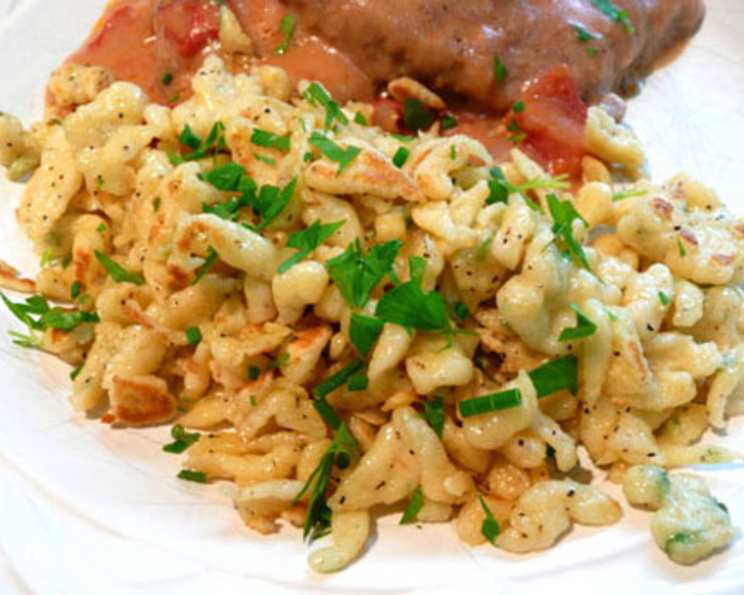
Herbed Spaetzle: A Taste of Homemade Comfort
The first time I tasted spaetzle, I was visiting a small Gasthaus in the Black Forest of Germany. Snow was falling softly outside, a fire crackled merrily in the hearth, and the air was thick with the aroma of roasting meats and simmering sauces. A generous portion of these tender, irregularly-shaped noodles, tossed with butter and herbs, arrived at my table, nestling beneath a hearty serving of Sauerbraten. The simple, comforting flavors were a perfect complement to the rich, tangy meat, and I remember thinking that this was the epitome of cozy, home-style cooking. It was a culinary memory I’ve cherished ever since, and one that inspired me to recreate this delightful dish in my own kitchen.
Recipe Overview
- Prep Time: 20 minutes
- Cook Time: 15 minutes
- Total Time: 35 minutes
- Servings: 6
- Dietary Type: Vegetarian
Ingredients
- 1 cup milk
- 3 eggs
- 2 cups all-purpose flour
- 2 teaspoons salt (plus more to taste)
- 1/8 teaspoon fresh ground pepper (plus more to taste)
- 1/4 teaspoon freshly grated nutmeg
- 3 tablespoons chopped fresh-leaf parsley
- 3 tablespoons chopped fresh chives
- 4 tablespoons unsalted butter
Equipment Needed
- Large bowl
- Whisk
- Large pot
- Spaetzle maker or colander with large holes
- Rubber spatula
- Large nonstick frying pan
- Colander with small holes
- Large serving bowl
Instructions
-
In a large bowl, combine the milk, eggs, flour, 2 teaspoons salt, 1/8 teaspoon pepper, the nutmeg, and 1 tablespoon each of the parsley and chives. Whisk until the batter is smooth. A few small lumps are perfectly fine; don’t overmix.
-
Fill a large pot about 2/3 full of lightly salted water and bring to a brisk simmer over medium-high heat. Keep the water at a gentle simmer, not a rolling boil, to prevent the spaetzle from breaking apart.
-
Prepare an ice bath. Set a large bowl of ice water near the stove. This will be used to stop the cooking process after the spaetzle is boiled, if you plan to make them ahead of time.
-
If you have one, put the batter in a spaetzle maker according to the manufacturer’s instructions. Slide the hopper to drop the spaetzle directly into the simmering water.
-
Alternatively, if you don’t have a spaetzle maker, hold a colander with large holes over the simmering water. Using a rubber spatula, push 1 cup of the batter through the holes directly into the water. Repeat with the remaining batter. Work quickly to ensure even cooking. Make sure to scrape all of the batter from the colander in between batches so it doesn’t dry to the colander.
-
As the spaetzle cooks, it will rise to the surface of the water. Once they float, cook them for about 1-2 minutes more.
-
Drain the spaetzle well in a colander with small holes so the noodles don’t slide through.
-
If you’re not serving immediately, plunge the cooked spaetzle into the ice bath to stop the cooking process. Drain thoroughly after a minute or two. The spaetzle may be refrigerated, covered, for up to 4 hours.
-
Just before serving, in a large nonstick frying pan over medium-high heat, melt the butter.
-
Add the spaetzle to the pan and sauté, stirring frequently, until the noodles are golden brown and crispy, about 6 to 8 minutes. Watch carefully to prevent burning, and adjust the heat as needed.
-
Season with salt and pepper to taste, and add the remaining 2 tablespoons each of parsley and chives.
-
Transfer to a warmed large serving bowl and serve immediately.
Expert Tips & Tricks
- For a richer flavor, brown the butter slightly before adding the spaetzle. Be careful not to burn it.
- If you don’t have fresh herbs, dried herbs can be used, but use about 1 teaspoon of each, as dried herbs are more concentrated.
- If the batter seems too thick, add a tablespoon or two of milk until it reaches a smooth, pourable consistency. It should be thick enough to hold its shape slightly but thin enough to easily pass through the spaetzle maker or colander.
- To prevent the spaetzle from sticking together while cooking, you can add a tablespoon of oil to the boiling water.
- Don’t overcrowd the pan when sautéing the spaetzle. Cook in batches if necessary to ensure even browning.
Serving & Storage Suggestions
Serve the herbed spaetzle immediately as a side dish with roasted meats, stews, or braised dishes. It’s also delicious on its own with a sprinkle of Parmesan cheese.
Leftover spaetzle can be stored in an airtight container in the refrigerator for up to 3 days. To reheat, sauté in a pan with a little butter or oil until heated through and crispy. You can also reheat them in the microwave, but they won’t be as crispy. Freezing is not recommended as it can affect the texture.
Nutritional Information
| Nutrient | Amount per Serving | % Daily Value |
|---|---|---|
| Calories | 283 kcal | N/A |
| Calories from Fat | 108 kcal | N/A |
| Total Fat | 12 g | 18% |
| Saturated Fat | 6.7 g | 33% |
| Cholesterol | 119 mg | 39% |
| Sodium | 833.6 mg | 34% |
| Total Carbohydrate | 34.1 g | 11% |
| Dietary Fiber | 1.3 g | 5% |
| Sugars | 0.3 g | 1% |
| Protein | 9 g | 17% |
Variations & Substitutions
- Gluten-Free: Substitute all-purpose flour with a gluten-free all-purpose flour blend.
- Vegan: Use plant-based milk (like almond or soy milk) and a vegan egg replacement. Substitute the butter with olive oil or vegan butter.
- Cheese Spaetzle (Käsespätzle): Add shredded Gruyere or Emmental cheese to the spaetzle during the last few minutes of sautéing.
- Garlic Herb Spaetzle: Add minced garlic to the butter when sautéing the spaetzle.
- Seasonal Herbs: Experiment with different herbs depending on the season. Try thyme, rosemary, or sage in the fall and winter, or basil and oregano in the spring and summer.
FAQs (Frequently Asked Questions)
Q: Can I make the spaetzle batter ahead of time?
A: Yes, you can make the batter up to a few hours in advance. Cover it and refrigerate until ready to use. You may need to add a tablespoon or two of milk to thin it out slightly if it thickens in the refrigerator.
Q: What if I don’t have a spaetzle maker or a colander with large holes?
A: You can use a cutting board and a knife. Spread a thin layer of batter on the cutting board and use the knife to slice off small strips into the simmering water. This method requires a bit more practice to get evenly shaped spaetzle.
Q: Why are my spaetzle sticking together?
A: Make sure the water is at a brisk simmer, not a rolling boil. Overcrowding the pot can also cause them to stick together. Try cooking them in smaller batches. Adding a tablespoon of oil to the boiling water can also help.
Q: Can I freeze the cooked spaetzle?
A: While it’s not ideal, you can freeze the cooked spaetzle. Spread them out in a single layer on a baking sheet and freeze until solid. Then, transfer them to a freezer bag. Reheat directly from frozen in a pan with butter or oil. The texture might be slightly softer than fresh spaetzle.
Q: How can I tell if the spaetzle are cooked through?
A: The spaetzle are cooked through when they float to the surface of the water and are slightly firm to the touch. Taste one to be sure.
Final Thoughts
Herbed Spaetzle is more than just a side dish; it’s a taste of tradition, a comforting embrace on a plate. Whether you’re serving it alongside a hearty stew or enjoying it simply tossed with butter and herbs, this homemade pasta is sure to bring warmth and satisfaction to your table. Don’t be intimidated by the process – with a little practice, you’ll be whipping up batches of perfect spaetzle in no time. I encourage you to give this recipe a try and share your feedback. Pair it with a crisp, dry white wine like a Riesling or Grüner Veltliner for a truly delightful culinary experience.