
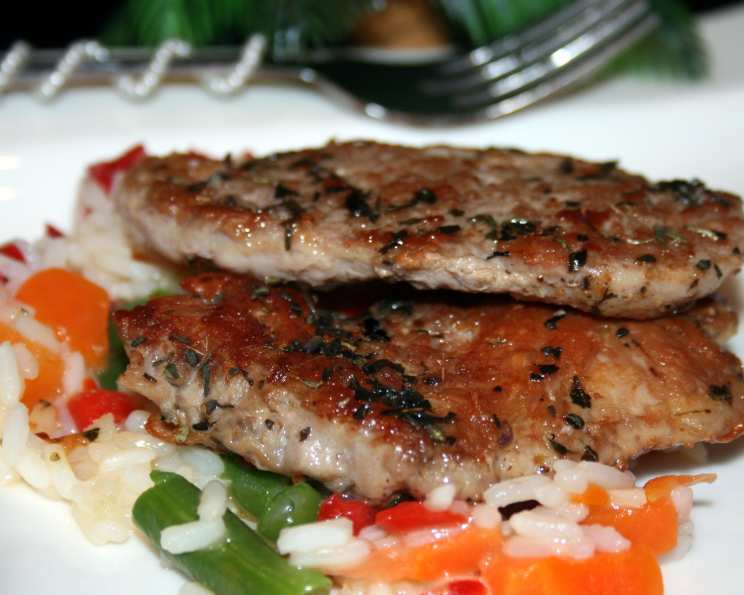
Herbes De Provence Pork Medallions: A Taste of the French Countryside
I’ll never forget the first time I tasted pork prepared with herbes de Provence. It was at a small bistro tucked away in the winding streets of Avignon, France. The aroma alone – a symphony of thyme, rosemary, and lavender – transported me to sun-drenched fields. The tender pork, kissed with the earthy herbs, was simply divine. I’ve been recreating that magic in my own kitchen ever since, and this recipe brings those cherished memories flooding back with every bite.
Recipe Overview
- Prep Time: 5 minutes
- Cook Time: 6-8 minutes
- Total Time: 11-13 minutes
- Servings: 2
- Dietary Type: Gluten-Free
Ingredients
- 8-10 ounces pork tenderloin, trimmed, cut into 6 pieces
- Fresh ground black pepper
- 1/4 cup dry white wine
- 1/2 teaspoon herbes de Provence
Equipment Needed
- Large frying pan
- Rolling pin
- Wax paper
- Baking dish
Instructions
- Begin by preparing the pork tenderloin. Cut it into 6 equal pieces.
- Generously sprinkle the pork pieces with fresh ground black pepper on both sides.
- Place the pork pieces between two sheets of wax paper.
- Using a rolling pin, gently flatten each piece of pork until it is approximately 1/4 inch thick. Be careful not to tear the meat. The wax paper prevents the pork from sticking to the rolling pin.
- Preheat your oven to 200°F (93°C). This low temperature will keep the cooked pork warm without drying it out while you prepare the sauce.
- Heat a large frying pan over medium heat.
- Carefully place the flattened pork medallions in the hot frying pan.
- Cook the pork for about 3 minutes on each side, or until nicely browned. The internal temperature should reach 145°F (63°C) for safe consumption.
- Remove the cooked pork from the frying pan and transfer it to a baking dish.
- Sprinkle the herbes de Provence evenly over the pork medallions. The warmth of the pork will help release the fragrant oils from the herbs.
- Place the baking dish with the pork in the preheated oven to keep warm while you make the wine sauce.
- Pour 1/4 cup of dry white wine into the same frying pan you used to cook the pork.
- Increase the heat to medium-high and bring the wine to a boil.
- As the wine simmers, use a spatula or spoon to scrape any cooked-on brown bits from the bottom of the pan. These browned bits, known as fond, are packed with flavor and will enhance the sauce.
- Continue to cook the wine, stirring frequently, until it has partially reduced, about 2-3 minutes. The sauce should thicken slightly.
- Remove the pork medallions from the oven.
- Pour the reduced wine sauce evenly over the pork.
- Serve immediately and enjoy!
Expert Tips & Tricks
- Pounding Perfection: Ensure the pork medallions are evenly pounded for consistent cooking. Uneven thickness can lead to some parts being overcooked while others are undercooked.
- Herb Infusion: For a more intense herbes de Provence flavor, consider gently pressing the herbs into the pork medallions before cooking.
- Wine Selection: Use a dry white wine that you would enjoy drinking, such as a Sauvignon Blanc or Pinot Grigio. Avoid cooking wines, as they often contain added salt and preservatives.
- Doneness Check: Use a meat thermometer to ensure the pork is cooked to a safe internal temperature of 145°F (63°C). Insert the thermometer into the thickest part of the medallion, avoiding contact with the pan.
- Searing Secret: Don’t overcrowd the pan when searing the pork. Work in batches if necessary, to ensure each medallion browns properly. Overcrowding lowers the pan temperature and results in steaming, not searing.
Serving & Storage Suggestions
Serve the Herbes de Provence Pork Medallions immediately while they are warm and the sauce is glossy. They pair beautifully with roasted vegetables like asparagus or potatoes, or a simple side salad with a vinaigrette dressing.
Leftovers can be stored in an airtight container in the refrigerator for up to 3 days. To reheat, gently warm the pork in a pan over low heat or in the microwave, adding a splash of white wine or broth to keep it moist. Freezing is not recommended, as the texture of the pork may change upon thawing.
Nutritional Information
| Nutrient | Amount per Serving | % Daily Value |
|---|---|---|
| Calories | 179 kcal | N/A |
| Total Fat | 6.1 g | 9% |
| Saturated Fat | 2.1 g | 10% |
| Cholesterol | 74.8 mg | 24% |
| Sodium | 57 mg | 2% |
| Total Carbohydrate | 0.8 g | 0% |
| Dietary Fiber | 0 g | 0% |
| Sugars | 0.3 g | 1% |
| Protein | 23.3 g | 46% |
Variations & Substitutions
- Chicken or Turkey Medallions: Replace the pork tenderloin with chicken or turkey breast for a leaner protein option. Adjust cooking time as needed to ensure the meat is cooked through.
- Vegetarian Option: While this recipe centers on pork, you can create a similar flavor profile with thick slices of eggplant or portobello mushrooms. Marinate them in olive oil, herbes de Provence, and garlic before grilling or pan-frying.
- Creamy Sauce: For a richer sauce, add a tablespoon of heavy cream or crème fraîche to the wine sauce just before serving.
- Lemon Twist: Add a squeeze of fresh lemon juice to the wine sauce for a bright and zesty flavor.
- Garlic Infusion: Mince a clove of garlic and sauté it in the pan before adding the white wine for an extra layer of flavor.
FAQs (Frequently Asked Questions)
Q: Can I use dried herbs if I don’t have herbes de Provence?
A: Yes, you can substitute with a mix of dried thyme, rosemary, savory, marjoram, and lavender. Use about 1/4 teaspoon of each to approximate 1/2 teaspoon of herbes de Provence.
Q: How do I prevent the pork from becoming tough?
A: Avoid overcooking the pork. Use a meat thermometer and cook it to an internal temperature of 145°F (63°C). Pounding the pork also helps to tenderize it.
Q: Can I make the wine sauce ahead of time?
A: Yes, you can make the wine sauce ahead of time and store it in the refrigerator for up to 2 days. Reheat gently before serving.
Q: What should I do if the wine sauce is too thin?
A: Continue to simmer the wine sauce until it reduces to your desired consistency. You can also thicken it with a small amount of cornstarch slurry (1 teaspoon cornstarch mixed with 1 tablespoon cold water).
Q: Is it necessary to let the pork rest after cooking?
A: While not strictly necessary for this recipe, allowing the pork to rest for a few minutes after cooking can help retain its juices and improve its tenderness.
Final Thoughts
Herbes de Provence Pork Medallions offer a delightful and surprisingly simple way to bring a touch of the French countryside to your table. This recipe is perfect for a quick weeknight dinner or an elegant weekend meal. Don’t be afraid to experiment with variations and make it your own. Try pairing it with a crisp glass of rosé or a light-bodied red wine for a truly unforgettable culinary experience. I encourage you to try this recipe and let me know what you think! Bon appétit!