
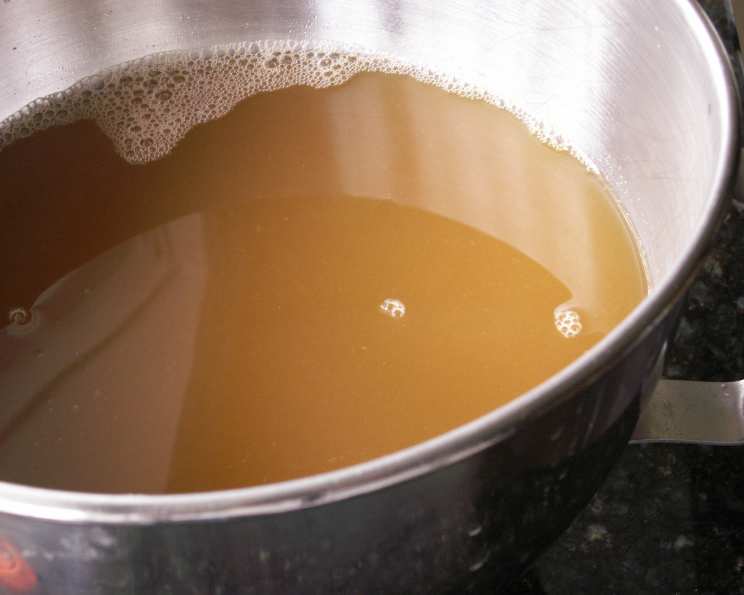
The Alchemy of Homemade Chicken Stock: A Culinary Foundation
My grandmother, a woman whose kitchen was a sanctuary of comforting aromas, always had a pot simmering on the stove. It wasn’t always a grand stew or a complicated sauce; often, it was just stock. The humble chicken stock, bubbling away, subtly perfuming the air with the promise of flavor, was the heart of her cooking. It transformed simple soups into restorative elixirs and elevated everyday sauces into something truly special. That simple pot was my first introduction to the magic that a truly great stock can bring to a dish.
Recipe Overview: Homemade Chicken Stock
- Prep Time: 20 minutes
- Cook Time: 4 hours
- Total Time: 4 hours 20 minutes
- Yields: 8 cups
- Serves: 8
- Dietary Type: Dairy-Free, Gluten-Free
Ingredients
- 1 stewing chicken (or 3lb/1.5kg chicken pieces)
- 3 carrots, unpeeled and coarsely chopped
- 3 onions, unpeeled and coarsely chopped
- 3 celery ribs, coarsely chopped
- 1 cup sliced mushrooms (stems and/or caps)
- 3 garlic cloves, smashed
- 10 sprigs fresh parsley
- 1⁄2 teaspoon dried thyme
- 1⁄2 teaspoon peppercorns
- 2 bay leaves
- 8 cups cold water
Equipment Needed
- Slow cooker or large stockpot
- Cheesecloth
- Sieve (or colander)
- Large bowl
- Airtight containers
Instructions
- Begin by placing the chicken into either your slow cooker or a large stockpot. If you’re using a stockpot, ensure it’s large enough to comfortably hold all the ingredients and the water.
- Add the remaining ingredients to the pot or slow cooker, starting with the carrots, onions, and celery. Next, add the sliced mushrooms, smashed garlic cloves, sprigs of fresh parsley, dried thyme, peppercorns, and bay leaves.
- Finally, pour in the cold water, ensuring that the chicken and vegetables are fully submerged.
- For a slow cooker, cover and cook on low heat for 8 to 10 hours, allowing the flavors to slowly meld and intensify.
- If using a stovetop stockpot, bring the mixture to a gentle simmer over medium heat. Once simmering, reduce the heat to low, cover, and cook for 4 hours, maintaining a very gentle simmer. Avoid a rolling boil, which can make the stock cloudy.
- After the cooking time is complete, carefully remove the chicken from the pot and discard it. The chicken has given all its flavor to the stock, and its texture will be unappealing.
- Line a sieve with cheesecloth, creating a fine mesh to strain the stock. Place the sieve over a large bowl.
- Carefully pour the stock through the cheesecloth-lined sieve, allowing the liquid to filter through. Gently press the vegetables with a spoon or ladle to extract as much liquid as possible, maximizing the flavor yield. Be careful not to force it too much, which could result in a cloudy stock.
- Allow the strained stock to cool slightly. Once cooled, you can remove the fat. If you plan to use the stock immediately, skim the fat off the top using a spoon or ladle. For later use, refrigerate the stock until the fat congeals on the surface, then simply lift it off in a solid layer.
- Transfer the defatted stock to airtight containers and refrigerate for up to 3 days, or freeze for up to 4 months.
Expert Tips & Tricks
- Roast the chicken carcass: For an even deeper, richer flavor, roast the chicken carcass in a 400°F (200°C) oven for 30-40 minutes before adding it to the pot. This will add a beautiful roasted note to your stock.
- Don’t salt the stock: It’s best to avoid adding salt during the stock-making process. This allows you to control the sodium level when you use the stock in other recipes.
- Use vegetable scraps: Save your onion skins, carrot tops, and celery ends to add to the stock for extra flavor. Just be sure to wash them thoroughly first. Avoid using cruciferous vegetables like broccoli or cabbage, as they can make the stock bitter.
- Skim for clarity: Throughout the cooking process, skim off any foam or impurities that rise to the surface. This will result in a clearer, more refined stock.
- Ice Bath Cooling: Speed up the cooling process by placing the strained stock in a bowl set in an ice bath. This prevents bacterial growth and ensures a safer product.
Serving & Storage Suggestions
Homemade chicken stock is incredibly versatile. Use it as a base for soups, stews, and sauces. It can also be used to cook grains like rice or quinoa, adding depth of flavor to these simple staples.
Store the stock in airtight containers in the refrigerator for up to 3 days. For longer storage, freeze the stock in individual portions (e.g., in ice cube trays or small containers) for easy use in recipes. Frozen stock can last up to 4 months. To reheat, simply thaw in the refrigerator overnight or gently heat on the stovetop.
Nutritional Information
Here’s an estimated nutritional breakdown per serving:
| Nutrient | Amount per Serving | % Daily Value |
|---|---|---|
| Calories | 295 kcal | N/A |
| Total Fat | 20.5g | 31% |
| Saturated Fat | 5.7g | 28% |
| Cholesterol | 70.7mg | 23% |
| Sodium | 106.7mg | 4% |
| Total Carbohydrate | 8.9g | 2% |
| Dietary Fiber | 2.2g | 8% |
| Sugars | 3.3g | N/A |
| Protein | 18.8g | 37% |
Note: Nutritional information is an estimate and may vary based on specific ingredients and cooking methods.
Variations & Substitutions
- Vegetable Stock: For a vegetarian option, substitute 2 whole tomatoes for the chicken. Increase the quantity of vegetables like carrots, celery, and onions. You can also add other vegetables like parsnips, leeks, and bell peppers.
- Herb Variations: Experiment with different herbs to create unique flavor profiles. Try adding rosemary, sage, or oregano.
- Spicy Stock: For a spicy kick, add a few dried chili peppers to the stockpot.
- Asian-Inspired Stock: Add ginger, scallions, and star anise for an Asian-inspired stock perfect for ramen or pho.
FAQs (Frequently Asked Questions)
Q: Why is my chicken stock cloudy?
A: Overboiling can emulsify fats and proteins, leading to a cloudy stock. Always maintain a gentle simmer. Also, avoid excessive stirring during the cooking process.
Q: Can I use a rotisserie chicken carcass for stock?
A: Absolutely! A rotisserie chicken carcass is a great way to make flavorful stock. The already cooked chicken adds a delicious roasted flavor.
Q: How can I reduce the sodium content of my stock?
A: Avoid adding salt during the stock-making process. This allows you to control the sodium level when you use the stock in your recipes.
Q: How do I know when the stock is done?
A: The stock is done when the vegetables are very soft and the liquid has a rich, savory flavor. The cooking time is a guideline, so trust your taste buds.
Q: Can I freeze leftover stock in ice cube trays?
A: Yes, freezing stock in ice cube trays is a great way to have small portions readily available for sauces and other dishes. Once frozen, transfer the cubes to a freezer bag.
Final Thoughts
Making homemade chicken stock might seem like a time-consuming process, but the reward is immeasurable. The depth of flavor it adds to your dishes is simply unmatched by store-bought varieties. Embrace the simplicity of this culinary foundation, and let the comforting aroma fill your kitchen. I encourage you to try this recipe and discover the magic of homemade stock. It truly elevates any dish, so make a batch, experiment with variations, and share your delicious creations with friends and family! Don’t hesitate to share any feedback, and consider pairing your stock-enhanced dish with a warm crusty bread for the ultimate comfort meal.